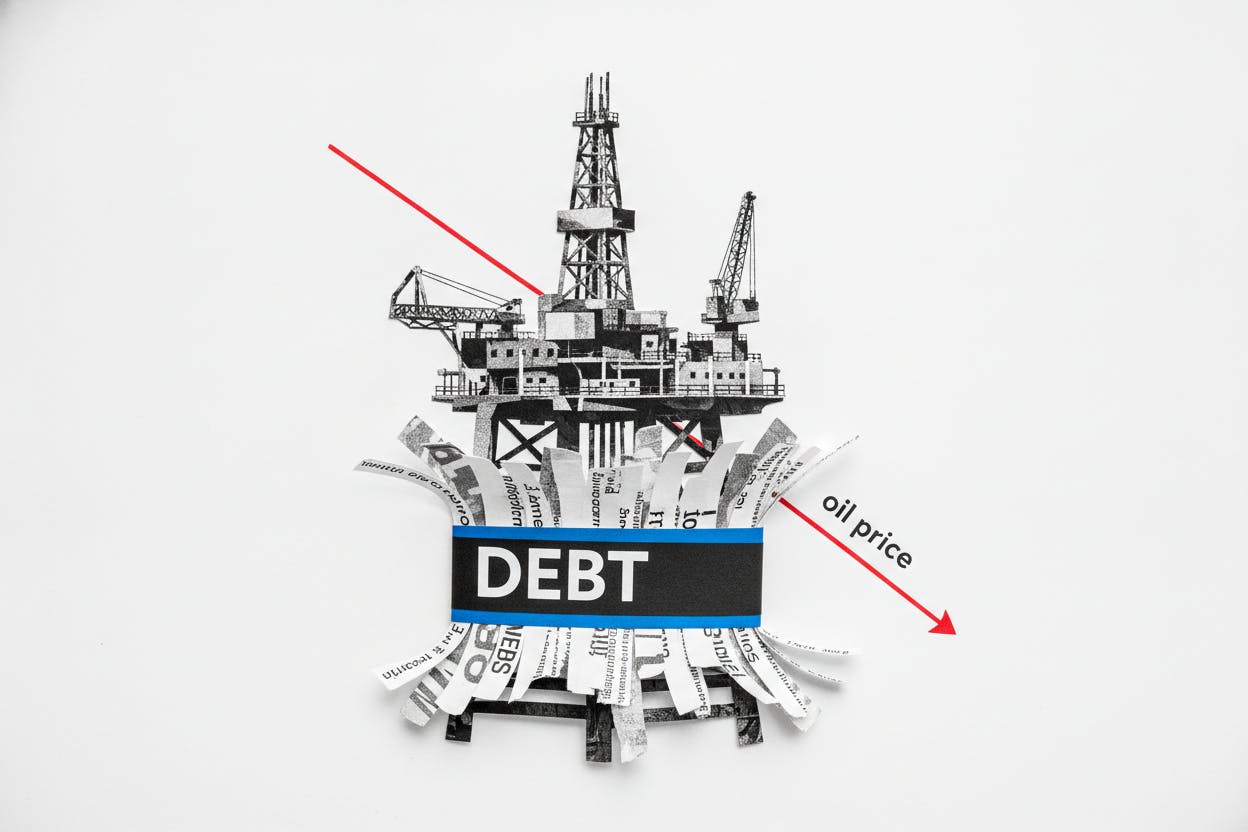
Oil prices edged lower on Tuesday, with West Texas Intermediate crude slipping to $69.13 a barrel, but one small energy producer bucked the broader trend. Sable Offshore saw its shares jump more than 23% after the company announced it had priced a combined equity-and-debt deal to refinance its existing borrowings.
The move underscores a key dynamic in the energy sector: while many oil and gas stocks move in lockstep with crude prices, company-specific financial maneuvers can sometimes matter more than the commodity on any given day.
What Sable Offshore's Deal Involves
Sable Offshore, a relatively small independent oil and gas producer, structured its refinancing as a package of new debt and newly issued shares. The proceeds from the deal will be used to replace existing borrowings tied to the company's assets. By swapping out old debt for a fresh mix of equity and debt, Sable aims to push back what is known in finance as a "maturity wall"—a situation where a large amount of debt comes due in a short period, putting pressure on the company's cash flow.
Refinancing can also reduce near-term interest costs, lowering the risk that the company might default or be forced into a distressed restructuring. For investors, that reduction in perceived risk is often a catalyst for a stock rally, as it was here.
The deal comes at a time when funding conditions for smaller energy companies remain mixed. While larger producers have benefited from strong cash flows in recent years, smaller players like Sable have sometimes struggled to secure favorable terms. Earlier this year, for instance, a loan for Sable Offshore was reportedly cut to $675 million as demand faltered, as covered in JPMorgan's 15% Sable Offshore Loan Cut to $675 Million as Demand Falters.
Oil Prices Remain Under Pressure
Meanwhile, the broader oil market continued to face headwinds. WTI crude fell to $69.13 a barrel, extending a recent trend of weakness driven by concerns about global demand and ample supply. The decline reflects ongoing uncertainty about the pace of economic growth in major consuming regions, including China and Europe, as well as the potential for increased output from OPEC+ producers.
For energy investors, the divergence between Sable's stock and the price of oil highlights an important lesson: company fundamentals and financing decisions can sometimes override the macro picture. A producer that successfully strengthens its balance sheet may be rewarded by the market even when the commodity itself is struggling.
What It Means for Investors
For everyday investors, the Sable Offshore story is a reminder that not all energy stocks are created equal. While many investors focus on the price of oil as a proxy for the entire sector, individual companies can see their shares move sharply based on their own financial health and strategic decisions.
Refinancing deals like this one are common in the energy industry, especially among smaller producers that rely heavily on debt to fund exploration and development. When a company successfully refinances, it can buy itself time and breathing room, reducing the risk of a liquidity crunch. That can be a positive signal for shareholders, as it suggests the company has access to capital markets and is taking steps to manage its liabilities.
However, investors should also be aware that issuing new shares dilutes existing shareholders' ownership. In Sable's case, the equity component of the deal means that while the stock rose on the news, the total number of shares outstanding has increased, which could weigh on future earnings per share.
For those looking at the broader energy landscape, the combination of falling oil prices and selective stock moves like Sable's suggests that the sector remains a mix of opportunities and risks. Investors may want to pay close attention to individual company balance sheets and financing activities, rather than relying solely on the direction of crude.
As always, it's worth keeping an eye on how other small-cap energy producers navigate similar challenges. The success or failure of refinancing efforts can have a significant impact on stock performance, sometimes more than the daily swings in oil prices.