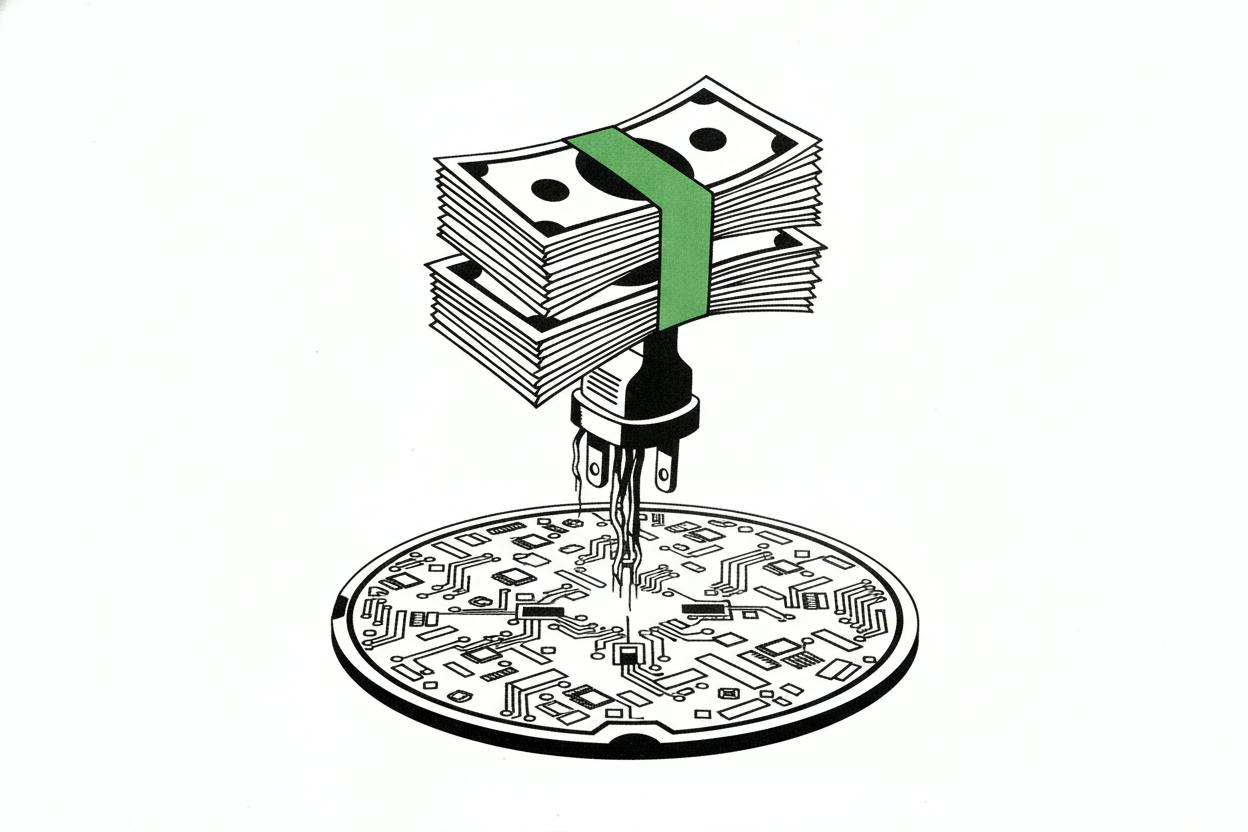
South Korea's two largest memory-chip makers, Samsung Electronics and SK Hynix, have pushed back on a proposal by the state-run utility Korea Electric Power Corp. (KEPCO) to pay 25 trillion won (about $18.7 billion) upfront to secure electricity for planned semiconductor mega-clusters. The rejection, reported by Reuters, highlights a growing tension between the country's industrial ambitions and the practical concerns of its biggest companies.
KEPCO has argued that it needs the cash early to build the grid and other infrastructure required to deliver reliable power to the massive new fabrication plants. But the chipmakers, after internal reviews, said it would be difficult to accept the plan, according to a document shared with Reuters by the office of lawmaker Lee Chul-gyu. Their core objection is timing: prepaying years ahead ties up enormous capital in a sector where demand can shift quickly.
Why the prepayment plan is controversial
The proposal comes as South Korea pushes to build one of the world's largest semiconductor clusters, a project that would require vast amounts of electricity. KEPCO, which has faced financial strain in recent years, sees the upfront payment as a way to fund the necessary infrastructure without borrowing more. But for Samsung and SK Hynix, the request raises a fundamental question: does it make sense to commit billions of dollars now for power they may not need at full capacity?
The chipmakers' skepticism is rooted in the cyclical nature of the semiconductor industry. Memory chip prices have historically swung between booms and busts, and demand for advanced chips—while strong today—could soften by the time the new plants come online. Paying a massive fee upfront would lock in costs regardless of future market conditions, a risk that companies in this position often try to avoid.
The dispute also reflects a broader debate about how to share the costs of building energy infrastructure for industrial projects. Utilities typically need to invest in transmission lines, substations, and other equipment before a factory can operate, and they often seek commitments from large customers to justify those investments. But the scale of KEPCO's request is unusual, and the chipmakers are pushing back on the idea that they should bear the full financial burden years in advance.
What it means for investors
For investors, the standoff is a reminder that even the world's most profitable companies are cautious about committing large sums to long-term projects. Samsung and SK Hynix are sitting on substantial cash reserves, but they are also facing pressure to return more to shareholders, a topic that has been central to Korea's Value-Up program. A 25 trillion won prepayment would be a significant drain on that cash, potentially reducing the funds available for dividends or buybacks.
The outcome of the negotiation could also affect the timeline for the semiconductor mega-clusters, which are seen as critical to South Korea's economic future. If the chipmakers and KEPCO cannot reach an agreement, the projects could face delays, which would ripple through the supply chain and potentially affect global chip availability. On the other hand, a compromise—such as a smaller upfront payment or a phased schedule—could ease concerns while still allowing the infrastructure to be built.
For everyday investors, the key takeaway is that large-scale industrial projects often involve complex financial negotiations, and the final terms can have real consequences for the companies involved. Samsung and SK Hynix are among the most closely watched stocks in Asia, and any news about their capital allocation decisions tends to move markets. The fact that they are willing to publicly resist a government-backed utility's request suggests they are prioritizing financial discipline over political pressure.
It's also worth noting that this is not the first time the chipmakers have clashed with policymakers over costs. Earlier this year, there were reports of deepening chip talks with OpenAI, and the companies have been investing heavily in new packaging and manufacturing capacity, including a $270 million AI chip packaging lab in Japan. These investments are part of a broader push to stay ahead in the AI-driven demand for memory chips, but they also require careful management of capital.
As the negotiation continues, investors will be watching for signs of a resolution. A deal that satisfies both sides could remove a source of uncertainty for the chipmakers, while a prolonged dispute might raise questions about the feasibility of the mega-cluster projects. Either way, the episode underscores the delicate balance between national industrial policy and corporate financial prudence.