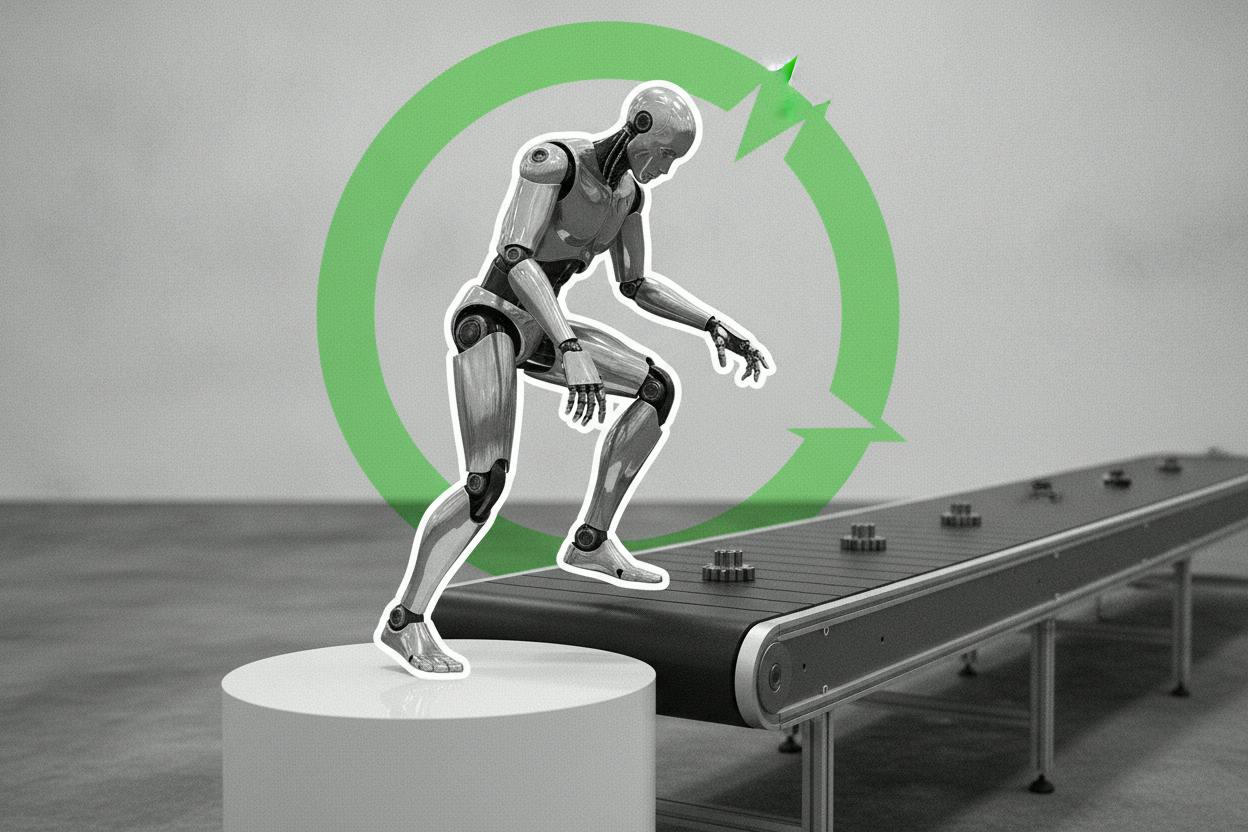
Samsung Electronics has confirmed plans to publicly unveil a humanoid robot prototype in January, with a showcase scheduled for the CES technology trade show in Las Vegas. The move is part of the South Korean tech giant's broader effort to find new growth engines beyond its core memory chip and smartphone businesses.
What we know about the robot
Samsung has been testing the prototype at its robotics hub in Seoul, focusing on the difficult engineering challenges of full-body control and precise hand-and-arm movements. These are the kinds of skills a robot would need before it can safely handle real factory tasks, where even small errors can cause damage or injuries.
But the bigger hurdle is reliability. Kris Hauser, who leads Samsung's Robotics eXperience (RX) lab, said in September that a 99% success rate still isn't good enough for production lines. Factories need something closer to 99.99% reliability to avoid costly stoppages. That gap is enormous: a robot that fails 1% of the time might disrupt a line several times a day, while one that fails 0.01% of the time could run for weeks without a hiccup.
That reliability bar helps explain why Samsung is building a dedicated RX unit under co-CEO TM Roh and talking up AI-driven plants by 2030. The company is also laying groundwork through robotics research in the US, China, and Japan, and has backed its ambitions with deals, including becoming the largest shareholder in Rainbow Robotics, a South Korean robotics firm.
Why the CES debut matters
For markets, Hauser's 99.99% target makes Samsung's CES debut more of a stress test than a sales pitch. In manufacturing, a robot's value is mostly about uptime: every unexpected failure can slow output, waste materials, or force humans to step in. The leap from 99% to 99.99% reliability isn't a minor tweak; it's the difference between something that breaks often enough to disrupt a line and something factories can treat like dependable equipment.
That's why customers typically demand long validation periods, tight integration with existing machines, and clear rules on support and liability before they let humanoids touch production. So Samsung's January reveal is best read as a signal of engineering progress and strategy – not a near-term revenue trigger. It sets expectations for a longer runway before RX and any eventual Gumi production line can translate R&D spending into repeatable sales.
Samsung is entering a crowded field that includes Unitree, Tesla, and Hyundai Motor's Boston Dynamics. Each is pursuing different approaches, but all face the same fundamental challenge: proving that humanoid robots can work reliably and cost-effectively in real-world settings. The broader push into robotics is also drawing interest from consumer-facing companies, but industrial applications remain the most immediate test.
What it means for investors
For everyday investors, Samsung's robot ambitions are a long-term story, not a near-term earnings driver. The company's core businesses – memory chips and smartphones – still dominate its revenue and profit. Robotics is a strategic bet that could pay off years down the road, but it's unlikely to move the needle on Samsung's financial results anytime soon.
Investors should also keep an eye on the broader market context. Samsung's stock has been volatile recently, partly due to concerns about AI demand and chip prices. The KOSPI's recent drop highlighted how sensitive Samsung's valuation is to AI-related sentiment. A successful robot debut could help diversify the narrative, but it won't change the near-term fundamentals.
The planned production line in Gumi is a key milestone to watch. If Samsung can build a robot that meets the 99.99% reliability bar, it could eventually open a new revenue stream. But that's a big if. The company itself acknowledges that the technology is still in development, and the CES showcase is just one step in a longer journey.
For now, the January reveal is best seen as a progress report. It tells investors that Samsung is serious about robotics and has the engineering resources to compete. But it also sets a high bar – and the market will be watching to see if the company can clear it.