Air-cargo handler SATS says the boom in artificial intelligence data centers is still filling its planes, even as the US tightens rules on shipping advanced chips to parts of Southeast Asia. CEO Kerry Mok told reporters that demand for server racks and semiconductors hasn't eased during the peak season, pointing to multi-year construction projects that keep generating repeat shipments.
SATS, one of the world's largest air-cargo ground handlers, has been a direct beneficiary of the AI infrastructure buildout. The company moves everything from standard parcels to delicate, high-value equipment like server racks and chips that require careful handling. Mok's comments come as investors debate whether the AI spending spree can last, with some scrutinizing the debt behind data-center projects.
Strong quarter, but supply is the wildcard
The momentum showed up in SATS' latest results. The company reported quarterly revenue of S$1.71 billion, up 9% from a year earlier, and said cargo volumes rose 8% in the July-September period. That beat the International Air Transport Association's estimate of 5.3% global growth, underscoring how AI-related freight is outpacing the broader market.
Mok also flagged a rebound in the Americas, now SATS' fastest-growing region. He attributed part of that to more charter flights moving data-center equipment into the US, as companies rush to build out computing capacity.
But in air freight, supply matters as much as demand. When Middle East carriers cancel passenger services, the industry loses "belly-hold" cargo space—the storage area under passenger cabins that also carries freight. That forces shippers to hunt for alternatives like charter flights or rerouting through hubs such as Singapore.
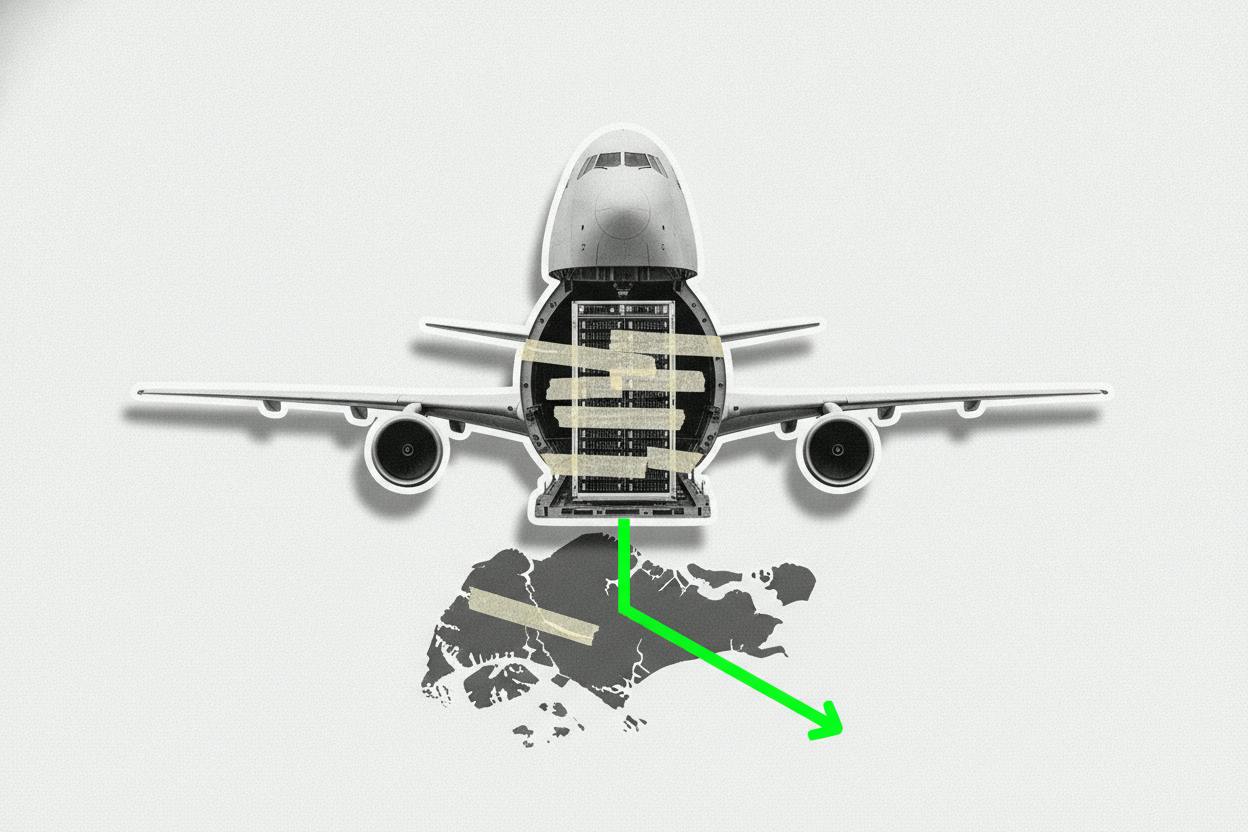
New US restrictions on advanced chip shipments to Malaysia, Singapore, and Thailand could further reshape routes. Mok argued that if demand still exceeds supply, blocked flows in one place tend to find another path. That suggests the restrictions may not kill the AI cargo boom, but could redirect it.
What it means for investors
For markets, SATS' cargo mix is the key to understanding its profit potential. Mok said roughly 20% of the cargo SATS handles globally needs specialized treatment—like avoiding vibration, tilting, or double stacking. Handling that kind of high-value equipment is less commodity-like than moving standard boxes, so disruptions can improve the revenue mix even if total tonnage doesn't jump.
Charter flights are the pressure valve when passenger capacity disappears. Less belly-hold space typically means tighter capacity overall, which can lift air-freight prices and shift more volumes into "higher-touch" logistics. That plays directly into SATS' niche.
The flip side is sensitivity. If passenger networks normalize and charter demand cools, or if trade rules force a bigger rerouting away from Singapore, SATS' cargo-led growth could slow faster than the headline AI-shipment story suggests. Investors should watch how the US chip restrictions evolve, especially as Malaysia negotiates with Washington over licensing rules.
The broader AI trade has been volatile, with chip and server stocks sliding recently on concerns about demand sustainability. But SATS' results suggest that, at least for now, the physical movement of AI hardware remains robust.
For everyday investors, the takeaway is that the AI boom isn't just a story about software and cloud earnings—it also ripples through logistics and transportation. Companies like SATS that handle the physical infrastructure of AI can benefit, but they're also exposed to the same cyclical risks and policy shifts that affect the broader tech trade.