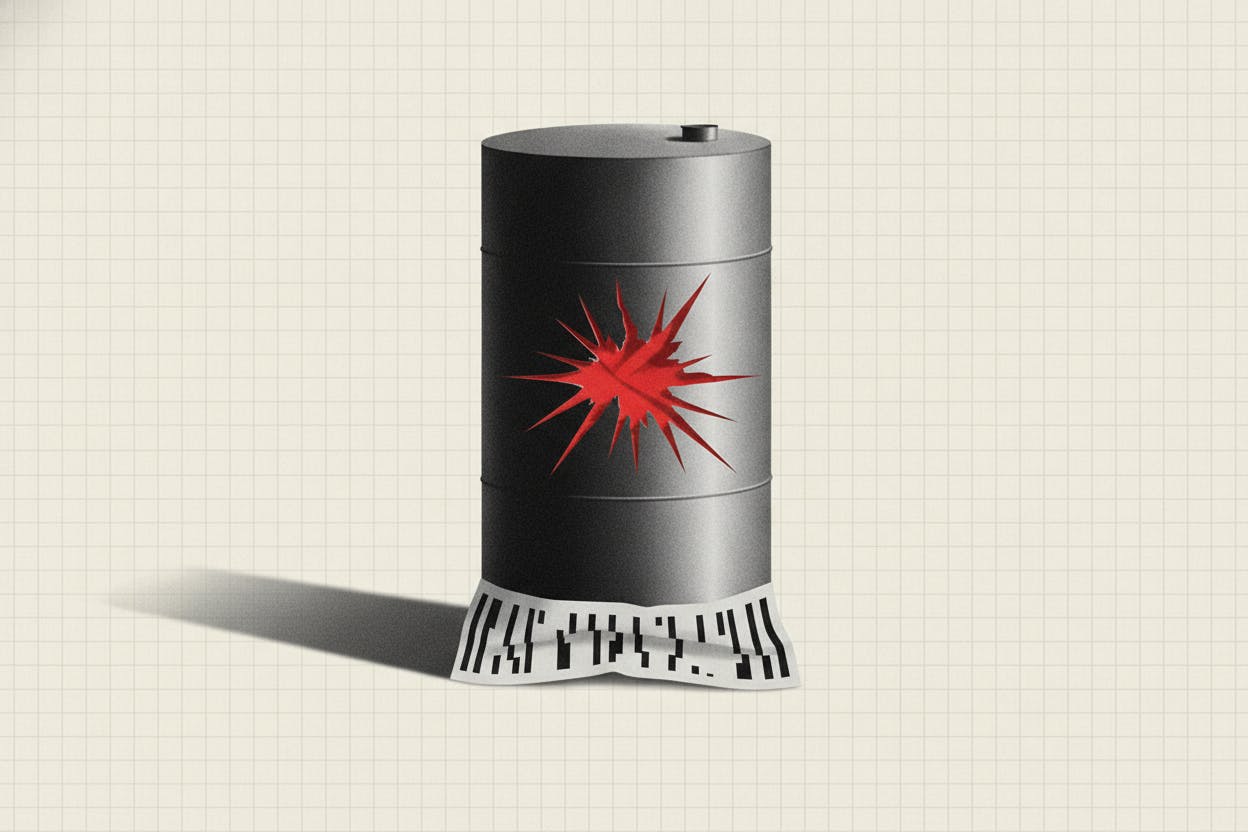
Saudi Arabia's stock market started the week on a down note Sunday, with the Tadawul All Share Index slipping 0.34% after reports that Yemen's Houthi group had struck oil-related infrastructure linked to state oil giant Saudi Aramco. The attack sent Aramco shares down 0.89%, dragging the broader index lower.
The Houthi strikes targeted oil structures on Saudi Arabia's Red Sea coast, including Aramco-owned facilities near the cities of Jizan and Yanbu, according to media reports cited by MT Newswires. The incident comes amid ongoing regional tensions that have periodically disrupted energy markets and investor sentiment in the Gulf.
Aramco's outsized influence on the Tadawul
Saudi Aramco is by far the largest company on the Tadawul, accounting for a significant portion of the index's total market capitalization. When Aramco moves, the entire market tends to follow. That dynamic was on full display Sunday: the stock's decline was the primary driver of the index's drop, even though many other stocks held steady or rose.
For investors, this concentration risk is a key feature of the Saudi market. A single geopolitical event affecting Aramco can ripple through the entire index, regardless of how other companies are performing. This is a reminder that energy sector tensions in the Middle East can have outsized effects on local benchmarks.
Export data shows a mixed picture
Alongside the market moves, new economic data released Sunday painted a complex picture of Saudi Arabia's trade performance. Total exports rose 3.9% in May compared to the same month last year, driven largely by oil shipments. However, non-oil exports fell sharply, dropping 26.1% year over year.
The decline in non-oil exports is a notable development for a country that has been aggressively pursuing economic diversification under its Vision 2030 plan. The goal is to reduce reliance on oil revenue by boosting other sectors like manufacturing, tourism, and technology. A steep drop in non-oil exports suggests that progress in diversification may be facing headwinds, possibly due to global economic slowdown or regional competition.
For everyday investors, this data matters because it signals how well Saudi Arabia's economy is adapting to a world that is gradually shifting away from fossil fuels. A sustained decline in non-oil exports could slow the pace of diversification and keep the economy more tied to oil price swings than policymakers would like.
What it means for investors
For those with exposure to Saudi stocks, the combination of geopolitical risk and mixed economic data creates a cautious backdrop. The Houthi strikes are a reminder that the region remains volatile, and any escalation could push oil prices higher while weighing on Saudi equities. Indeed, oil prices have already posted strong weekly gains as Middle East tensions persist.
On the other hand, the export data suggests that the non-oil economy is struggling to gain traction. Investors should watch for upcoming quarterly earnings reports from Saudi companies outside the energy sector to see if the weakness in non-oil exports is translating into lower profits.
It's also worth noting that the Tadawul's decline on Sunday was relatively modest. A 0.34% drop is not a panic move, and Aramco's 0.89% fall is within normal daily ranges. The market appears to be pricing in the Houthi threat as a known risk rather than a new shock. However, any further escalation could change that calculus quickly.
For global investors, the Saudi market remains a high-beta play on oil prices and Middle East geopolitics. Those who own Saudi stocks through exchange-traded funds or direct holdings should be comfortable with that volatility. As always, diversification across regions and sectors can help manage the risk of a single event—like a strike on Aramco infrastructure—hitting a portfolio too hard.
Looking ahead, the key catalysts for the Tadawul will be oil price movements, the trajectory of non-oil exports, and any further geopolitical developments. The Houthi strikes are a reminder that in the Gulf, politics and markets are never far apart.