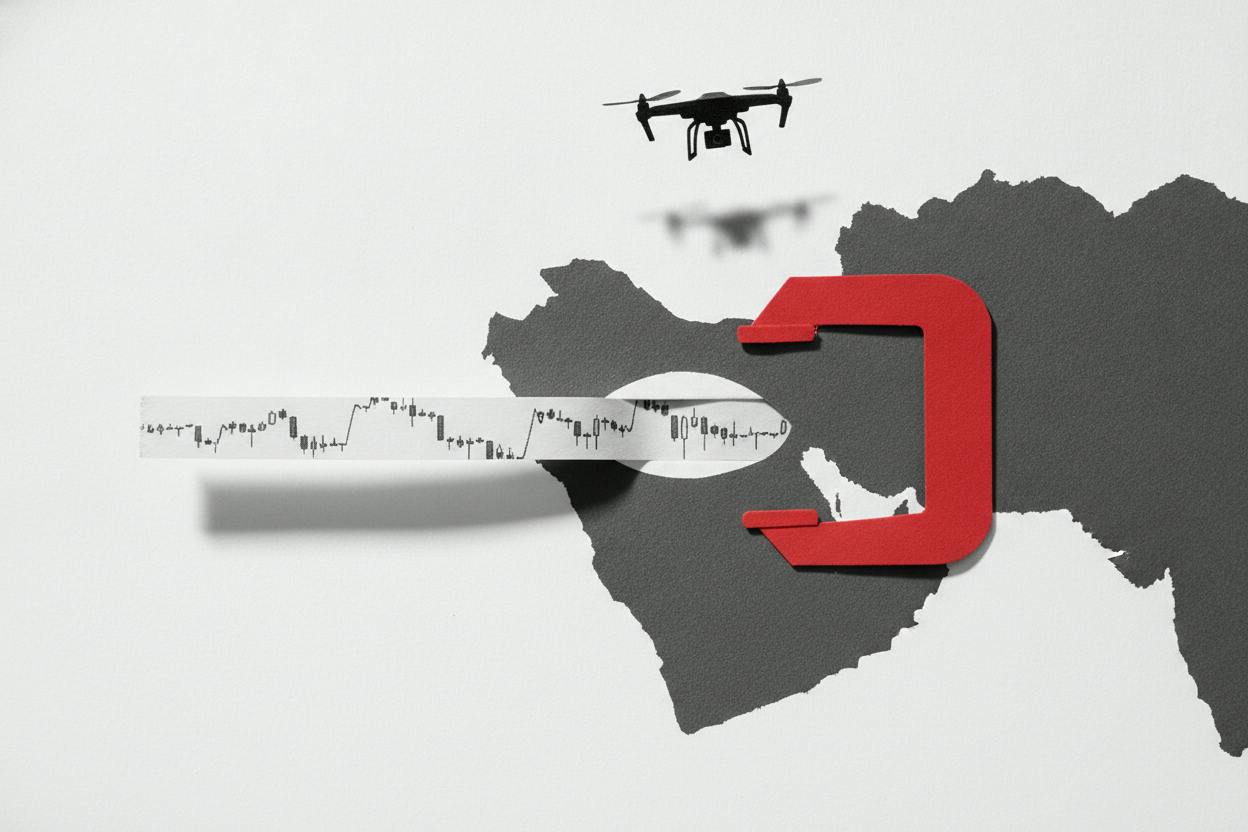
Saudi Arabia's stock market edged lower on [day], as investors weighed fresh security risks near the Strait of Hormuz against tentative hopes that diplomatic efforts could ease tensions. The Tadawul All Share Index slipped 0.11%, a modest decline that reflected the cautious mood across Gulf markets.
What happened
Reports emerged of an intercepted drone attack in Bahrain, adding to a series of incidents that have kept the region on edge. The attack, which was reportedly thwarted, underscored the persistent threat to shipping and infrastructure in the Gulf. At the same time, there were signs that de-escalation talks could resume, offering a glimmer of hope for investors looking for a reduction in hostilities.
The Strait of Hormuz is a critical chokepoint for global oil supplies, with a significant portion of the world's crude passing through its waters. Any disruption there can have immediate implications for energy prices and, by extension, for markets worldwide. For Saudi Arabia, the region's largest economy, stability in the strait is particularly important given its reliance on oil exports.
Why it matters for investors
For everyday investors, the key takeaway is that geopolitical risk in the Gulf remains a live factor. When tensions flare near Hormuz, oil prices often spike, which can boost energy stocks but also raise concerns about inflation and global growth. Conversely, any sign of de-escalation tends to calm markets and support risk appetite.
The modest decline in the Tadawul index suggests that investors are not panicking, but they are also not fully confident that the situation will resolve quickly. The cautious optimism about talks is a positive signal, but it is tempered by the reality that such negotiations can be fragile and easily derailed.
Broader Gulf market context
The Saudi move was not isolated. Gulf markets have been sensitive to Hormuz-related headlines for weeks, with tanker attacks near the strait keeping oil risk in focus. In recent sessions, some regional bourses have diverged, with UAE stocks rising as shipping fears eased despite continued incidents. That divergence highlights how quickly sentiment can shift based on the latest news.
For Saudi investors, the domestic market's performance is also tied to oil prices, government spending, and the pace of economic diversification under Vision 2030. While geopolitical headlines can cause short-term volatility, the longer-term outlook for Saudi stocks depends on these broader fundamentals.
What to watch next
Investors will be closely monitoring any developments in the Strait of Hormuz, including diplomatic efforts and any further incidents. Oil price movements will be a key indicator, as they often reflect the market's assessment of risk. Additionally, any official statements from regional governments or international bodies could provide clarity on the likelihood of de-escalation.
For those with exposure to Saudi or Gulf equities, it may be wise to stay informed but avoid making impulsive decisions based on daily headlines. Geopolitical events can create volatility, but they also tend to be short-lived unless they escalate into a sustained conflict. As always, a diversified portfolio can help cushion against such shocks.
In the meantime, the Tadawul's slight dip is a reminder that even small moves can carry significant information about investor sentiment. The market is clearly pricing in a degree of risk, but not enough to trigger a sell-off. That balance could change quickly if the situation deteriorates or improves.
For now, the cautious tone in Riyadh mirrors the broader uncertainty across the region. Investors are hoping for a diplomatic breakthrough, but they are also preparing for the possibility of further disruptions. The coming days will likely provide more clarity on which scenario is more probable.