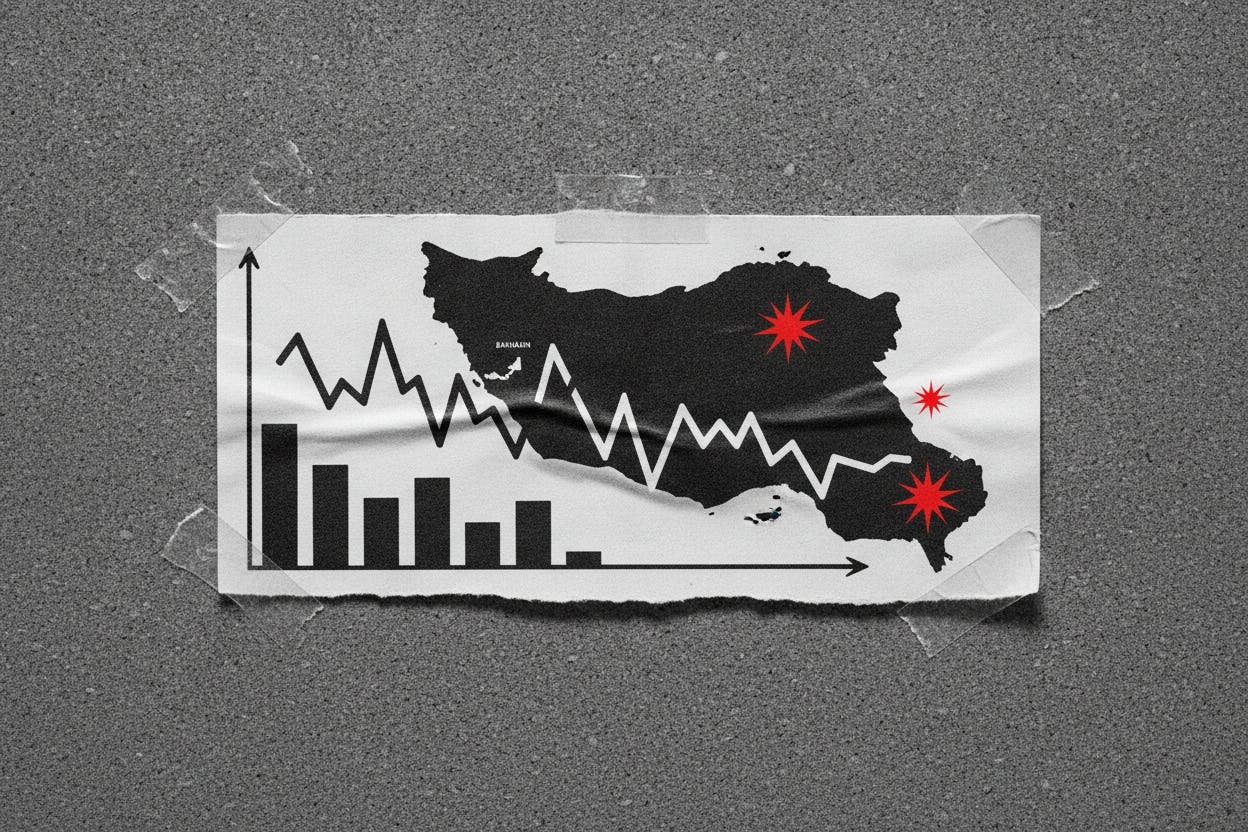
Saudi Arabia's stock market opened the week on a cautious note, with the Tadawul All Share Index (TASI) falling 0.23% on Sunday. The decline came as fresh military exchanges between the United States and Iran shattered hopes that an interim peace deal would hold, prompting investors to reassess the risks tied to the region.
The move was driven by geopolitics rather than corporate earnings. Iran launched retaliatory strikes on US military targets in Bahrain and Kuwait after President Donald Trump warned of possible military action. Both sides accused each other of violating the interim agreement, escalating tensions that had briefly eased in recent weeks.
Why Geopolitical Tensions Hit Stocks
When geopolitical uncertainty spikes, investors typically demand a higher risk premium — the extra return they require to hold stocks instead of safer assets like government bonds. That higher required return can push stock prices lower, especially in markets perceived as closer to potential fallout. Saudi Arabia, as a key regional player and oil producer, is particularly sensitive to such developments.
The TASI index includes major companies such as Saudi Aramco, banks, and petrochemical firms. A broad-based decline suggests the selling was widespread, reflecting a general shift in sentiment rather than company-specific news. The index had been supported earlier this year by hopes of de-escalation and steady oil prices, but the latest attacks have reintroduced uncertainty.
This is not the first time this year that geopolitical jitters have weighed on global markets. In a similar pattern, the S&P 500 dropped 2% as AI stocks slid on Iran ceasefire doubts, showing how interconnected markets have become. When tensions flare in the Middle East, investors often sell first and ask questions later, particularly in sectors like technology that are sensitive to global growth expectations.
What It Means for Investors
For everyday investors, the key takeaway is that geopolitical events can create short-term volatility, but they rarely change the long-term fundamentals of most companies. The Saudi market's decline on Sunday was modest — less than a quarter of a percent — suggesting that while caution is warranted, panic is not.
Investors should watch for further developments in US-Iran relations, as any escalation could push oil prices higher and increase costs for businesses worldwide. Higher oil prices can benefit energy companies but hurt sectors like airlines and manufacturing. Conversely, a return to diplomacy could quickly reverse the selling pressure.
It is also worth noting that the interim peace deal was never fully cemented, and both sides have continued to trade accusations. This pattern of brief calm followed by renewed tension has become familiar to markets. As a result, some investors may choose to reduce exposure to regionally sensitive stocks until a clearer picture emerges.
For those with diversified portfolios, a single day's move in one index is rarely a reason to act. The broader context — including interest rates, corporate earnings, and global economic data — remains more important for long-term returns. Recent reports, such as the jobs report that could reignite Fed rate hike talk, show that central bank policy continues to be a major driver of market direction.
Broader Market Context
The Saudi market's decline also comes amid a mixed picture for global equities. US stocks have been volatile, with tech stocks sliding on concerns about AI spending and trade tensions. The Trump administration's 100% tariff threat on digital taxes has added another layer of uncertainty for multinational companies.
Meanwhile, energy markets remain on edge. Any disruption to shipping routes in the Persian Gulf, such as the recent Strait of Hormuz incident that revived shipping jitters, can have immediate effects on oil prices and, by extension, stock markets in the region.
Investors should also keep an eye on the US dollar and Treasury yields, as safe-haven flows often strengthen the dollar when geopolitical risks rise. A stronger dollar can weigh on emerging markets, including Saudi Arabia, by making their exports more expensive and reducing the value of foreign investment.
Looking Ahead
The coming days will be critical for the Saudi market. If the attacks subside and both sides return to the negotiating table, the TASI could recover quickly. However, if the situation escalates further, the index could face additional pressure. Investors should monitor official statements from both governments and any developments in oil markets for clues about the next move.
For now, the message from the market is clear: uncertainty is back, and investors are pricing in a higher risk premium. Whether that premium remains elevated or fades will depend on whether the interim peace deal can be revived — or if the region slides back into a cycle of retaliation.