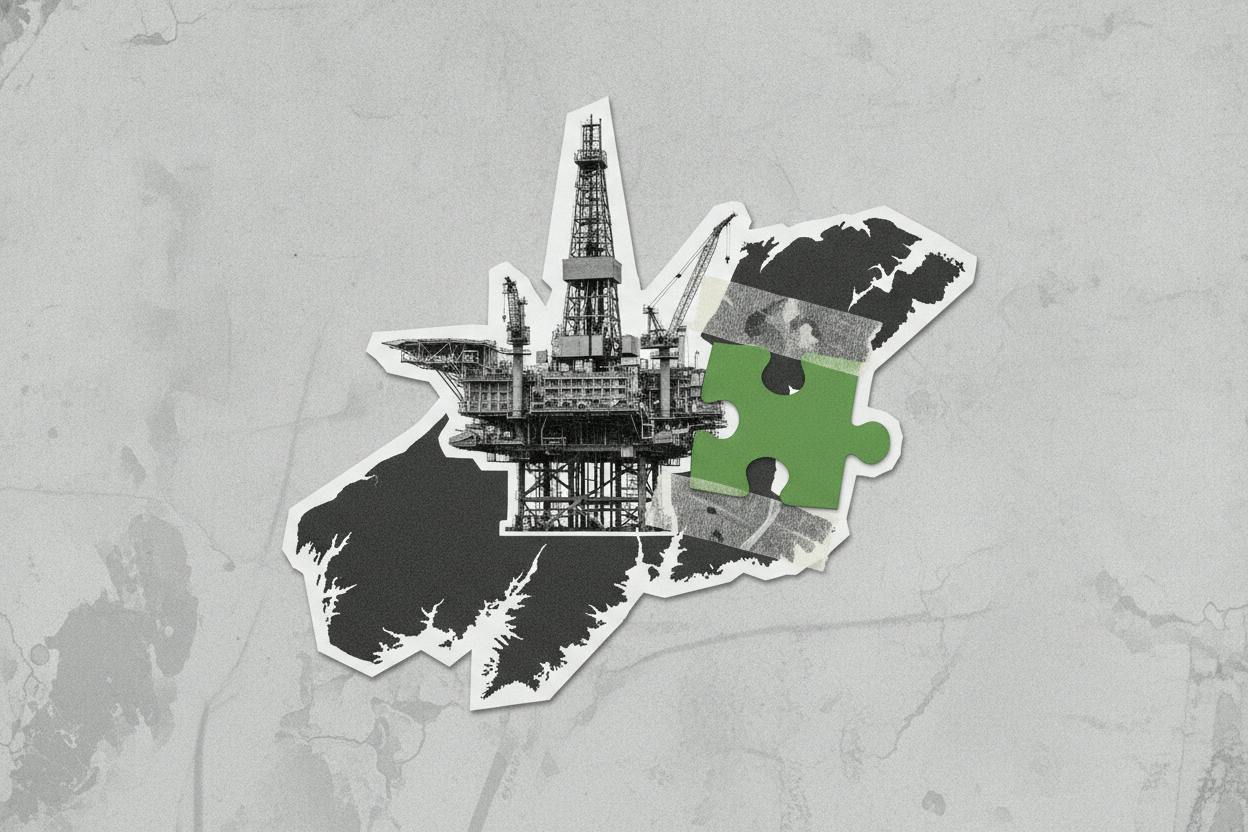
Shell has agreed to acquire a 30% stake in Equinor's Bay du Nord offshore oil project in Canada, marking one of several notable deals announced on Friday. The move gives Shell a non-operating interest in a major development off the coast of Newfoundland and Labrador, a region that has become a focal point for Atlantic Canadian oil production.
The deal is part of a broader wave of merger and acquisition activity that also included BASF weighing a richer offer for specialty chemicals maker Evonik, and DCC Energy selling its Nexora business for $725 million. Together, these transactions illustrate how companies across different industries are using M&A to reposition themselves for the future.
What is Bay du Nord?
Bay du Nord is a large offshore oil field located in the Flemish Pass Basin, about 500 kilometers east of St. John's, Newfoundland. Equinor, the Norwegian state-owned energy company, has been developing the project for years, and it is expected to be one of the largest new oil developments in Canada. The project has faced environmental scrutiny and regulatory hurdles, but it remains a key part of Equinor's international portfolio.
By taking a 30% stake, Shell becomes a significant partner in the project without taking on the operator role. That structure is common in the oil and gas industry, where companies often share risk and capital costs while one partner manages day-to-day operations. For Shell, the deal provides access to long-term production growth in a politically stable region, complementing its existing operations in Canada and elsewhere.
Why energy majors are swapping assets
The Bay du Nord deal fits a broader pattern among energy majors. Rather than simply growing or shrinking, companies like Shell and Equinor are constantly rebalancing their portfolios to match near-term cash flow with future production needs. This often means selling mature assets that generate steady income today while buying into projects that will produce years down the line.
Shell, for example, has been reporting record refining margins recently, which boosts its short-term profitability. But refining margins are cyclical, and the company needs to ensure it has enough oil and gas reserves to replace what it pumps out each year. Buying into Bay du Nord is a way to secure future supply without taking on the full cost and risk of developing a new field from scratch.
Equinor, meanwhile, is selling a stake in a project it still controls, raising capital that can be used for other priorities, including renewable energy and lower-carbon investments. This kind of asset rotation is standard practice for large energy companies, and it often accelerates when oil prices are volatile or when companies face pressure from investors to improve returns.
M&A activity across sectors
Friday's roundup showed that dealmaking is not confined to the energy sector. In chemicals, BASF, Germany's largest chemical company, is reportedly considering a higher offer for Evonik, a specialty chemicals maker. Such a deal would create a giant in the European chemicals industry, potentially reshaping competition in markets ranging from coatings to additives. The talks are still preliminary, and no final decision has been made, but the fact that BASF is willing to sweeten its bid suggests it sees strategic value in combining with Evonik.
In the energy services space, DCC Energy agreed to sell Nexora for $725 million. Nexora provides energy efficiency and sustainability solutions, and the sale reflects DCC's strategy of focusing on its core distribution businesses. The price tag underscores the growing demand for companies that help businesses cut their carbon footprint, a trend that has attracted both strategic buyers and private equity investors.
What it means for investors
For everyday investors, the flurry of M&A activity is a reminder that corporate dealmaking can have a direct impact on share prices. When a company like Shell announces a stake acquisition, investors often look at whether the price paid is reasonable and whether the deal will add to earnings per share over time. In this case, the financial terms of the Bay du Nord transaction were not disclosed, so it is difficult to assess the immediate financial impact.
However, the strategic logic is clear: Shell is positioning itself for long-term production growth in a stable jurisdiction. For investors holding Shell shares, this deal is likely to be viewed as a positive, as it addresses one of the key risks facing oil majors—the depletion of reserves. It also signals that Shell is willing to invest in oil projects even as it pursues its energy transition strategy, a balance that many investors are watching closely.
For those invested in Equinor, the sale of a stake in Bay du Nord frees up capital and reduces risk, which could support dividends or share buybacks. The deal also demonstrates that Equinor can monetize its project pipeline, a sign of financial discipline.
More broadly, the M&A activity across sectors suggests that companies are confident enough in their balance sheets to make large strategic moves. That confidence can be a positive signal for the overall market, though investors should always consider the specific risks of each deal.
Looking ahead
Investors will be watching for further details on the Shell-Equinor deal, including the final price and expected closing date. They will also keep an eye on the BASF-Evonik talks, which could have significant implications for the chemicals sector. And with oil prices remaining elevated, energy M&A is likely to stay active as companies look to secure reserves and optimize their portfolios.
For now, Friday's roundup shows that dealmaking is alive and well, driven by strategic needs rather than mere expansion. Whether it's an oil major buying into a new field or a chemical giant pursuing a rival, these moves are designed to position companies for the challenges and opportunities ahead.