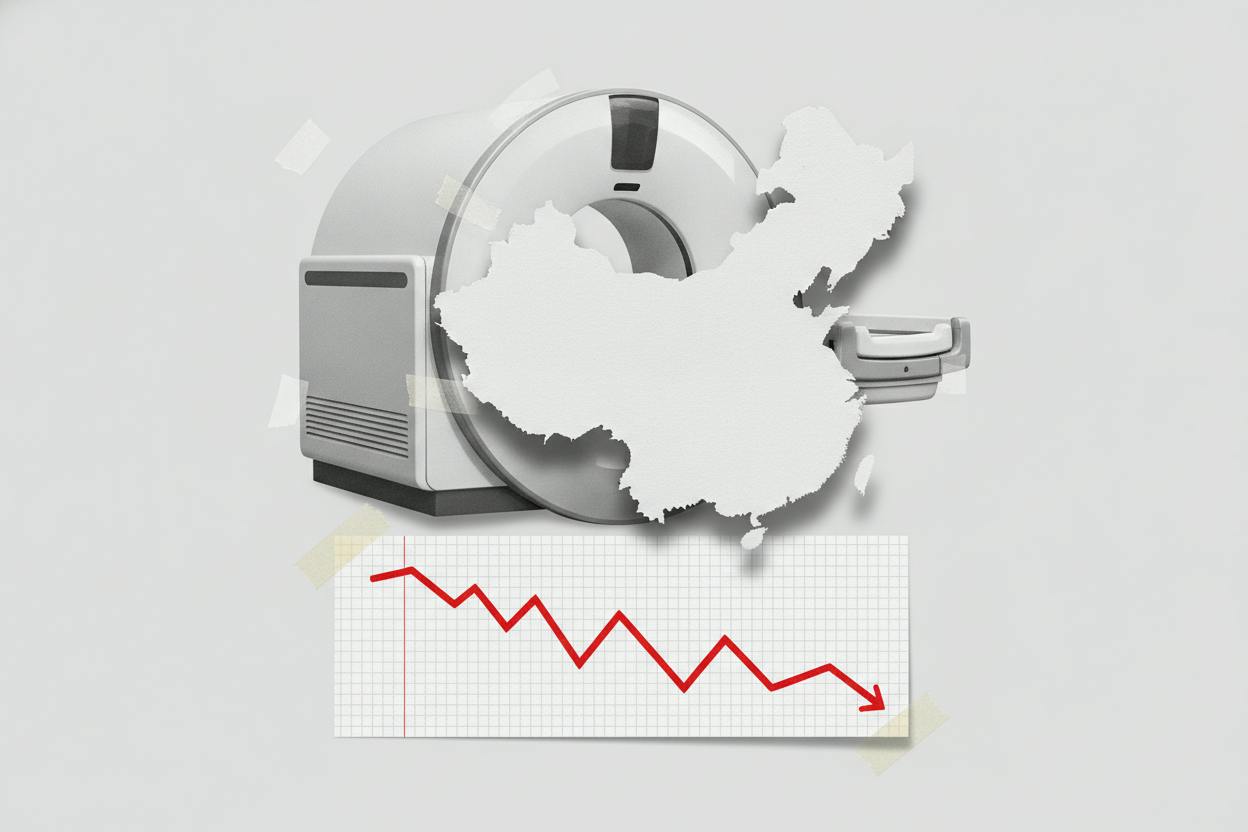
German medical-technology company Siemens Healthineers has signaled that fiscal 2027 will be a slower year, with persistent weakness in China continuing to pressure its diagnostics division. The company told investors to expect comparable revenue growth of 4% to 5% for the fiscal year, a range that falls short of the roughly 5.5% that analysts had been forecasting.
The guidance, released alongside the company's latest earnings update, also included an adjusted earnings per share (EPS) forecast of €2.20 to €2.40 for fiscal 2027. That compares with the €2.37 analysts had penciled in and the €2.42 the company expects to report for fiscal 2026. Adjusted EPS excludes one-off items, giving a clearer picture of underlying profitability.
Why China matters for Siemens Healthineers
China has long been a key growth market for medical-technology companies, including Siemens Healthineers. The country's large and aging population drives demand for imaging equipment, laboratory diagnostics, and other medical devices. But in recent years, that demand has cooled. A combination of slower economic growth, tighter healthcare budgets, and a government anti-corruption campaign that has delayed hospital purchasing decisions has weighed on sales.
For Siemens Healthineers, the impact has been most acute in its diagnostics unit, which makes blood-testing equipment and reagents. Hospitals and labs in China have been slower to place orders, and the company has had to adjust its expectations accordingly. The weakness is not new—it has been a recurring theme in the company's recent earnings calls—but the fact that it is still dragging on the outlook for fiscal 2027 suggests the recovery may take longer than many hoped.
Investors have been watching closely to see whether China's demand would bounce back. The company's guidance implies that it does not expect a sharp rebound anytime soon. Instead, it is planning for a more gradual improvement, with growth in other regions helping to offset the Chinese shortfall.
What the guidance means for investors
For everyday investors, the key takeaway is that Siemens Healthineers is growing, but not as fast as the market had hoped. A 4%-5% revenue growth rate is still respectable for a large, established medical-technology firm, but it is below the pace that analysts had built into their models. That gap is often enough to disappoint investors, and the company's shares could come under pressure as a result.
The adjusted EPS guidance also points to a modest decline from fiscal 2026 levels. At the midpoint of €2.30, that would be below the €2.42 expected for the current year. That suggests that while revenue is growing, profitability may be squeezed—possibly due to higher costs, investments in new products, or the mix of sales shifting toward lower-margin items.
It's worth noting that guidance is just a forecast, and companies often set conservative targets that they later beat. But the fact that Siemens Healthineers is guiding below consensus is a signal that management sees real headwinds, not just a desire to lowball expectations.
Broader context: medtech and the China slowdown
Siemens Healthineers is not alone in facing China-related challenges. Many global healthcare and technology companies have cited weaker demand from China as a drag on their results. The country's economic slowdown, combined with policy changes aimed at reducing healthcare costs, has made it a tougher market for foreign firms.
For the broader medical-technology sector, the news is a reminder that growth is not guaranteed, even for industry leaders. Companies that have relied on China for a significant portion of their sales may need to diversify or find other growth engines. In Siemens Healthineers' case, the company has been investing in areas like artificial intelligence for imaging and expanding its presence in other emerging markets.
Investors who hold Siemens Healthineers stock—or who are considering it—should watch how the company navigates the coming year. Key things to monitor include whether China demand stabilizes, how the diagnostics unit performs relative to expectations, and whether the company can maintain its profit margins while investing for the future.
What to watch next
The company's full fiscal 2026 results, due later this year, will provide more detail on how the current year is shaping up. Investors will also be listening for any updates on China's recovery and whether the company's other divisions—such as imaging and advanced therapies—can pick up the slack.
For now, the message from Siemens Healthineers is clear: fiscal 2027 will be a year of slower growth, and China remains the key variable. As with any investment, it's important to consider how this fits into your overall portfolio and risk tolerance. The company's fundamentals remain solid, but the near-term outlook is more cautious than many had expected.
For more on how companies are navigating slower growth, see our coverage of Datadog's cautious outlook and Booking's mixed signals. And for a look at how other firms are dealing with China exposure, check out Zydus Lifesciences' earnings.