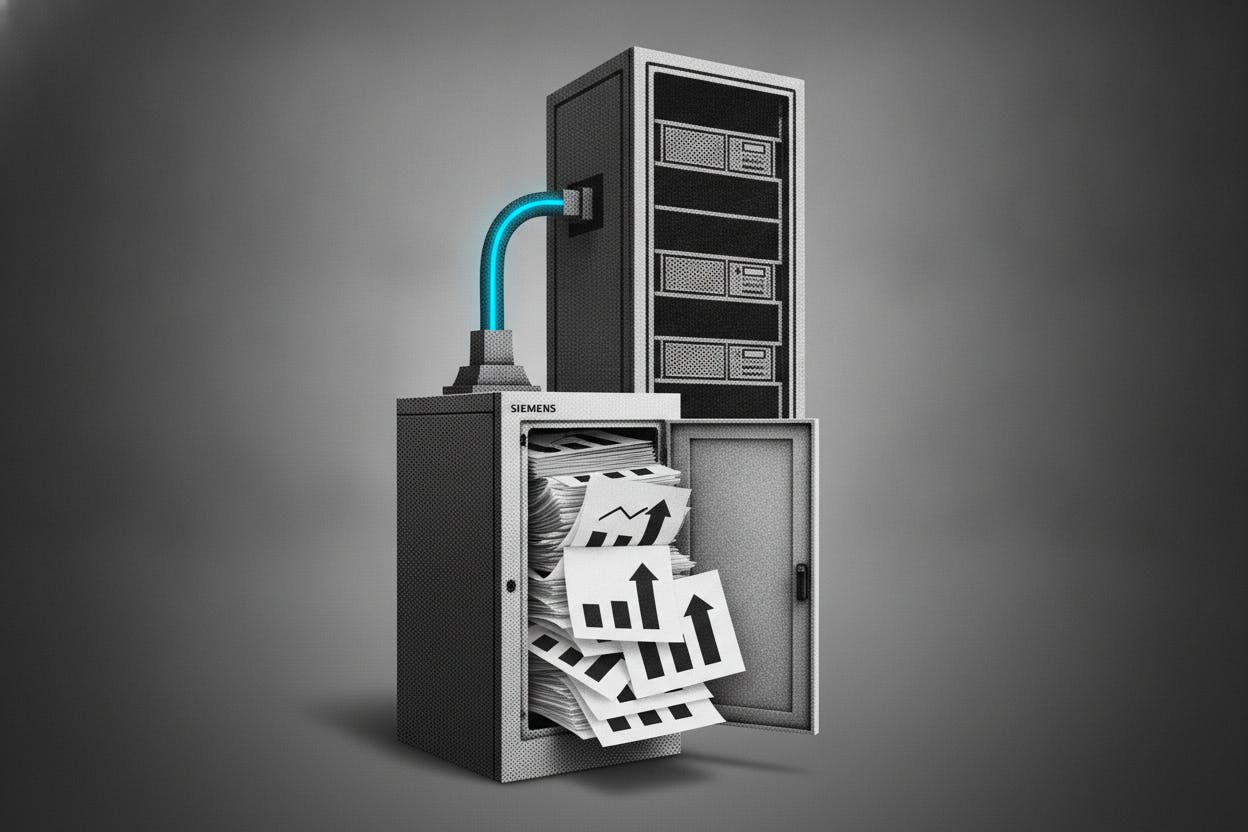
German industrial giant Siemens said Tuesday that the global boom in artificial intelligence data centers is spilling into its factory-automation business, helping it post a record quarterly profit and lift its full-year earnings forecast.
For the quarter ending in June, Siemens reported industrial profit of €3.52 billion, up 25% from a year earlier and comfortably above the €3.18 billion consensus compiled by the company. Revenue rose 7% to €20.79 billion, while orders jumped 13% to a record €27.90 billion—a sign that customers are still spending even as the broader manufacturing economy wobbles.
Why AI data centers matter for Siemens
Siemens is best known for making factory automation equipment, trains, and industrial software. But its automation division also supplies the electrical and digital infrastructure that data centers need—from power distribution gear to building management systems. As tech giants and cloud providers race to build AI data centers, that part of the business is seeing a surge in demand.
The company said the AI-driven construction wave is feeding directly into its factory-automation unit, which has been a drag in recent quarters as manufacturers in Europe and China pulled back on spending. Now, with data center operators placing large orders for electrical equipment and automation, Siemens is seeing a fresh source of growth.
That helps explain why orders hit a record level even as the global manufacturing sector remains choppy. For everyday investors, it's a reminder that demand for AI infrastructure isn't just about chipmakers—it's rippling through the broader industrial economy.
What the numbers show
The quarterly results beat expectations on both profit and revenue. The 25% jump in industrial profit was driven by strong margins in its digital industries and smart infrastructure divisions, which benefit from data center spending. Revenue growth of 7% was solid, though slightly below the double-digit pace some investors had hoped for.
The company also raised its full-year earnings per share guidance, a sign that management expects the momentum to continue. While Siemens didn't provide a new specific EPS figure in the release, the upgrade signals confidence in the second half of its fiscal year.
Investors will likely watch whether the AI-driven demand can offset weakness in traditional manufacturing markets, especially in China and Europe, where factory activity has been subdued.
What it means for investors
For investors, the key takeaway is that AI infrastructure spending is broadening beyond the tech sector. Companies like Siemens, which provide the physical backbone for data centers, are starting to see the benefits in their order books. That's a positive signal for the broader industrial sector, though it also raises questions about how long the boom can last.
Siemens' results echo those of other companies benefiting from data center demand. For example, Schneider Electric recently lifted its outlook on similar strength, and Texas Pacific Land has seen record royalty output from energy-intensive operations. Even in Asia, miners are rallying on copper demand, partly tied to electrification and data center construction.
However, investors should be cautious. The AI trade has been volatile, with recent selloffs in chip stocks highlighting how quickly sentiment can shift. If AI spending slows, companies like Siemens could see orders fade just as quickly as they surged.
For now, Siemens' record orders and raised guidance suggest that the AI infrastructure buildout is still in full swing. But as with any boom, the key question is sustainability. Investors should watch whether order growth continues in the coming quarters and whether the company can convert those orders into profits.
In the meantime, Siemens' results offer a useful reminder: the AI revolution isn't just about software and chips—it's also about the physical equipment that makes it all work.