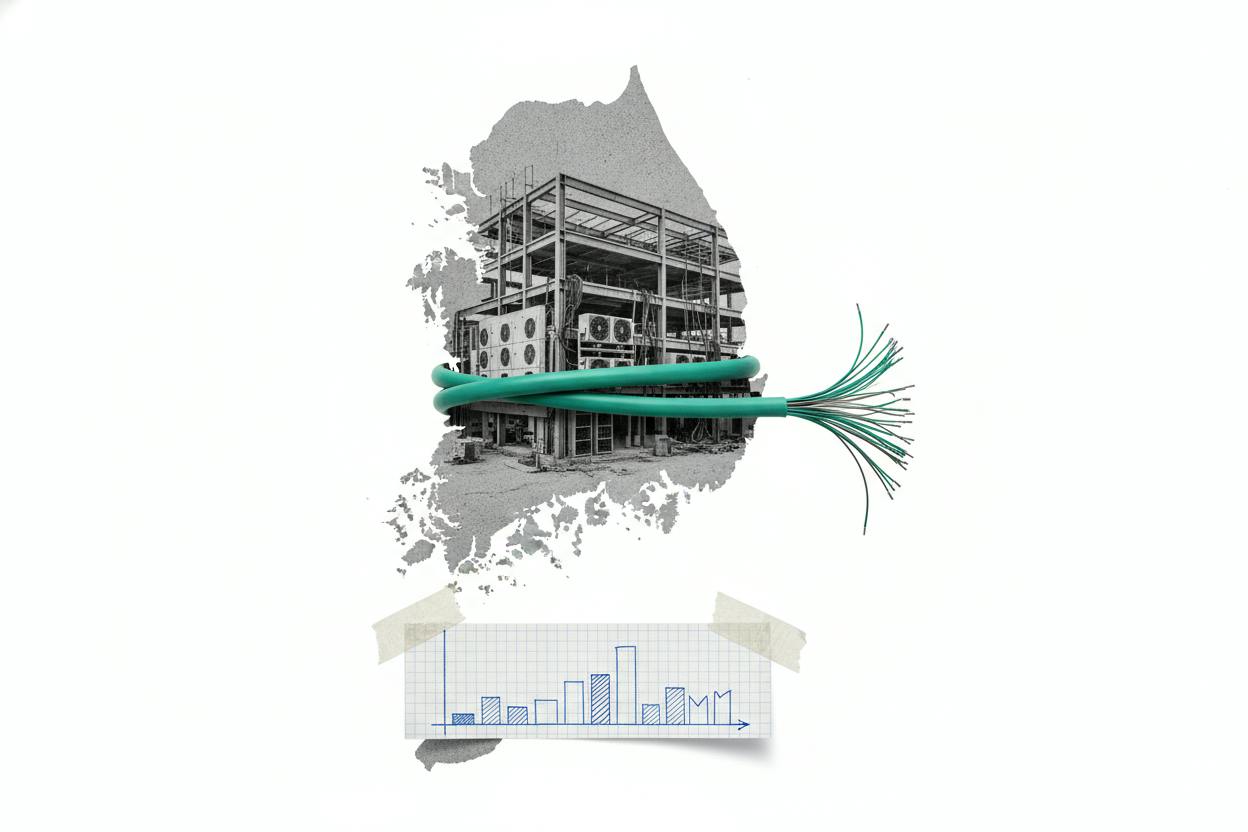
South Korean President Lee Jae-myung visited the construction site of a massive AI data center in Ulsan, jointly built by SK Group and Amazon Web Services (AWS), and urged the companies to move faster. The message was simple: in the race to dominate artificial intelligence, whoever builds computing capacity first gains a decisive edge.
The project, with a budget of 7 trillion won (about $5.2 billion), is targeting a start in the second half of 2027. By 2029, the first phase aims to deliver 103 megawatts of capacity, with a much larger expansion planned later, according to SK Group Chair Chey Tae-won.
Why data centers matter for AI
Data centers are the physical warehouses for the computing power that AI models rely on. They house thousands of servers, networking gear, and cooling systems, and they consume enormous amounts of electricity. For countries and companies alike, building these facilities is seen as essential to staying competitive in AI.
The Ulsan project is part of South Korea's broader push to expand AI infrastructure beyond the capital region. The science ministry has confirmed the 7 trillion won budget through 2029, underscoring the scale of the investment.
But President Lee also flagged a less obvious constraint: skilled construction labor. Even with around 900 workers already on site, he said advanced facilities are short of specialized tradespeople. He urged government ministries to consider training programs for data-center and AI infrastructure jobs.
The labor bottleneck that could delay everything
In large construction projects, the headline budget rarely determines the timeline. What usually causes delays is the sequencing of specialized work, especially at the end of the build. For data centers, the critical path includes electrical and mechanical fit-out, and what's called “commissioning” — the process of proving that all systems work safely together before the building can go live.
These tasks require highly skilled electricians, pipefitters, and project managers. If those workers aren't available when needed, the entire schedule can slip. President Lee's comments suggest that even with a huge budget and a visible workforce, the project could face delays if the labor pool doesn't keep up.
This is a familiar challenge for big tech and industrial projects. They rarely stall because the money runs out; they stall because the right people aren't in the right place at the right time.
What it means for investors
For investors, the Ulsan project is a reminder that AI's growth isn't just about chips and software. It's also about physical infrastructure — and the people who build it. The project's success could signal how quickly South Korea can expand its AI capabilities, which in turn affects demand for semiconductors, grid connections, and other related industries.
If the labor bottleneck worsens, Ulsan could miss its 2027 start or ramp up more slowly toward the 103 megawatts planned by 2029. That would be a setback for SK Group and AWS, but also for South Korea's broader ambitions to become a global AI hub.
For everyday investors, the takeaway is that AI's promise is tied to practical realities like construction schedules and workforce availability. As AI's power use jumps, the demand for data centers will only grow, but so will the challenges of building them.
The Ulsan project is one to watch, not just for its size, but for what it reveals about the bottlenecks that could shape the AI race. As recent market moves show, investors are paying close attention to whether the AI boom can sustain its momentum.
For now, the race is on — and it's not just about money. It's about electricians, pipefitters, and project managers as much as it is about chips and capital.