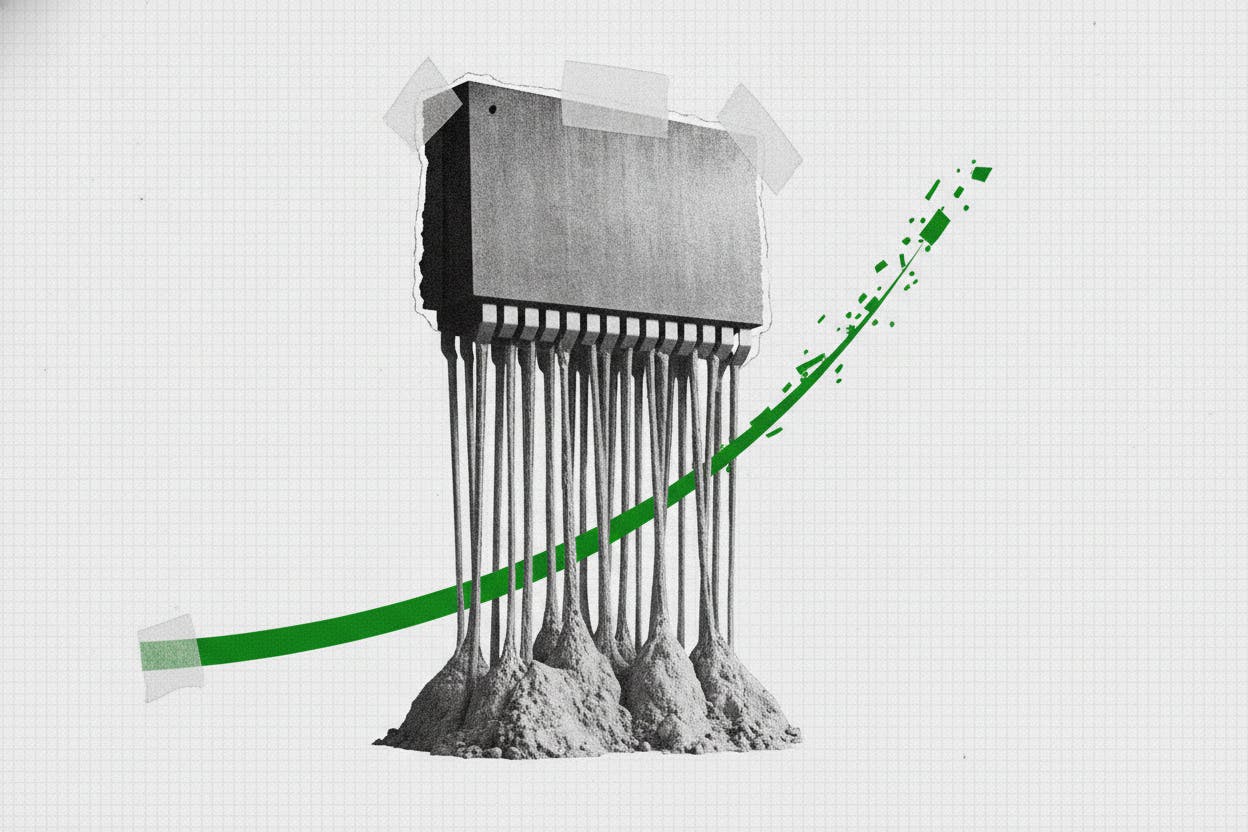
South Korean chipmaker SK Hynix has laid out fresh details on a massive 100 trillion won (about $64 billion) expansion plan in Cheongju, committing to build a new NAND flash memory factory and an advanced packaging plant. The announcement comes as the company doubles down on its bet that demand from artificial intelligence servers will continue to fuel memory chip needs, even as some investors grow wary that the AI spending spree may be peaking.
What SK Hynix Is Building
According to a Reuters report, SK Hynix plans to spend 80 trillion won on a new NAND flash memory factory in Cheongju, with construction of the facility—dubbed M17—set to begin next year and production expected to ramp up by 2029. An additional 20 trillion won will go toward an advanced packaging plant, which is slated for completion by late 2027. Advanced packaging is a critical step in chip manufacturing that involves stacking and connecting multiple chips together, a technique increasingly important for high-performance AI processors.
NAND flash memory is the type of chip used in solid-state drives (SSDs), USB drives, and memory cards. It retains data even when power is off, making it essential for data storage in everything from smartphones to data centers. SK Hynix is one of the world's largest producers of both NAND and DRAM (dynamic random-access memory, used in computers and servers), competing directly with Samsung Electronics and Micron Technology.
The AI Demand Story—and the Cyclical Risk
The expansion is a clear bet that the AI boom will keep driving demand for memory chips. AI servers require vast amounts of both NAND for storage and DRAM for fast data processing, and a tight market has recently pushed prices for both types of memory to record levels, according to Reuters. SK Hynix has been a key supplier to AI chip leader Nvidia, and its high-bandwidth memory (HBM) products have been in strong demand.
But memory chip manufacturing is famously cyclical. Building and qualifying new factories takes years, meaning that new supply tends to come online in large waves—often just as demand starts to cool. That classic boom-bust pattern is now creating tension in the market. Some investors are questioning whether the current AI infrastructure buildout is happening too quickly, potentially leading to oversupply down the road. That concern has recently weighed on chip stocks, including SK Hynix, as seen in broader market moves like the 8% tumble in South Korean stocks earlier this year.
SK Hynix has sounded confident about the outlook, but the company has also acknowledged in regulatory filings that plans could change if customer spending shifts, overall chip demand weakens, or construction timelines slip, Reuters noted.
What It Means for Investors
For everyday investors, this announcement is a reminder of the long lead times in the semiconductor industry. The new NAND factory won't start producing chips until 2029, and the packaging plant is still years away. That means today's tight supply conditions can coexist with a potential future glut—and the market will have to wait years to see which scenario plays out.
If AI demand growth slows before that 2027-2029 wave of new capacity arrives, memory makers typically try to defend prices by cutting factory utilization—essentially producing less. That can help stabilize selling prices, but it doesn't erase heavy fixed costs like depreciation and start-up inefficiencies, which can still squeeze profit margins. The key question for SK Hynix—and its rivals Samsung Electronics and Micron—is whether the AI-driven demand story stays strong long enough to absorb the new capacity on schedule.
Investors should also keep an eye on broader economic signals that could affect chip demand. For instance, South Korea's inflation rate hit 3.2% earlier this year, which could influence interest rates and, in turn, corporate spending on technology. Additionally, the shift in AI enthusiasm toward chipmakers has been a notable trend, but rising debt costs for software firms could eventually dampen overall tech investment.
SK Hynix's massive bet is a high-stakes wager on the future of AI. For now, the company is betting big that the boom will last long enough to fill those new factories.