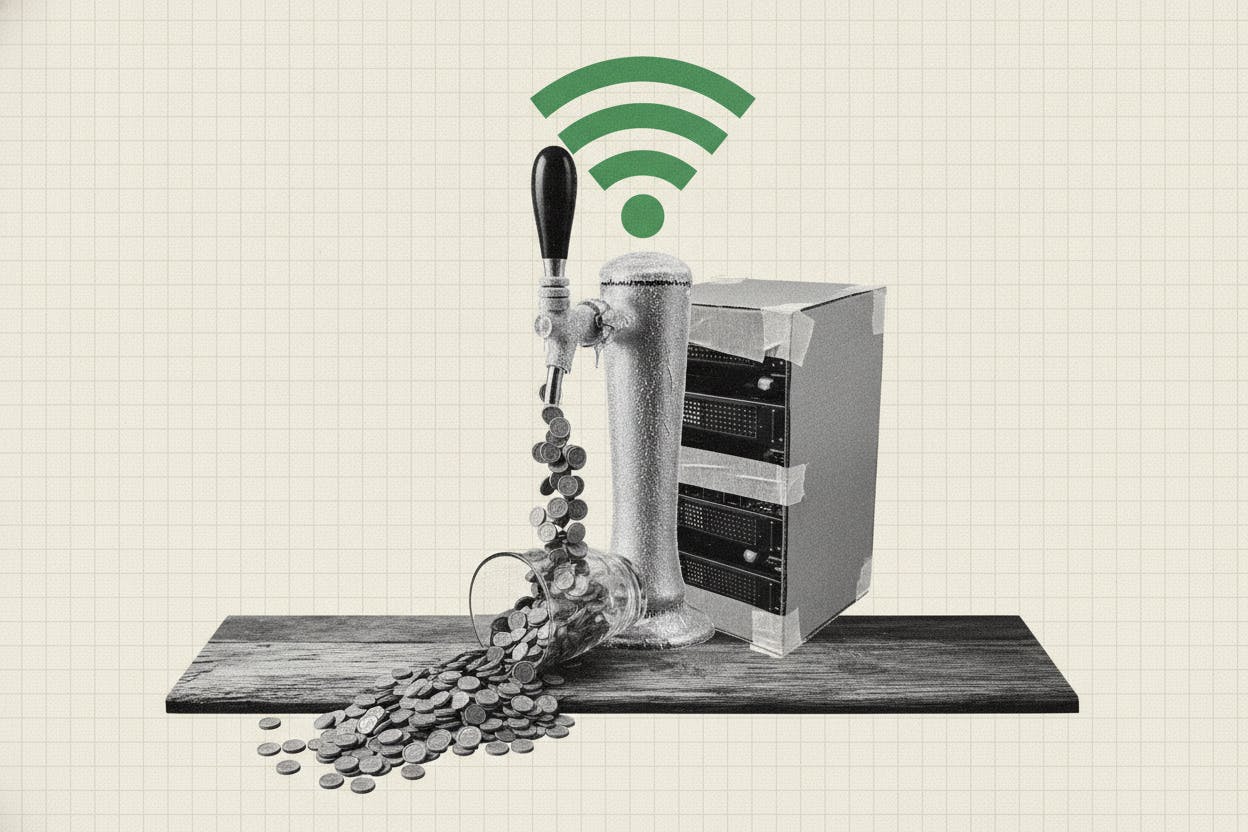
In the heart of Beijing's Zhongguancun district—often called China's Silicon Valley—a new kind of hangout is drawing in the city's AI developers, students, and investors. AGI Bar, which opened last year, has become a meetup spot where the drinks come with a side of cutting-edge computing power. Patrons can connect to the bar's AI agent and tap into "free unlimited" DeepSeek tokens for coding, all powered by two on-site Nvidia DGX Spark computers.
The concept is unusual, even for a tech hub known for its quirky startups. Owner Song De frames it as a bet that "AI should be like WiFi"—a utility people expect to be there when they sit down. But he also admits the bar is "completely losing money."
What's the Big Idea?
AGI Bar is more than just a place to grab a beer. It's a physical infrastructure play, a space where the line between a social venue and a cloud computing provider blurs. For the price of a drink, developers get access to powerful AI models that would otherwise cost money to use. The two Nvidia DGX Spark computers on-site are the engine room, enabling the bar to offer this service without relying on external cloud providers.
This approach taps into a broader trend in China's AI ecosystem, where open models and accessible tools are increasingly seen as key to competing with US dominance. Beijing has been pushing for open-source AI development, and China's push for open models is part of a larger strategy to counter US leadership in the field.
DeepSeek, the company behind the tokens, has been making waves with its cost-effective models. The company has recently raised prices on some of its offerings, hinting at a shift in its low-cost strategy. Yet, at AGI Bar, the tokens are free, a deliberate choice to build a community and demonstrate the utility of AI in everyday settings.
Why It Matters for Investors
For everyday investors, AGI Bar is a microcosm of a larger debate in the tech world: how will AI companies make money? DeepSeek has been pausing a $74 billion fundraise and eyeing a Shanghai IPO, signaling that even successful AI startups are still figuring out their business models. The bar's willingness to give away tokens for free is a bet that the long-term value of AI adoption outweighs the short-term costs.
But it's also a cautionary tale. The owner's admission that the bar is losing money highlights the challenges of monetizing AI infrastructure. For investors, this raises questions about the sustainability of companies that rely on heavy upfront investment in hardware and free giveaways to attract users.
"It's like the early days of the internet," says a tech analyst who frequents the bar. "People were giving away free email and free web hosting, and it took years for anyone to figure out how to make money from it. AI might be going through the same phase."
What to Watch Next
Investors should keep an eye on how DeepSeek's pricing strategy evolves. The company has been betting on premium AI with its V4-Pro model, priced at up to 14 times its V4 Flash. This suggests a two-tier approach: cheap or free access to build a user base, and premium pricing for advanced features.
At the same time, the broader Chinese economy is showing signs of strain, with July data disappointing and Beijing signaling more support. This could affect funding for startups like DeepSeek, which may need to rely on public markets sooner than expected.
For now, AGI Bar remains a niche experiment. But it's a vivid example of how AI is becoming embedded in everyday life, and how companies are willing to lose money today in the hope of winning tomorrow. As one patron put it, "The beer is cold, the WiFi is fast, and the AI is free. What's not to like?"
For investors, the lesson is clear: the AI revolution is not just about algorithms and data centers. It's also about the people who use them, and the places where they gather. Whether that translates into profits remains to be seen.