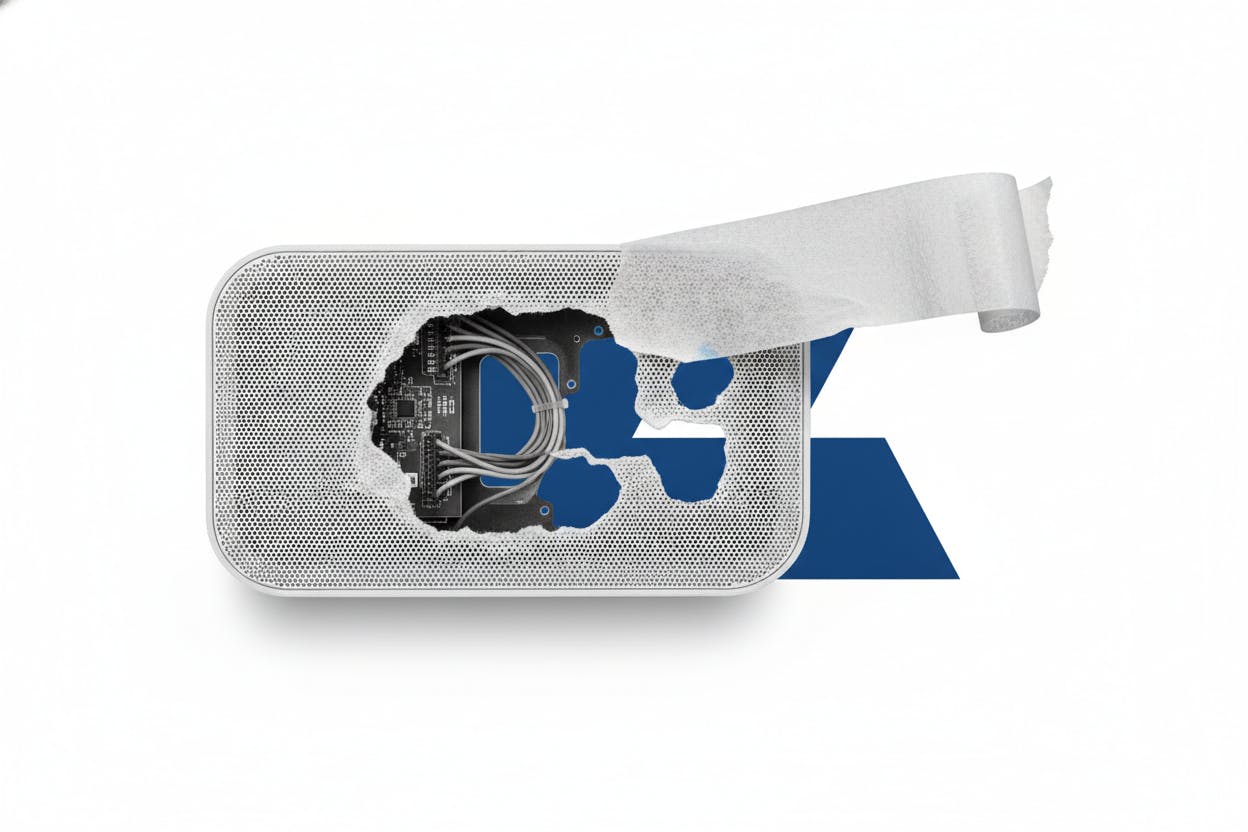
Sonos, the company best known for its wireless speakers and home audio systems, has laid off about 3% of its workforce. The cuts hit teams in user experience, product, and design — the very groups that shape how customers interact with Sonos devices and software.
CEO Tom Conrad, who took the helm in early 2024, told staff in a memo that the company needs “more conviction and more velocity.” The layoffs are part of a broader effort to strip away management layers and give product teams more independence, so decisions happen faster and ideas move from concept to prototype more quickly.
What’s behind the cuts?
This is not the first round of job reductions at Sonos this year. Earlier, the company trimmed roles in its marketing group. Taken together, the moves signal a deliberate reshaping of how the company operates — not just a one-off cost-cutting exercise.
In his memo, Conrad described a shift away from long alignment meetings and toward more time in the lab testing ideas. The goal, he said, is to “get to evidence faster” on what customers actually want. That means shortening the path from idea to prototype to finished product — a classic organizational goal known as reducing cycle time.
But cutting headcount in the very functions that define the customer experience carries risks. If the remaining teams become bottlenecks, the company could face more last-minute fixes, uneven product launches, or quality issues that hurt the brand. Sonos is betting that fewer layers and more autonomy will outweigh those risks.
What it means for investors
For investors, the immediate question is not about the modest cost savings from a 3% headcount reduction. Sonos employs roughly 1,800 people, so the cuts affect around 50 to 60 roles. The real question is whether the reorganization actually speeds up product development without creating new problems.
If the new structure leads to a steadier cadence of product launches — devices that ship on time and work well out of the box — Sonos could become more predictable. That would make it easier for analysts to forecast revenue and for investors to value the stock. Predictability often commands a premium in the market.
On the other hand, if the cuts create bottlenecks in design and user experience, the opposite could happen: more delays, more rushed fixes, and a cost base that swings unpredictably with product cycles. That would make Sonos harder to analyze and potentially more volatile.
Either way, the layoffs are a signal that Sonos is prioritizing speed over headcount. The company is trying to compete in a crowded market where rivals like Apple, Amazon, and Samsung all offer smart speakers and audio products. Faster iteration could help Sonos stay relevant, but it also makes short-term outcomes harder to predict.
Broader context
Sonos is not alone in reshaping its workforce to move faster. Across the tech industry, companies are trimming middle management and giving teams more autonomy, hoping to speed up innovation. Renault recently announced plans to cut 800 engineering jobs in France as part of a retraining push to compete with Chinese electric vehicle rivals. The logic is similar: remove layers, empower teams, and move faster.
But the approach is not without trade-offs. When companies cut staff in customer-facing functions like user experience and design, they risk losing the deep understanding of what users want. That can lead to products that miss the mark, requiring costly rework later.
For Sonos, the bet is that a leaner, faster organization will produce better products more consistently. Investors will be watching the next few product launches closely to see if the gamble pays off.