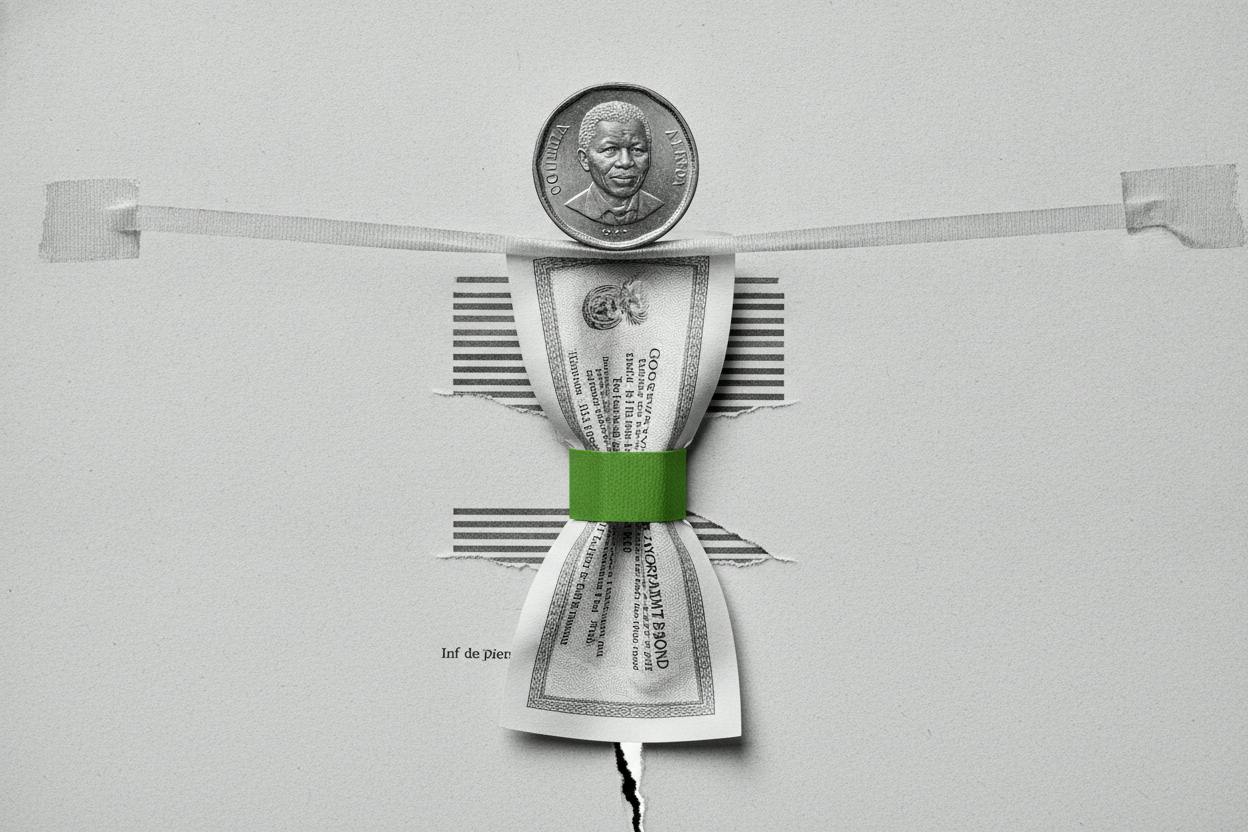
South African markets are turning their attention to an inflation-linked government bond auction, a key test of investor confidence in the country's debt, even as the rand holds its ground. The auction comes against a backdrop of hotter-than-expected producer inflation at home and persistent US inflation that has kept the Federal Reserve's next move front and center.
What's driving the market
South African assets are being pulled in two directions. Domestically, producer inflation surprised to the upside, suggesting that price pressures in the supply chain may not be cooling as smoothly as investors had hoped. That complicates the picture for the central bank, which has been trying to bring inflation back to target without choking off growth.
Abroad, firm US inflation readings have strengthened the "higher-for-longer" interest-rate narrative. That tends to support the US dollar and raises the bar for riskier assets, including emerging-market currencies and bonds. The rand has so far stayed relatively steady, but traders are wary of any renewed dollar strength.
The rand's recent resilience has been notable, but the currency remains sensitive to global rate expectations. If US rates stay high, the appeal of South African assets—which offer relatively attractive yields—could be tested.
Why the bond auction matters
Friday's inflation-linked bond sale is more than just a routine funding operation. These securities adjust their principal with inflation, so the auction result effectively reveals the "real yield"—the return investors demand after accounting for inflation—from South Africa's government.
By comparing that real yield with yields on regular government bonds, analysts can derive an implied "break-even inflation" rate: the inflation rate at which investors would be indifferent between the two types of bonds. A weak auction—where investors demand higher real yields or the government sells less than planned—can signal tighter local funding conditions at an awkward time for emerging markets.
This is especially relevant given the broader backdrop. African markets have been squeezed by a strong dollar and higher oil prices, and South Africa is not immune. A poorly received auction could add to concerns about the country's fiscal position and borrowing costs.
What it means for investors
For market watchers, the auction is a real-time test of real yields. The clearing real yield and overall demand will feed directly into how traders price South African government bonds. If buyers insist on noticeably higher real yields, it usually puts pressure on inflation-linked bonds relative to conventional ones, lifts borrowing costs, and can cool offshore appetite.
Because the rand often benefits when investors can earn attractive yields relative to the US, the auction outcome also matters through the "carry" channel. If local real yields don't adequately compensate for global-rate risk, the currency could become more sensitive to any renewed push toward higher US rates.
For everyday investors, the key takeaway is that this auction is a barometer of confidence in South Africa's economy and its ability to manage inflation and debt. A strong auction would suggest investors are comfortable with the country's risk profile; a weak one could signal trouble ahead.
As the Fed's policy path remains uncertain, the dollar's strength continues to weigh on emerging markets. South Africa's bond auction will be an important indicator of whether the country can stand firm in this environment.
Looking ahead
Investors will be watching the auction results closely, along with any commentary from the central bank and the Treasury. The outcome could influence not only bond prices but also the rand's trajectory in the coming weeks.
For now, the rand's steadiness offers some comfort, but the real test lies in whether South Africa can attract enough demand at reasonable yields. As other currencies have shown, a narrowing yield edge can quickly change market sentiment.
In the end, this auction is a reminder that in emerging markets, every funding operation is a vote of confidence—and the market's verdict will be clear soon enough.