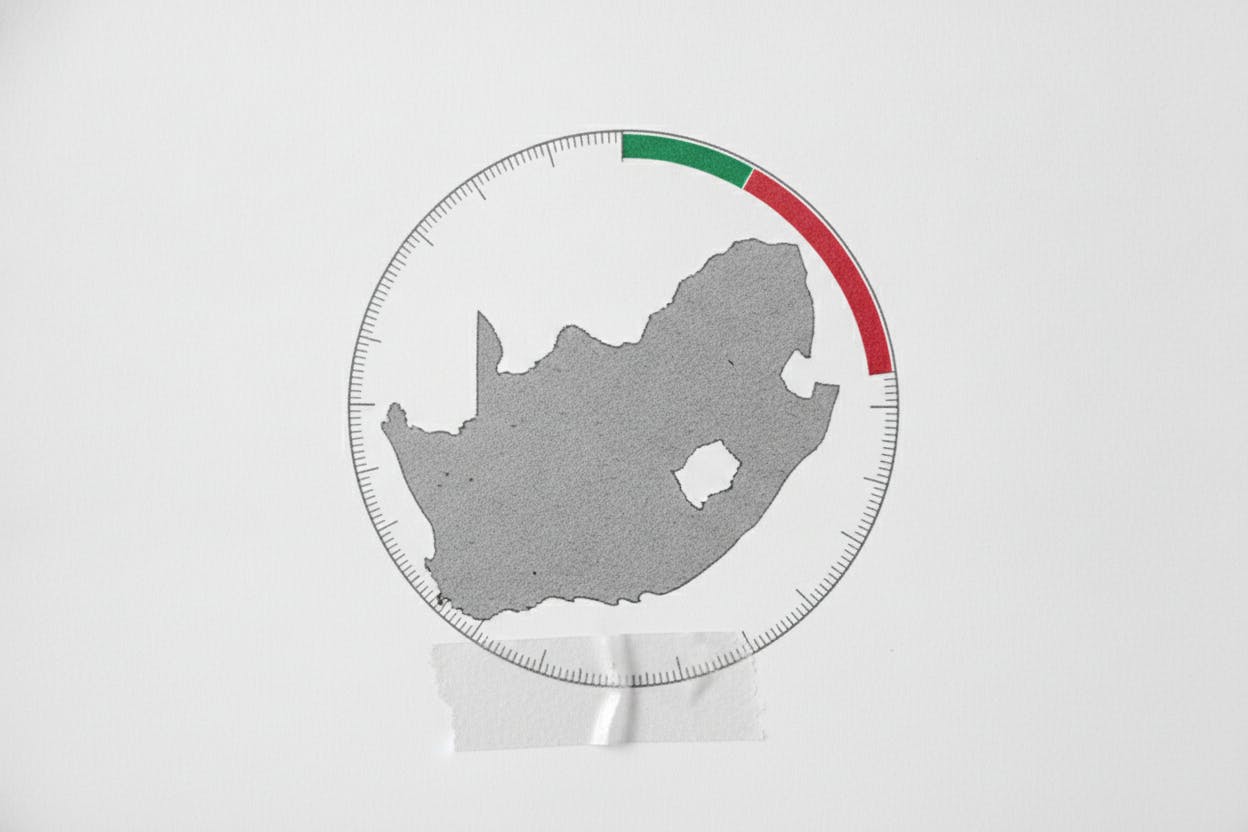
South Africa's private sector showed tentative signs of stabilization in June, as a key gauge of business activity crept back into growth territory. The S&P Global Purchasing Managers' Index (PMI) rose to 50.5 from 49.6 in May, crossing the 50-point threshold that separates expansion from contraction. However, the reading suggests a fragile recovery rather than a robust rebound, with output and new orders still declining for a second consecutive month.
What the PMI Numbers Tell Us
The PMI is a monthly survey of purchasing managers at private-sector companies, covering manufacturing, services, and other industries. A reading above 50 indicates that business activity is expanding compared to the previous month, while below 50 signals contraction. The June figure of 50.5 is only marginally above the neutral mark, indicating that growth is barely positive.
According to S&P Global, the uptick was driven by a slower pace of decline in output and new orders, along with a slight improvement in export demand. However, the underlying picture remains subdued. Firms reported that customers were still cautious, held back by economic uncertainty and high costs. The drop in output and new orders, while milder than in May, still points to weak overall demand.
Hiring Provides a Bright Spot
One of the more encouraging signs in the report was the resilience of the labor market. Businesses continued to add both permanent and temporary staff during June, building capacity despite the sluggish demand environment. This suggests that companies are positioning for a potential upturn, even as current conditions remain challenging.
Hiring often lags behind changes in output, so the continued expansion in employment could be a leading indicator of future growth. However, it could also reflect a need to maintain staffing levels after previous cuts, rather than a vote of confidence in the near-term outlook.
Price Pressures Ease
Another positive development was the easing of price pressures. Input costs and selling prices both rose at a slower pace in June, providing some relief to businesses and consumers alike. This moderation in inflation could give the South African Reserve Bank more room to hold interest rates steady or even consider cuts later this year, which would support economic activity.
Lower price pressures are particularly welcome in an economy that has faced stubbornly high inflation and elevated borrowing costs. The central bank has kept its key interest rate at a restrictive level to combat inflation, and any sign that price growth is cooling could ease the pressure on households and businesses.
What It Means for Investors
For everyday investors, the PMI data offers a mixed picture. The return to growth is a positive signal, but the weakness in output and new orders suggests that the economy is not out of the woods yet. The resilience in hiring is encouraging, as it points to underlying confidence among businesses, but the cautious consumer behavior highlighted in the survey remains a headwind.
Investors should watch for further PMI readings in the coming months to confirm whether the recovery is gaining traction. A sustained move above 50, combined with stronger output and new orders, would be a more convincing sign of a genuine turnaround. In the meantime, the easing of price pressures is a welcome development that could support both consumer spending and corporate margins.
South Africa's economic performance is also influenced by global factors, including commodity prices, trade flows, and the health of major trading partners. The slight improvement in export demand noted in the June PMI is a positive, but it remains to be seen whether this trend can be sustained amid ongoing global uncertainty.
Broader Context
The South African PMI data comes amid a mixed picture for global private-sector activity. In other regions, Italy's services sector returned to growth as cost pressures eased, while India's private sector growth slowed in June, with services hitting a 17-month low. Meanwhile, China's private sector growth also slowed, though export orders surged. These divergent trends highlight the uneven nature of the global economic recovery.
For South Africa, the key question is whether the stabilization seen in June can be sustained and eventually translate into stronger growth. The PMI data suggests that the economy is at a crossroads, with some positive signs but also persistent headwinds. Investors will be watching closely for further evidence of a durable recovery.