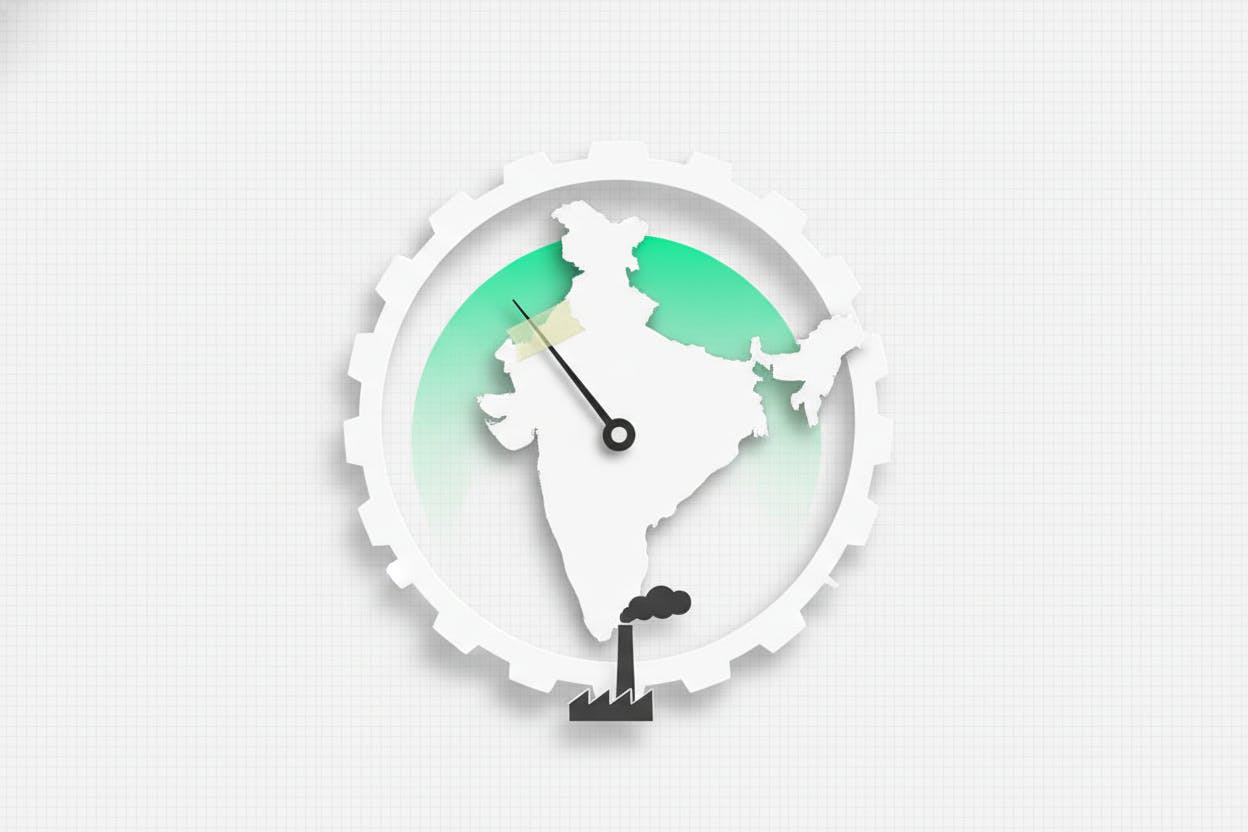
India's private sector lost some momentum in June, with the HSBC India composite Purchasing Managers' Index (PMI) slipping to 57.1 from 59.3 in May. The decline was driven by a sharp slowdown in services activity, which fell to a 17-month low, and a cooling in hiring across both manufacturing and services.
The composite PMI, which combines manufacturing and services data, remains well above the 50 mark that separates expansion from contraction. However, the drop signals that the pace of growth is easing after a strong run earlier in the year.
Services Lead the Slowdown
The services PMI fell to 57.4 in June, down from 59.8 in May, marking the weakest reading since early 2023. Manufacturers also saw a slowdown, with their PMI easing to 54.2 from 55. The broader trend points to a softening in demand: overall new orders grew at their slowest pace in more than two and a half years, and firms in both sectors trimmed their outlooks for future activity.
Hiring also cooled, with companies reporting a more cautious approach to adding staff. This is a notable shift after several months of robust employment growth in the services sector.
What This Means for Investors
For everyday investors, the PMI data is a key indicator of economic health. A reading above 50 still signals growth, but the downward trend suggests that India's economy is losing some steam. This could have implications for corporate earnings, particularly in sectors like banking, consumer goods, and IT services that are sensitive to domestic demand.
The slowdown in services is especially significant, as the sector has been a major driver of India's post-pandemic recovery. If demand continues to soften, it could weigh on company profits and stock market sentiment. However, the manufacturing sector, while also slowing, remains in expansion territory, offering some support.
Investors should also watch for any spillover effects from global trends. For context, similar slowdowns have been observed in other Asian economies. For example, China's private sector growth slowed in June, while Japan's services sector rebounded, highlighting a mixed picture across the region.
Broader Economic Context
The PMI data comes amid a backdrop of global uncertainty, with central banks in developed economies maintaining tight monetary policy to combat inflation. India's own central bank, the Reserve Bank of India (RBI), has kept interest rates steady but has signaled caution about inflation risks.
The cooling in hiring and new orders could also reflect a cautious stance among businesses ahead of the upcoming monsoon season, which can impact agricultural output and rural demand. Additionally, the recent rebound in gold prices has affected consumer behavior, with gold buyers in India pausing purchases, which may have broader implications for discretionary spending.
What to Watch Next
Investors will be looking ahead to upcoming economic data, including inflation figures and industrial production numbers, to gauge whether the slowdown is temporary or part of a longer-term trend. The RBI's next monetary policy meeting will also be closely watched for any changes in interest rates or growth forecasts.
In the near term, the stock market may see some volatility as investors digest the PMI data. However, the fact that the composite index remains above 50 suggests that the economy is still expanding, albeit at a slower pace. For long-term investors, this could be a time to focus on sectors that are less cyclical, such as healthcare or consumer staples, which tend to be more resilient during periods of economic softening.
Overall, the June PMI data serves as a reminder that India's growth story, while still intact, is not immune to headwinds. Staying diversified and keeping an eye on economic indicators will be key for navigating the months ahead.