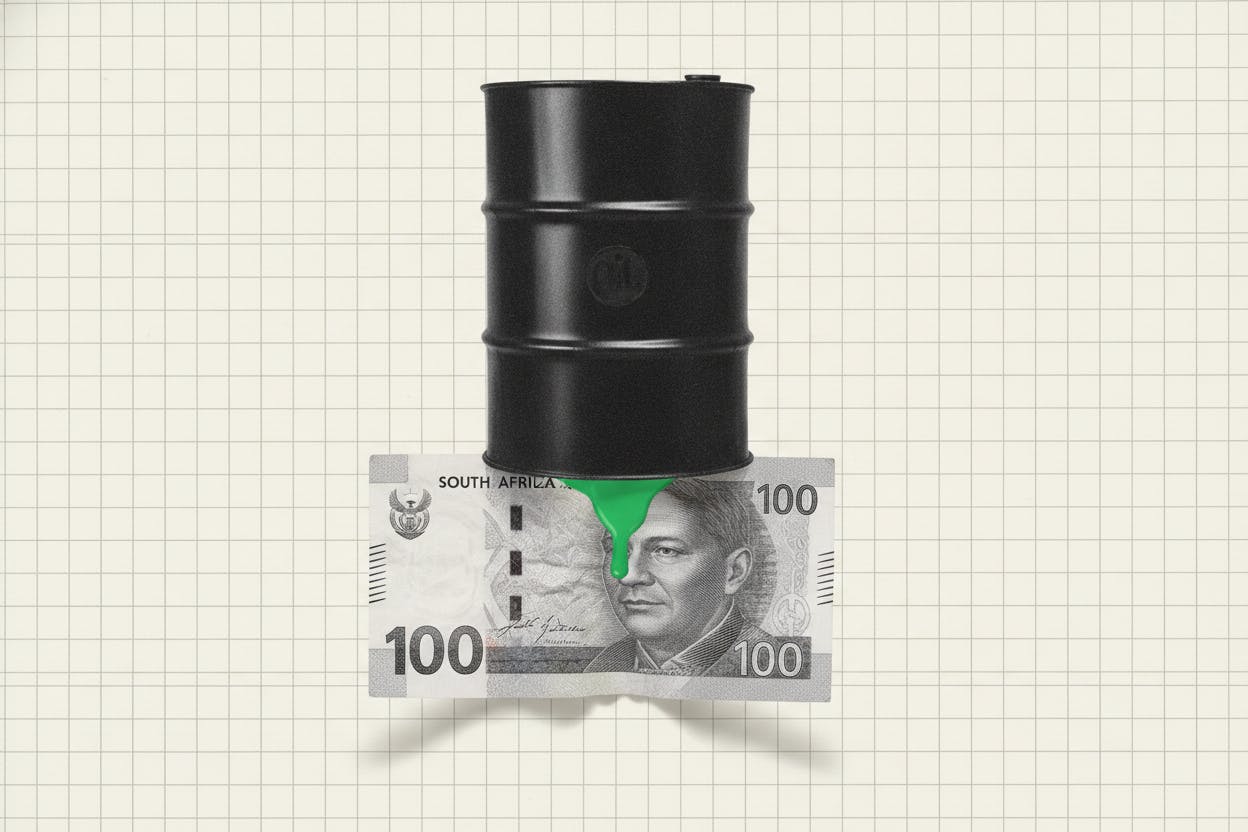
South Africa's currency took a hit on Tuesday, sliding to a one-week low against the dollar after former President Donald Trump declared that an interim peace deal with Iran was "over." The comment sent oil prices surging and soured appetite for riskier assets, dragging the JSE Top-40 index down 1.3%.
What Happened
The rand weakened as global investors reacted to the breakdown of diplomatic efforts between the US and Iran. Trump's statement, made during a press conference, signaled that the fragile ceasefire arrangement was no longer in effect, raising the prospect of renewed tensions in the Middle East. Oil prices jumped sharply on the news, with Brent crude climbing over 4% in early trading.
The JSE Top-40, which tracks the 40 largest companies listed on the Johannesburg Stock Exchange, fell 1.3% as energy-sensitive stocks and financials led the decline. The broader market also felt the pinch, with the All-Share index down roughly 1%.
Why Oil Matters for South Africa
Oil is one of the quickest ways geopolitics reaches portfolios. When headlines hint at tighter supply or fresh conflict, crude can jump, and that can revive worries that inflation will pick up again, keeping interest rates higher for longer. For South Africa, that's a double hit. The country imports a lot of its fuel, so pricier oil means a bigger bill paid in foreign currency and less support from trade flows for the rand. Higher pump prices can also filter through to transport and other costs, adding local inflation pressure and making investors demand a bigger "risk premium" for holding rand-denominated assets like government bonds.
So this wasn't just an emerging-markets wobble: oil spikes can hurt South Africa more than commodity-exporting peers because the shock worsens both the trade picture and the inflation backdrop at the same time. In contrast, countries like Saudi Arabia or Russia benefit from higher oil prices, as they sell crude on global markets.
What It Means for Investors
For everyday investors, the rand's slide is a reminder that geopolitical events can quickly affect portfolios. A weaker rand makes imported goods more expensive, from electronics to fuel, which can feed into higher inflation at home. That, in turn, could prompt the South African Reserve Bank to keep interest rates higher for longer, squeezing borrowers and potentially slowing economic growth.
The JSE's decline also reflects broader risk aversion. When oil jumps and geopolitical tensions rise, investors often flee emerging markets for safer havens like US Treasuries or gold. South African stocks, particularly those in retail, banking, and manufacturing, are sensitive to higher energy costs and weaker consumer spending.
For those holding South African government bonds, the weaker rand is a warning sign. Higher oil prices can widen the country's external financing needs and lift inflation expectations, pushing up the yield investors demand to hold local debt. That can lead to capital outflows and further pressure on the currency.
Broader Context
This isn't the first time oil spikes have rattled South African markets. In recent years, similar episodes have seen the rand lose ground quickly, only to recover when tensions ease. But the current backdrop is more fragile: global inflation remains sticky, central banks are cautious about cutting rates, and emerging markets are already under pressure from a strong dollar.
The JSE's 1.3% drop is significant but not catastrophic. The index had been trading near recent highs, so some profit-taking was expected. However, if oil prices stay elevated, the sell-off could deepen, especially for energy-intensive sectors like mining and manufacturing.
For a deeper look at how oil surges affect African markets, see our earlier piece: Oil Surge and Weaker Rand Set the Tone for African Markets. And for more on the US-Iran tensions driving this move, check out Oil Surges 6% as Trump Declares Iran Deal Over, US Stocks Slide.
What to Watch Next
Investors should keep an eye on oil prices in the coming days. If crude continues to climb, the rand could face further pressure, and the JSE may extend its losses. The South African Reserve Bank's next policy meeting is also on the horizon, and any signs that inflation is picking up could lead to a hawkish stance, which would be negative for bonds and equities.
For now, the message is clear: geopolitics and energy markets are intertwined, and South Africa's position as a net oil importer makes it especially vulnerable. Diversification across asset classes and geographies remains a key strategy for managing such risks.



