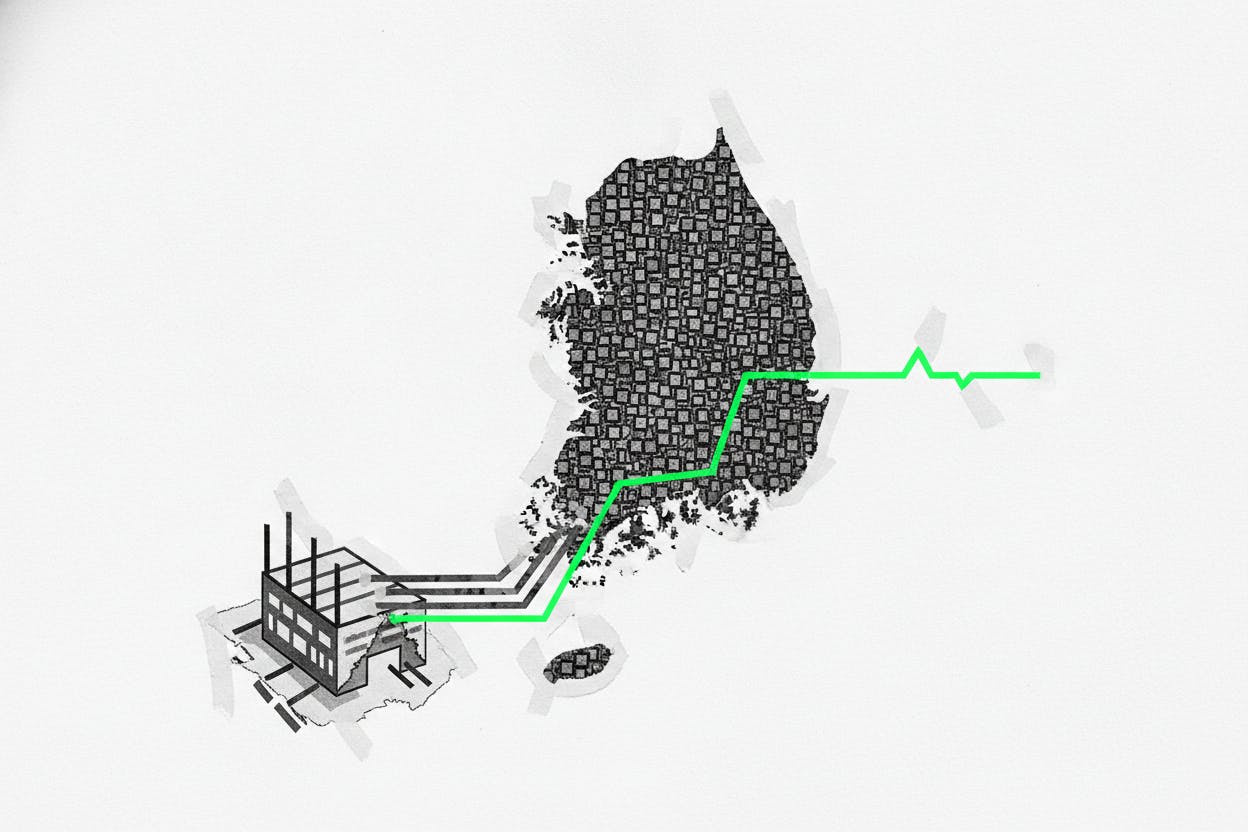
South Korea's President Lee Jae Myung has announced plans to build new semiconductor manufacturing clusters and artificial intelligence data centers outside the capital Seoul, with the Gwangju and South Jeolla region targeting 520 trillion won ($336.70 billion) in investment over the next several years, according to Reuters.
What's Happening
The initiative is part of a broader push to decentralize South Korea's economy, which has long been heavily concentrated in the Seoul metropolitan area. President Lee made the announcement alongside executives from Samsung Electronics and SK Hynix, two of the world's largest memory-chip makers, which are expected to be among the key investors in these new hubs.
The Gwangju-South Jeolla region, located in the southwestern part of the country, has historically lagged behind Seoul and the surrounding Gyeonggi province in terms of industrial development and economic output. By targeting chip and AI infrastructure there, the government hopes to create jobs, boost local economies, and reduce the strain on Seoul's housing and transportation systems.
This is not the first time South Korea has announced ambitious plans for its chip industry. Earlier this year, the government unveiled a $650 billion plan to build the world's largest semiconductor cluster in Yongin, south of Seoul, as part of a strategy to maintain the country's dominance in memory chips and expand into logic chips and AI hardware. You can read more about that in our earlier coverage: South Korea Unveils $650 Billion AI and Chip Plan to Decentralize Economy Beyond Seoul.
Why It Matters
South Korea is home to two of the world's most important chip companies: Samsung Electronics and SK Hynix. Together, they control a large share of the global market for memory chips, which are used in everything from smartphones to data centers. The country's chip exports are a critical driver of its economic growth, as we noted in South Korea's Growth Hinges on Chip Exports as Domestic Demand Stays Weak.
The push into AI data centers is also significant. As artificial intelligence applications grow, demand for high-performance computing and data storage is soaring. Building data centers locally could help South Korean companies reduce reliance on foreign infrastructure and position the country as a regional hub for AI services.
However, the chip industry is cyclical and subject to global demand swings. Recently, South Korean chip stocks have been volatile, partly due to uncertainty around AI spending in the US. For more on that, see South Korean Chip Stocks Slide as US AI Volatility Spills Over and South Korean Stocks Plunge 5.8% as AI Spending Doubts Hammer Chip Giants.
What It Means for Investors
For everyday investors, this news signals that South Korea is doubling down on its core competitive advantage in semiconductors and AI infrastructure. The government's willingness to commit large sums of money and coordinate with major companies suggests a long-term strategic bet on these sectors.
Investors with exposure to South Korean stocks, particularly through exchange-traded funds (ETFs) that track the KOSPI index, may see this as a positive development for the country's economic outlook. Companies like Samsung Electronics and SK Hynix could benefit from government support and increased demand for chips and data center services.
However, it's important to remember that such large-scale investment plans often take years to materialize and may face delays due to regulatory hurdles, funding issues, or changes in global demand. The chip industry is also highly sensitive to geopolitical tensions, especially between the US and China, which can affect supply chains and export markets.
For those interested in the broader theme of AI and semiconductor investing, this story reinforces the idea that governments around the world are racing to build domestic capacity in these critical technologies. South Korea's move is part of a global trend that includes similar efforts in the US, Europe, and Japan.
As always, investors should consider their own risk tolerance and diversification strategy. No single government plan guarantees returns, but understanding the direction of policy can help inform long-term investment decisions.