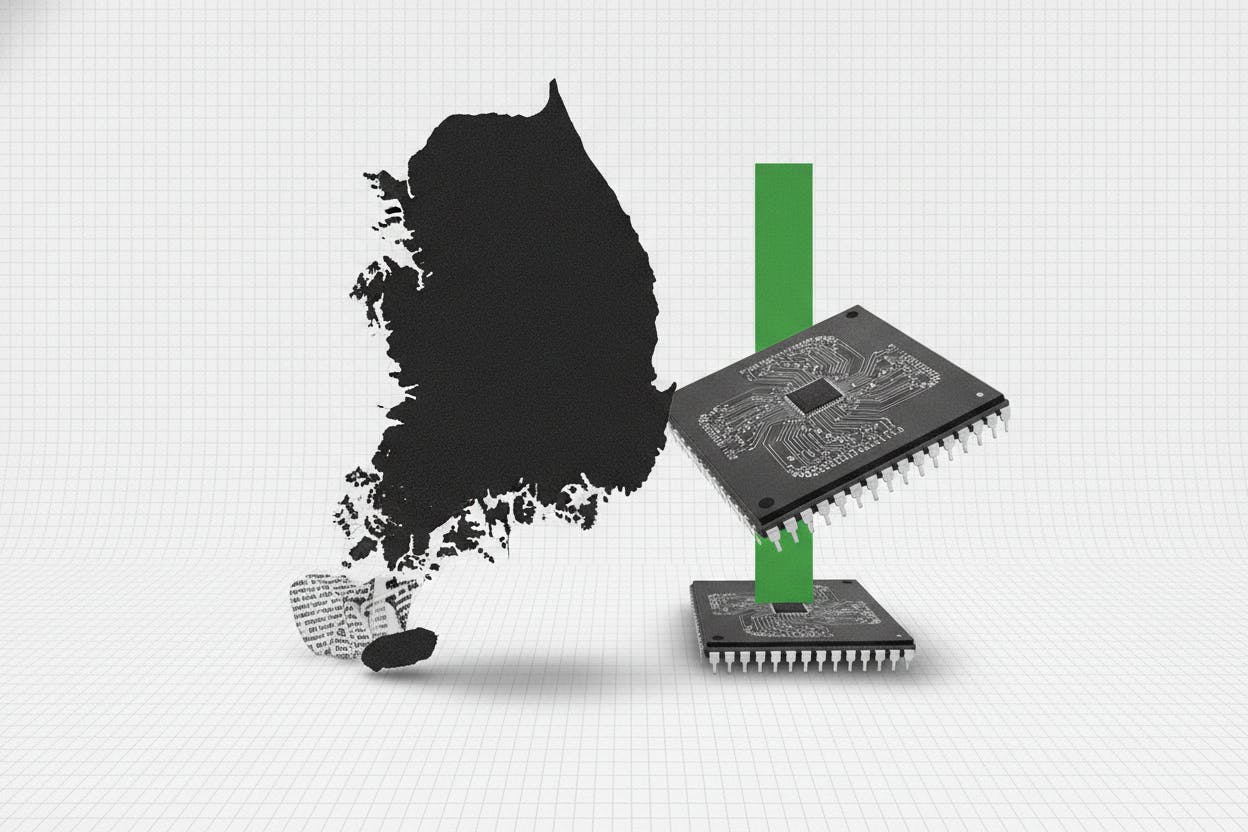
South Korea's economy is on track to grow 2.7% this year, but the engine is almost entirely powered by semiconductor exports rather than a broad-based recovery at home, according to a new forecast from the Korea Economic Research Institute (KERI). The think tank's projection, presented at a seminar, suggests the economy could exceed its long-run potential growth rate of roughly 2% for the first time in two years — a sign of how heavily the country's fortunes are tied to the global chip cycle.
Record Current Account Surplus
KERI also expects South Korea's current account surplus to hit a record $225 billion in 2025. The current account is a broad measure of trade and investment income flows; a surplus means the country is earning more from exports and overseas investments than it is paying out to foreign entities. That large surplus tends to support the Korean won by generating steady net inflows of foreign currency.
The record surplus projection leans on an assumption that Middle East tensions remain calm, keeping oil prices, inflation, and the exchange rate from flaring up. Even so, KERI expects consumer inflation to run at 2.7% this year, matching the overall growth rate.
Domestic Demand Remains Soft
While exports are booming, the domestic side of the economy is struggling. KERI forecasts private consumption will grow just 2% in 2025, and construction investment will barely expand at 0.5%. That split highlights a growing divergence: the export sector, led by semiconductors, is firing on all cylinders, while households and businesses at home remain cautious.
This pattern is not unique to South Korea. Similar dynamics are playing out in other export-dependent economies. For instance, Singapore factory growth slowed in May, with an AI-driven electronics boom masking weakness elsewhere. In South Korea, the chip sector has been a standout beneficiary of the global artificial intelligence investment wave, with companies like Samsung considering a massive $648 billion investment plan for domestic chip plants.
What It Means for Investors
For investors, the key takeaway is the concentration of risk. A record current account surplus of $225 billion could help steady the won if chip exports keep delivering. A steadier currency can cool imported inflation — dollar-priced essentials like energy become less expensive in won terms — and reduce the need for local firms to spend on foreign-exchange hedges.
However, the cushion is only as strong as the chip cycle. Any slowdown in semiconductor demand can show up quickly in currency moves, and then in expectations for inflation and interest rates. The recent 5.8% plunge in South Korean stocks on AI spending doubts is a reminder of how vulnerable the market is to shifts in sentiment around chip demand.
KERI's forecast assumes no major disruption to oil prices or the exchange rate. If those assumptions break down, the growth outlook could quickly sour. For now, the economy is riding a semiconductor wave — but the domestic demand base remains too weak to provide a safety net.