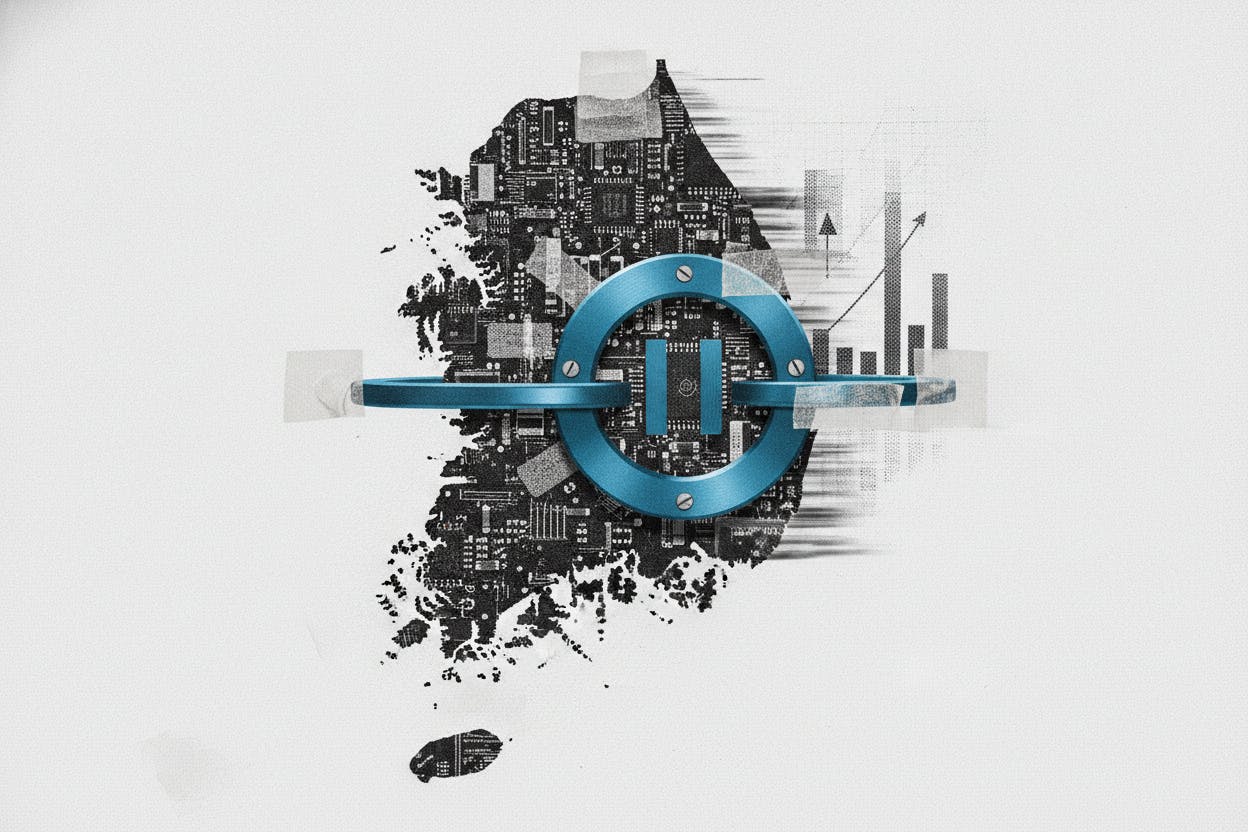
South Korea's benchmark KOSPI index surged more than 7% on Wednesday, propelled by a massive rally in AI chip stocks that briefly triggered a market-wide trading curb. The move underscores how heavily the Korean market depends on its semiconductor giants and how quickly global AI enthusiasm can translate into outsized local gains.
What Happened
SK Hynix, one of the world's leading memory chipmakers, soared 13%, while Samsung Electronics, the country's largest company by market capitalization, jumped 8%. The sharp upward move in these two stocks alone was enough to push the broader index into a temporary halt for program trading, a mechanism known as a "sidecar" that automatically pauses automated trades when prices move too fast.
The sidecar is designed to prevent runaway volatility by giving markets a brief cooling-off period. It was triggered as the rally accelerated, reflecting the sheer force of buying pressure concentrated in a handful of mega-cap tech names.
Why the Rally Happened
The immediate catalyst came from overseas. Softer-than-expected US inflation data released Tuesday fueled hopes that the Federal Reserve may ease its interest rate hiking cycle sooner than previously thought. That sparked a rally in US tech stocks overnight, with the Nasdaq Composite posting strong gains. South Korean chip stocks, which are closely tied to global demand for semiconductors and AI infrastructure, followed suit.
But the bigger story is how today's moves can feed on themselves. The rise of leveraged single-stock exchange-traded funds (ETFs) has amplified price swings in individual names. These funds are designed to deliver a multiple of a stock's daily return, meaning a 10% gain in the underlying stock can translate into a 20% or 30% gain in the ETF. When these leveraged products rebalance at the end of the day, they can add further momentum to already fast-moving stocks.
For context, SK Hynix ADRs surged 28% in recent weeks as cooler US inflation and a Barclays upgrade boosted chip stocks. That momentum appears to have carried over into Wednesday's session.
What It Means for Investors
For everyday investors, this rally is a reminder of how concentrated the South Korean market is. The KOSPI's performance is heavily influenced by a handful of tech and semiconductor stocks. When those stocks move sharply, the entire index can swing dramatically, as seen today.
Investors should also be aware of the role of leveraged ETFs. While they can amplify gains, they also magnify losses. A sudden reversal in sentiment could lead to equally sharp declines. The sidecar mechanism is a safety valve, but it doesn't eliminate risk.
Looking ahead, all eyes will be on whether the US inflation data marks a genuine turning point for global interest rate expectations. If the Fed does pivot to a more dovish stance, it could provide further support for risk assets like tech stocks. However, if inflation proves stickier than expected, the rally could quickly reverse.
For those invested in Korean stocks or ETFs, it's worth monitoring how much of your portfolio is tied to the semiconductor sector. Diversification across different industries and geographies can help cushion against the kind of volatility seen today.
Broader Market Context
The rally in South Korea is part of a broader uptick in Asian markets. Asian stocks rallied as the US inflation surprise eased rate hike fears, lifting sentiment across the region. Meanwhile, foreign investors poured $132 billion into US stocks and corporate bonds in May, signaling strong appetite for risk assets.
The AI theme continues to dominate market narratives. Six stocks made Bloomberg's watchlist for AI data-center plays, highlighting the infrastructure buildout that is driving demand for memory chips and other components.
For now, the KOSPI's surge is a vivid example of how AI enthusiasm, combined with favorable macro data, can create powerful short-term moves. But investors should remain cautious about chasing momentum in such a concentrated market.



