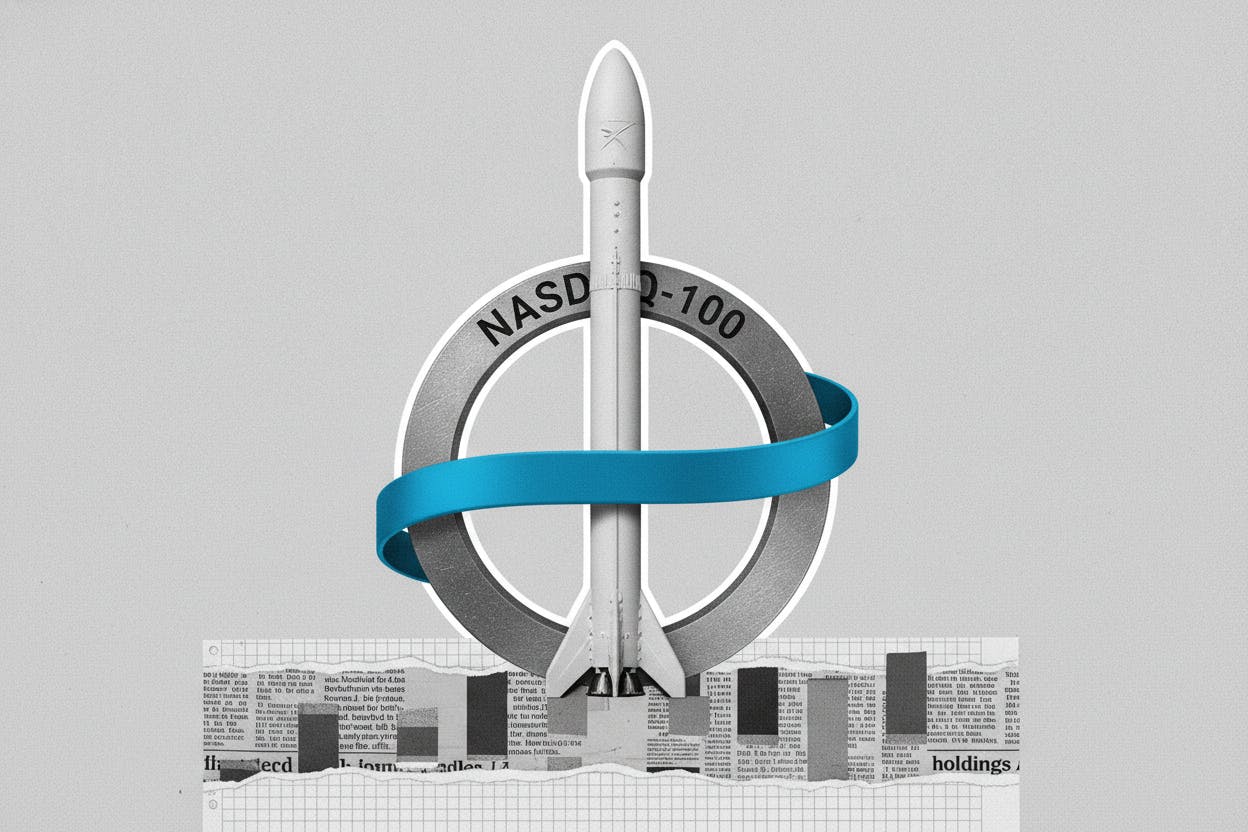
SpaceX officially joined the Nasdaq-100 index on Tuesday, just 15 days after its initial public offering on June 12. The rapid inclusion has set off a wave of forced buying by passive funds that track the index, with J.P. Morgan estimating the total at roughly $4.3 billion.
What Is the Nasdaq-100 and Why Does This Matter?
The Nasdaq-100 is a stock market index that tracks the 100 largest non-financial companies listed on the Nasdaq exchange. It includes household names like Apple, Microsoft, Amazon, and Alphabet. Many exchange-traded funds (ETFs) and mutual funds are designed to mirror the index's performance, meaning they hold shares in the same proportions as the index.
When a new company is added to the Nasdaq-100, these passive funds must buy its stock to match the index weight. This buying happens regardless of market conditions or the company's recent performance. In SpaceX's case, the index assigned it a weight of 1.34% after applying a "free-float adjustment"—a method that counts only shares available for public trading, not those held by insiders or locked up.
The $4.3 Billion Scramble
J.P. Morgan analysts calculated that index trackers will need to purchase about $4.3 billion worth of SpaceX shares to align their portfolios with the new index composition. This forced buying can push the stock price higher in the short term, benefiting early investors but also creating potential volatility.
SpaceX's inclusion so soon after its IPO is unusual. Most companies wait months or even years before joining major indexes. The Nasdaq-100's rules allow for faster entry if a company meets certain criteria, including a large market capitalization and sufficient trading volume. SpaceX, with its high-profile IPO and massive market cap, qualified quickly.
For context, the Nasdaq-100 is tracked by billions of dollars in passive assets. Popular ETFs like the Invesco QQQ Trust (QQQ) and the newly launched BlackRock Nasdaq 100 ETF (IQQ) are among the funds that must now buy SpaceX shares. BlackRock's recent launch of its own Nasdaq 100 ETF adds another layer of competition in the space.
What It Means for Everyday Investors
If you own shares in a Nasdaq-100 index fund or ETF, you now indirectly own a piece of SpaceX. The forced buying by these funds can provide a short-term boost to SpaceX's stock price, but it also means the fund's performance will be more tied to SpaceX's fortunes going forward.
Investors should understand that index fund buying is mechanical—it doesn't reflect any judgment about SpaceX's business prospects. The company, known for its rocket launches and Starlink satellite internet service, faces both opportunities and risks. Morgan Stanley has highlighted Starlink as a potential disruptor to cable broadband, which could drive future growth.
However, the broader market context matters. The Nasdaq index has been volatile recently, partly due to concerns about AI spending and chip stocks. Chip stocks plunged earlier this week after news that Chinese AI firm DeepSeek is developing its own chips, raising questions about the sustainability of AI-driven market gains.
For passive investors, the key takeaway is that index funds do the rebalancing automatically. You don't need to take any action. But it's worth being aware that rapid index inclusions can create short-term price distortions. Over the long term, the fundamentals of the company—not the index mechanics—will determine returns.
Looking Ahead
SpaceX's entry into the Nasdaq-100 is a milestone for the company and a reminder of how passive investing shapes markets. With trillions of dollars tracking indexes, index changes can move billions in a single day. Investors should watch for any further index adjustments and keep an eye on SpaceX's earnings reports to gauge its performance.
As always, diversification remains important. Even a high-profile stock like SpaceX carries risks, and no single company should dominate a well-balanced portfolio.