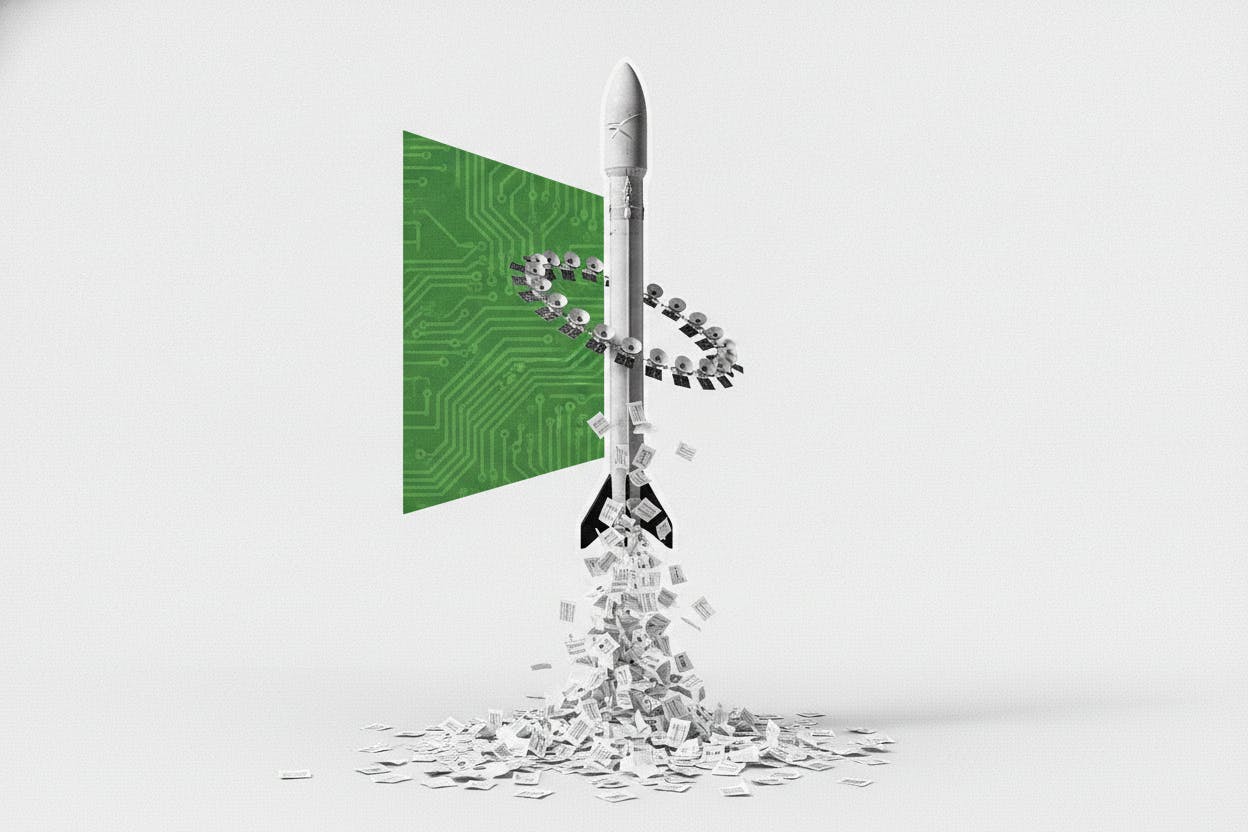
SpaceX has released its first public earnings report since its June IPO, and the numbers are eye-catching: revenue jumped 92% to $7.8 billion in the April–June quarter, up from $4.1 billion a year earlier. But the market's reaction has been muted—the stock is down about 8% since the IPO, which valued the company at roughly $1.75 trillion. Investors are looking past the headline growth to two specific concerns: the health of Starlink's subscriber economics and an upcoming lock-up expiry that could flood the market with shares.
Starlink's ARPU under the microscope
Starlink, SpaceX's satellite internet business, is the company's main revenue engine. While the service has grown rapidly, the average revenue per user (ARPU) has been falling. ARPU is a key metric for subscription businesses—it shows how much money the company makes from each customer on average. A declining ARPU can signal that the company is adding customers at lower price points, or that competition is forcing it to cut prices. For investors, this raises questions about long-term profitability, even as the subscriber base expands.
The company is also leaning heavily into AI infrastructure. SpaceX has been building out data centers and satellite capabilities that support AI workloads, a trend that's sweeping across the tech sector. As Big Tech's AI data center leases have shown, demand for compute power is surging, and SpaceX wants to be part of that supply chain. But the capital expenditures required for such buildouts are massive, and investors are watching whether the AI bet pays off.
The lock-up expiry: what it means
Thursday marks the end of the post-IPO lock-up period, when insiders and early backers are first allowed to sell their shares. This is a common event after any IPO, and it often leads to increased selling pressure as those investors cash in on their gains. The exact number of shares that could be sold isn't public, but the mere possibility of a supply glut can weigh on the stock price.
For everyday investors, a lock-up expiry doesn't necessarily mean the stock will crash—it depends on how many shares actually hit the market and whether demand absorbs them. But it's a risk factor to be aware of, especially for a high-profile stock like SpaceX that has already seen a post-IPO pullback.
What it means for investors
SpaceX's first earnings report is a milestone, but it also highlights the challenges of investing in a company that's still heavily investing in growth. The 92% revenue jump is impressive, but the falling ARPU suggests that Starlink's pricing power may be weakening. Meanwhile, the AI buildout is a long-term bet that could pay off handsomely or require years of heavy spending before it generates meaningful returns.
For those considering SpaceX stock, it's important to understand that the company is not just a rocket maker—it's a telecom and AI infrastructure play. The lock-up expiry adds a short-term risk, but the bigger question is whether Starlink can stabilize its ARPU and whether the AI investments will eventually boost margins. As with any high-growth stock, volatility is likely to continue.
Investors should also keep an eye on the broader AI data center trend, which has been a major driver for companies like AMD and CoreWeave. SpaceX's AI ambitions are part of this larger wave, but the company faces stiff competition from established players.
The road ahead
SpaceX's next earnings report will be closely watched for updates on Starlink's ARPU trend and any progress on the AI front. The lock-up expiry is a near-term event, but the company's long-term story depends on its ability to grow revenue while maintaining profitability. For now, the market is taking a cautious stance, and that's a signal that even the most exciting companies need to prove their business models can sustain growth.
As always, it's wise to do your own research and consider how SpaceX fits into your overall portfolio. The company's first public earnings are a starting point, not a final verdict.