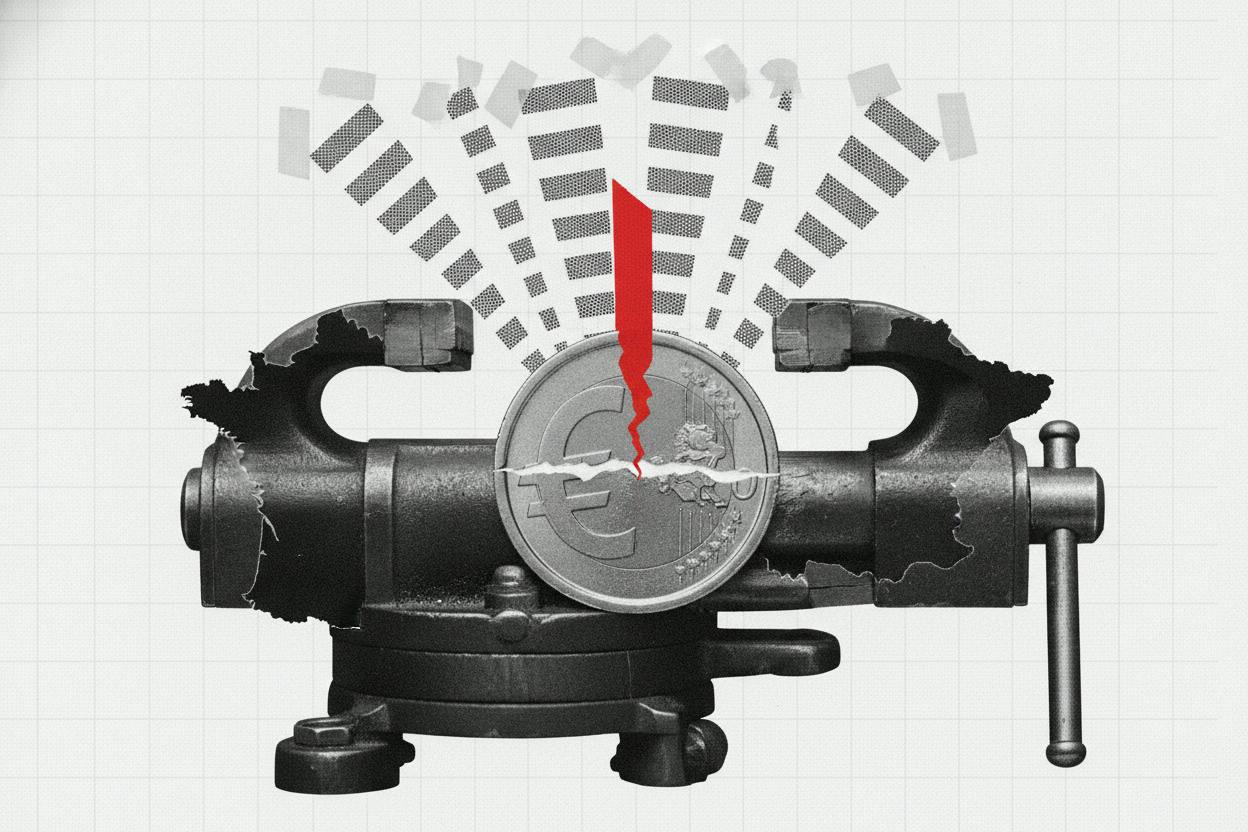
Spain's Prime Minister Pedro Sanchez has called a snap election for November, injecting a fresh dose of political uncertainty into the eurozone just as investors are already grappling with bond-market jitters in France and a softer euro. The move adds a second major economy to the list of political risks that markets are trying to price in, and it comes at a delicate time for the European Central Bank (ECB), which is weighing how aggressively to fight inflation.
Two eurozone economies, two political headaches
In Spain, opinion polls suggest Sanchez could lose the upcoming vote, which would likely bring a change in government and potentially a period of coalition-building or policy uncertainty. For investors, that means another reason to demand a higher premium for holding Spanish debt, even though the country's fiscal position has been relatively stable in recent years.
Meanwhile, France remains in the spotlight. Worries about the country's budget have pushed its borrowing costs up, and the gap between French and German government bond yields—a key measure of perceived risk—has widened sharply. Investors recently demanded 137 basis points more yield to hold French 10-year debt than equivalent German bonds, up from about 85 basis points a month earlier. That widening spread is a clear signal that markets are increasingly nervous about France's fiscal trajectory.
The stress is not confined to the bond market. The euro has been wobbling near $1.12, reflecting broader concerns about the eurozone's economic and political outlook. A weaker currency can complicate the ECB's task by making imported goods more expensive, adding to inflationary pressure.
What the widening spread means
The spread between French and German bonds is more than just a number on a screen. When investors demand a bigger premium to lend to France than to Germany, it directly increases the interest costs for the French government. That can spill over into higher borrowing rates for businesses and households across the economy, tightening financial conditions even if the ECB does not raise its policy rates.
In effect, political risk can do some of the ECB's "tightening" for it. Higher market-driven yields can cool economic activity and dampen inflation, but they also raise governments' interest bills and can widen spreads further, creating a feedback loop that the central bank must watch carefully.
This is why the ECB can look boxed in. On one hand, inflation is still running at 3.8%, well above the bank's 2% target, and traders are pricing in an 83% chance of a rate increase by the end of the year. On the other hand, higher rates would mechanically increase governments' borrowing costs and could exacerbate the very stress that is already visible in bond markets.
In practice, those market signals can limit how hawkish the ECB can sound. The central bank's credibility depends not only on fighting inflation but also on keeping financial stress from snowballing. If it moves too aggressively, it risks triggering a sharper sell-off in government bonds, which could undermine the eurozone's financial stability.
What it means for investors
For everyday investors, the key takeaway is that political risk in the eurozone is becoming a policy constraint. The widening French spread is not just noise; it is a real cost that can affect everything from government bond yields to mortgage rates and corporate borrowing costs.
Investors holding eurozone government bonds should be aware that spreads can move quickly, and that political events—like Spain's snap election—can add to volatility. For those with diversified portfolios, the broader lesson is that political uncertainty in major economies can ripple through markets, affecting currencies, bond yields, and even equity valuations.
The situation also highlights the delicate balancing act facing the ECB. With inflation still elevated, the central bank may feel pressure to raise rates, but it must weigh that against the risk of widening spreads and financial stress. As France's budget woes push the euro lower, the ECB's room to maneuver is shrinking.
Investors will be watching closely for any signals from the ECB about its next move, as well as for developments in Spain's election campaign and France's budget negotiations. The role of hedge funds in France's bond sell-off has also been highlighted, adding another layer of complexity to the market dynamics.
For now, the eurozone is facing a period of heightened political and financial uncertainty. The dollar's strength against the euro reflects these concerns, and the corporate bond market is also feeling the strain as spreads hit six-month highs. The coming months will test whether the ECB can navigate these choppy waters without triggering a broader crisis.