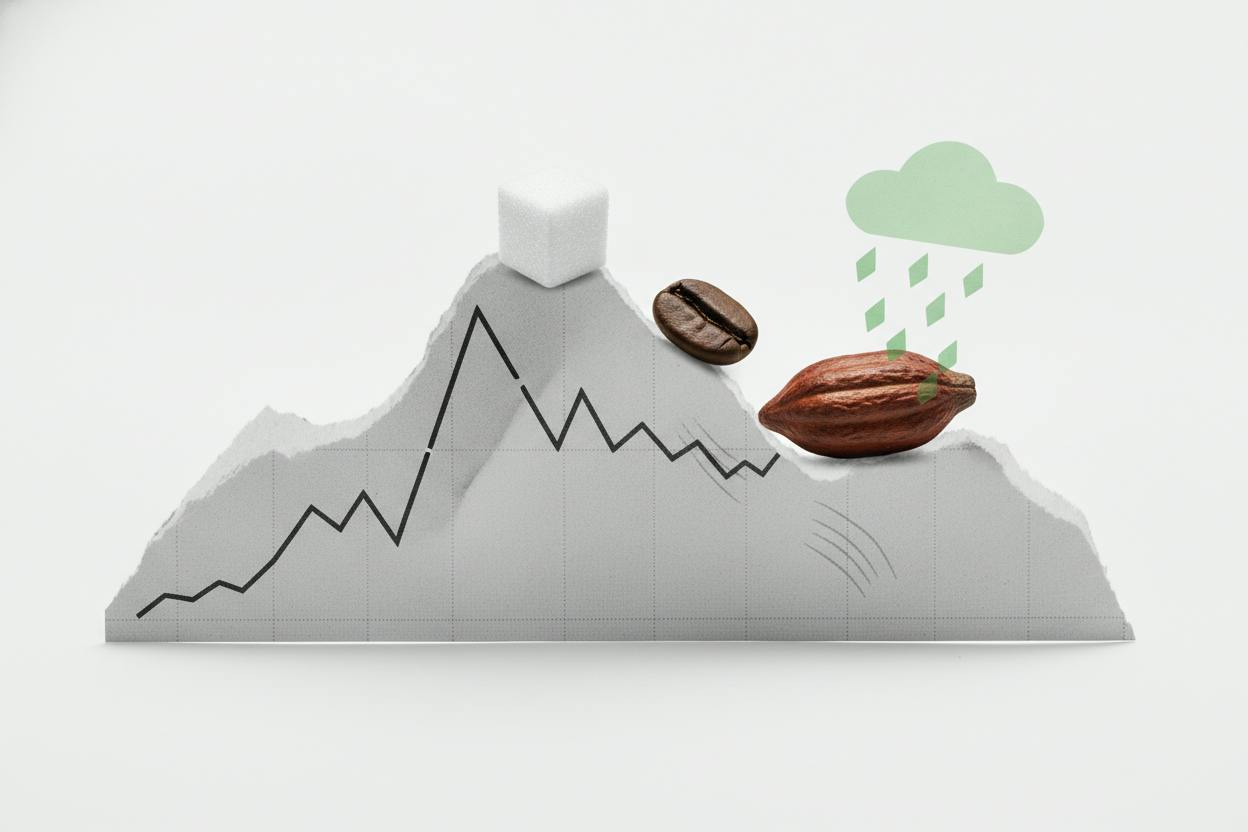
After a sharp rally that pushed prices to multi-month highs, sugar, coffee, and cocoa futures all pulled back on Tuesday, as traders pointed to cooling fund buying and improved rain forecasts in key growing regions. The retreat offers a glimpse of relief for food companies and consumers, though analysts caution that supply risks haven't disappeared.
What happened in the markets
The biggest move was in sugar. Raw sugar futures slipped 1.3% to 20.54 cents per pound, after touching a 19-month high of 21.24 cents earlier in the session. White sugar also fell. The pullback came as dealers noted that high prices were starting to curb physical demand, even though supply concerns remain.
In Brazil, the world's largest sugar producer, wet weather has slowed the harvest, and the International Sugar Organization has flagged a weaker production outlook than it expected just six weeks ago. Meanwhile, the El Niño weather pattern could weigh on output in parts of Asia. These factors had helped drive the recent rally, but the market's reaction on Tuesday suggests that traders are now weighing the demand destruction from high prices against those supply risks.
Coffee and cocoa also cooled. Arabica coffee fell 3.7% to $2.9305 per pound, as strong exports from Brazil helped keep near-term supply feeling less tight. Cocoa dipped as well, with New York contracts down 1.6% to $5,611 a ton, after forecasts showed improved rain prospects for Ivory Coast, the world's biggest grower. However, analysts cautioned that the timing of the rain still matters for crop recovery.
Why the pullback matters
Soft commodities—agricultural products like sugar, coffee, and cocoa—are often volatile, and a single day's move can be misleading. The recent rally had been driven by a combination of weather concerns and fund buying, but the market is now seeing a bit of a correction as those factors ease.
For investors, the key takeaway is that these price swings can have a ripple effect through the food supply chain. Companies that use these commodities as inputs—think beverage makers, chocolate producers, and food manufacturers—often hedge their costs by locking in prices months in advance. So a one-day drop in futures prices rarely shows up immediately at the grocery store.
Instead, the impact is felt over time. If these lower prices persist, they could influence future promotions, next-season pricing, or even product sizes. The bigger driver for what you pay at the checkout is whether these lower prices stick around long enough to reset what manufacturers pay when they next hedge or renew supply deals.
What to watch next
Investors will be keeping an eye on weather forecasts in Brazil and Ivory Coast, as well as any signs of demand recovery. The El Niño pattern remains a wildcard for sugar production in Asia, and any further weather disruptions could reignite the rally.
For now, the pullback offers a bit of breathing room, but the underlying supply concerns haven't gone away. As always, commodity markets can turn quickly, so it's important to stay informed about the factors driving prices.
For more on the recent sugar rally, check out our earlier coverage on Brazil's rain threatening the harvest and El Niño's impact on Brazil's output. And for a broader view of how commodity moves affect markets, see our piece on Big Tech's rally lifting stocks.