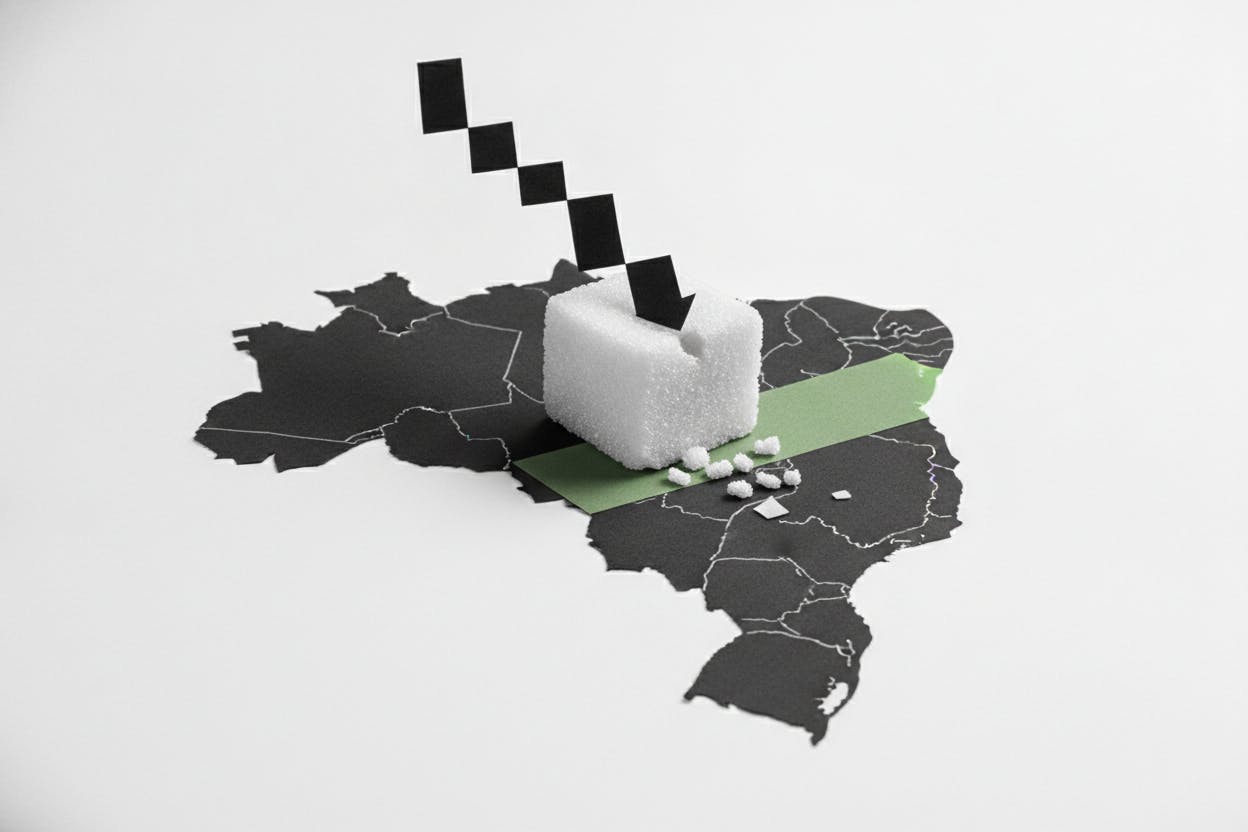
Raw sugar futures slipped to 14.77 cents per pound on Wednesday, as traders weighed favorable harvest weather in Brazil against a sharp drop in Chinese imports. The move highlights how near-term supply expectations and demand signals are pulling the market in opposite directions.
Brazil's Weather Keeps Harvest Moving
The main driver behind the price dip is the outlook for Brazil's Centre-South region, the world's largest sugar-producing area. Commodity research firm Green Pool noted that weather conditions there "will favour harvesting this week," meaning mills can cut and process cane at a steady pace. Dry, warm weather typically allows for uninterrupted field work, which keeps near-term sugar supplies flowing into the market.
Brazil's harvest season runs from April to November, and any disruption—such as heavy rain—can slow crushing and tighten supply. For now, the forecast looks supportive for output, which has helped push prices lower.
China's Imports Drop Sharply
On the demand side, China imported 280,000 metric tons of sugar in June, according to customs data. That represents a 34.2% decline compared to the same month last year. China is the world's largest sugar importer, so any slowdown in its buying can weigh on global prices.
The drop may reflect several factors: higher domestic sugar production, ample inventories, or weaker demand from food and beverage manufacturers. While one month of data doesn't signal a long-term trend, it adds to the cautious tone in the market.
What This Means for Investors
For everyday investors, sugar is a commodity that can affect the cost of everything from candy and soft drinks to processed foods. Lower sugar prices can help food companies' profit margins, but they also reduce revenue for producers and commodity-focused funds.
The current price level—around 14.77 cents per pound—is relatively low by historical standards. Sugar has traded in a wide range over the past few years, influenced by weather, energy prices (since sugarcane can also be used for ethanol), and global economic growth. Investors should watch for updates on Brazil's harvest pace and any changes in Chinese demand, as these will likely drive near-term moves.
Broader market conditions also matter. If central banks like the Federal Reserve keep interest rates high—as recent comments from some Fed officials suggest—it could strengthen the US dollar, making dollar-denominated commodities like sugar more expensive for foreign buyers and potentially dampening demand further. For more on how rate expectations affect markets, see our coverage of Fed Hawk Hammack Signals Possible Rate Hike as Inflation Stays Stubborn.
Similarly, geopolitical tensions can shift investor sentiment toward safe-haven assets, impacting commodity prices. The recent Yuan Slips as Middle East Tensions Boost Dollar Demand story illustrates how global risks can ripple through currency and commodity markets.
The Bigger Picture
Sugar is also tied to energy markets because Brazil uses much of its cane to produce ethanol. When oil prices rise, ethanol becomes more profitable, and mills may divert cane away from sugar production. That dynamic can support sugar prices. Conversely, if oil prices fall, more cane goes to sugar, potentially weighing on prices.
For now, the market is focused on the immediate supply picture from Brazil and the demand signals from China. Investors should keep an eye on weekly harvest updates and any shifts in Chinese import policy or consumption trends.
In other commodity markets, similar dynamics are at play. For instance, Palm Oil Slips Friday but Stays on Track for Second Weekly Gain shows how weather and demand interplay in agricultural commodities. And for a broader view of how commodity moves affect equities, see TSX Slips to One-Week Low as AI Chip Stocks Retreat, Energy Shares Gain.
As always, no single data point tells the whole story. The combination of Brazil's favorable weather and China's weaker imports has created a headwind for sugar prices in the short term. But the market remains sensitive to any surprises—whether from weather shifts, policy changes, or global economic data.



