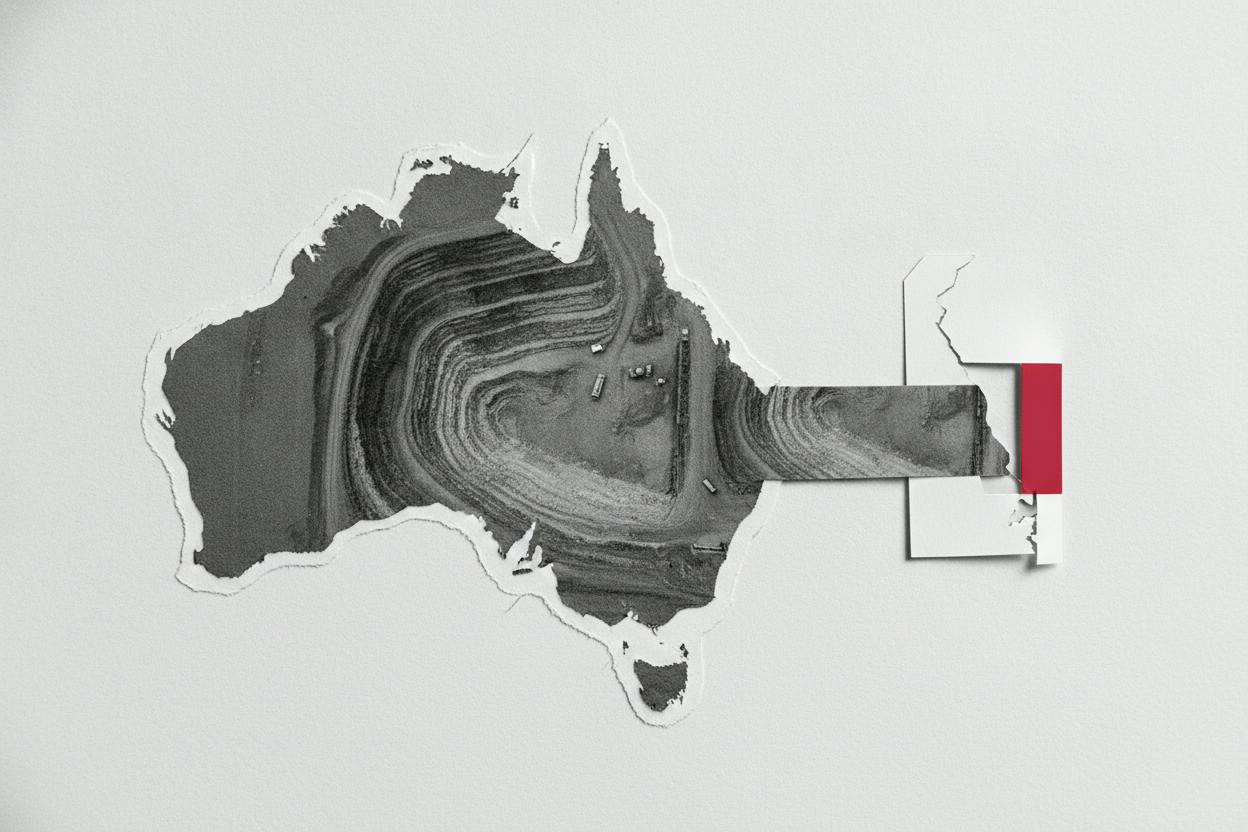
Australian miner Sunrise Energy Metals has announced plans to re-domicile in Delaware and shift its primary stock listing to the Nasdaq exchange. The move is part of a broader strategy to secure up to $400 million in conditional US government-backed funding for its Syerston scandium project in New South Wales.
Under the proposal, a new US parent company, Sunrise Energy Metals, Inc., would acquire the existing shares of the Australian entity. Nasdaq would become the company's main listing, while the Australian Securities Exchange (ASX) would take on a secondary role. Sunrise says the restructuring would not alter its assets or leadership, but would place its corporate structure where US investors and brokers are already equipped to own and trade the stock.
Why the US move?
Scandium is a critical mineral used in lightweight alloys, solid oxide fuel cells, and aerospace components. The Syerston project, located in New South Wales, is one of the world's largest known scandium deposits. However, developing such a project requires significant capital, and securing funding from US government sources often comes with conditions—including a US corporate presence.
By re-domiciling in Delaware, a state known for its business-friendly legal framework, Sunrise aims to align itself with US regulatory and investor expectations. A Nasdaq listing would also increase visibility among US institutional investors, who may be more familiar with critical minerals and clean energy supply chains than with Australian-listed small caps.
This move mirrors a broader trend of resource companies seeking US listings to tap into deeper capital markets and government support programs. The US has been actively courting critical mineral projects as part of its strategy to reduce reliance on foreign supply chains, particularly from China.
What it means for investors
For current shareholders, the re-domiciling would be a corporate restructuring rather than a change in the underlying business. The company emphasizes that assets and management remain the same. However, the shift to Nasdaq could bring several practical benefits: potentially higher trading liquidity, inclusion in US indices, and easier access for US-based investors who may have been restricted from buying ASX-listed shares.
On the flip side, moving to a US listing often comes with additional compliance costs and regulatory scrutiny. ASX shareholders would need to approve the plan, and the transition could take several months. There's also the risk that the conditional funding commitment—up to $400 million—may not ultimately materialize, as such commitments are often subject to due diligence and final approval.
For everyday investors, this story highlights the growing importance of critical minerals in the global energy transition. Scandium, while less well-known than lithium or cobalt, is essential for certain high-performance applications. Government backing for such projects can de-risk development, but it also ties the company's fortunes to political and policy shifts.
Broader market context
The move comes at a time when energy and resource stocks are in focus. Recent volatility in oil prices and shifting energy policies have made investors more attentive to supply chain security. For example, oil price jumps have set up rebounds for Australian shares, and energy stocks have rallied on diesel export ban talk. These dynamics underscore the strategic value of domestic critical mineral projects.
Sunrise's move also reflects a broader pattern of companies seeking US listings to access capital and government support. While not unique, it is notable for a mid-sized miner. Investors should watch for shareholder votes and regulatory approvals in the coming months.
As always, this is not a recommendation to buy or sell. It's important to understand the risks and potential rewards of any corporate restructuring. For those interested in critical minerals, this development is worth tracking.