Swiss stocks ended Monday essentially flat, as a downgrade of heavyweight Novartis offset encouraging signs from the country's manufacturers. The Swiss Market Index (SMI) slipped just 0.05%, leaving investors to weigh an economy that is expanding, but unevenly.
Mixed signals from the Swiss economy
Fresh data painted a two-sided picture. A business survey showed manufacturing activity strengthened again in October, suggesting factories are finding their footing. But that was tempered by a drop in inflation-adjusted retail sales in September, reversing the previous month's gain.
The KOF employment indicator, which measures companies' hiring intentions, edged down but remained above its long-run average. That suggests businesses are still more inclined to add workers than cut them, even as the pace of hiring cools.
For investors, the takeaway is that the Swiss economy is not in trouble, but it is not firing on all cylinders either. That backdrop helps explain why the index barely moved: there was no single catalyst strong enough to push the market decisively in either direction.
Novartis hit by a sell rating
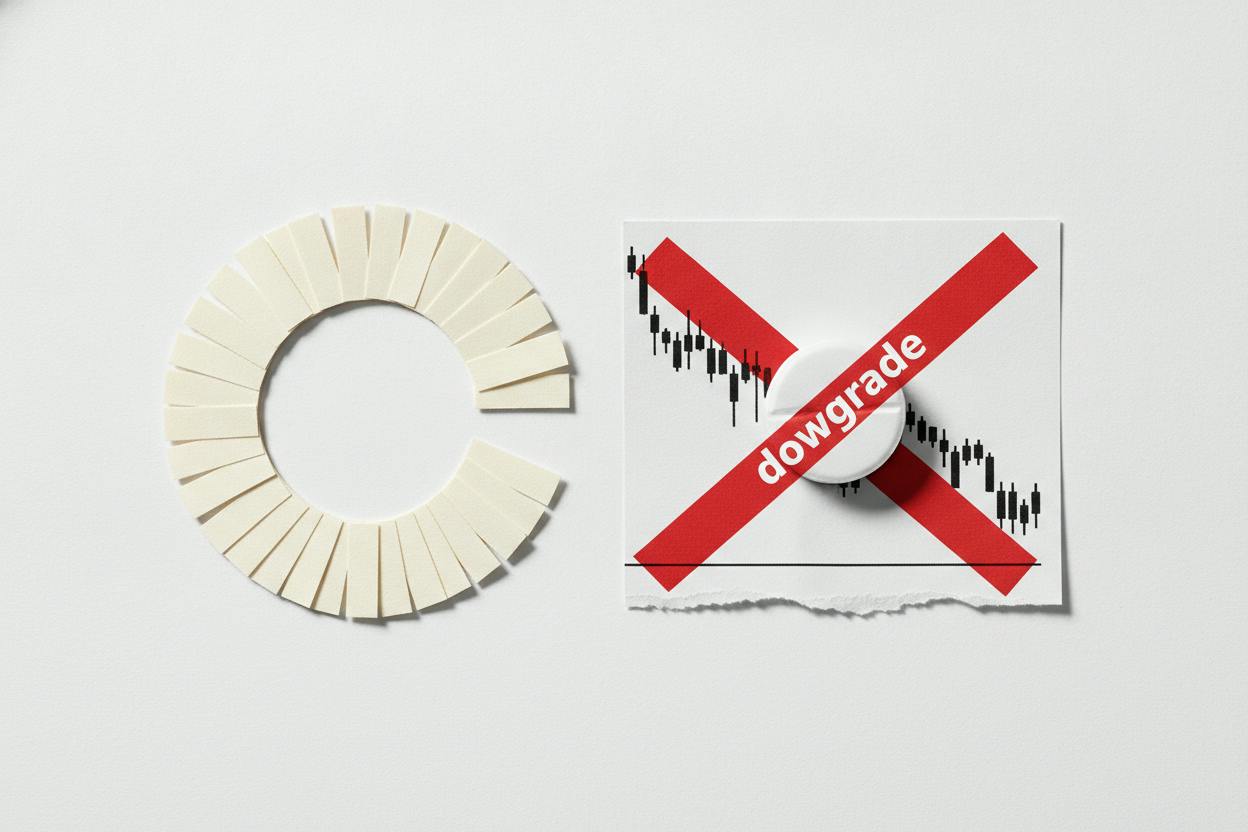
The biggest single drag on the index came from Novartis, which fell 1.69% after Deutsche Bank Research downgraded the stock to sell from hold. The bank also trimmed its price target to 115 Swiss francs, arguing that the shares had run ahead of what near-term drug-development updates are likely to deliver.
Novartis is one of the largest components of the SMI, so a move of this size has an outsized impact on the index. The downgrade reflects a view that the market has already priced in positive news from the company's pipeline, leaving little room for upside in the near term.
For everyday investors, this is a reminder that analyst ratings can move individual stocks, but they are opinions, not facts. A single downgrade does not change the underlying business, but it can signal that the easy gains may be behind the stock for now.
PolyPeptide becomes a takeover stub
Elsewhere, Samsung Biologics, a South Korean contract drugmaker, said its tender offer for Swiss peptide manufacturer PolyPeptide Group had reached 97.98% of the targeted shares. The company plans to squeeze out the remaining minority holders, even as PolyPeptide shares fell 1.55% on the day.
When an acquirer gets close to total ownership, the remaining shares stop trading like a normal company and start trading like a deal claim on an eventual cash-out. With so little stock left in public hands, liquidity often dries up: bid-ask spreads widen, small trades can move the price, and the shares can swing on process timing rather than business news.
In other words, even if a squeeze-out is the likely end point, the path there can be choppier and harder to trade for minority holders. This is a common dynamic in takeovers, and it is worth understanding for anyone holding shares of a company being acquired.
What it means for investors
For Swiss market watchers, Monday's session was a study in balance. The flat close hides a lot of moving parts: a resilient manufacturing sector, softer consumer spending, a cautious employment outlook, and company-specific news that moved individual stocks.
The Novartis downgrade is a reminder that even blue-chip stocks can be vulnerable to analyst sentiment. The PolyPeptide situation highlights the risks and mechanics of holding shares in a company that is being taken over.
Looking ahead, investors will likely keep an eye on whether manufacturing strength continues and whether retail sales recover. They will also watch for any further updates on the PolyPeptide squeeze-out and for any new developments in Novartis's pipeline that could change the picture.
For now, the Swiss market is treading water, and that is not necessarily a bad thing. Steady markets can be a good environment for long-term investors who are focused on fundamentals rather than short-term noise.