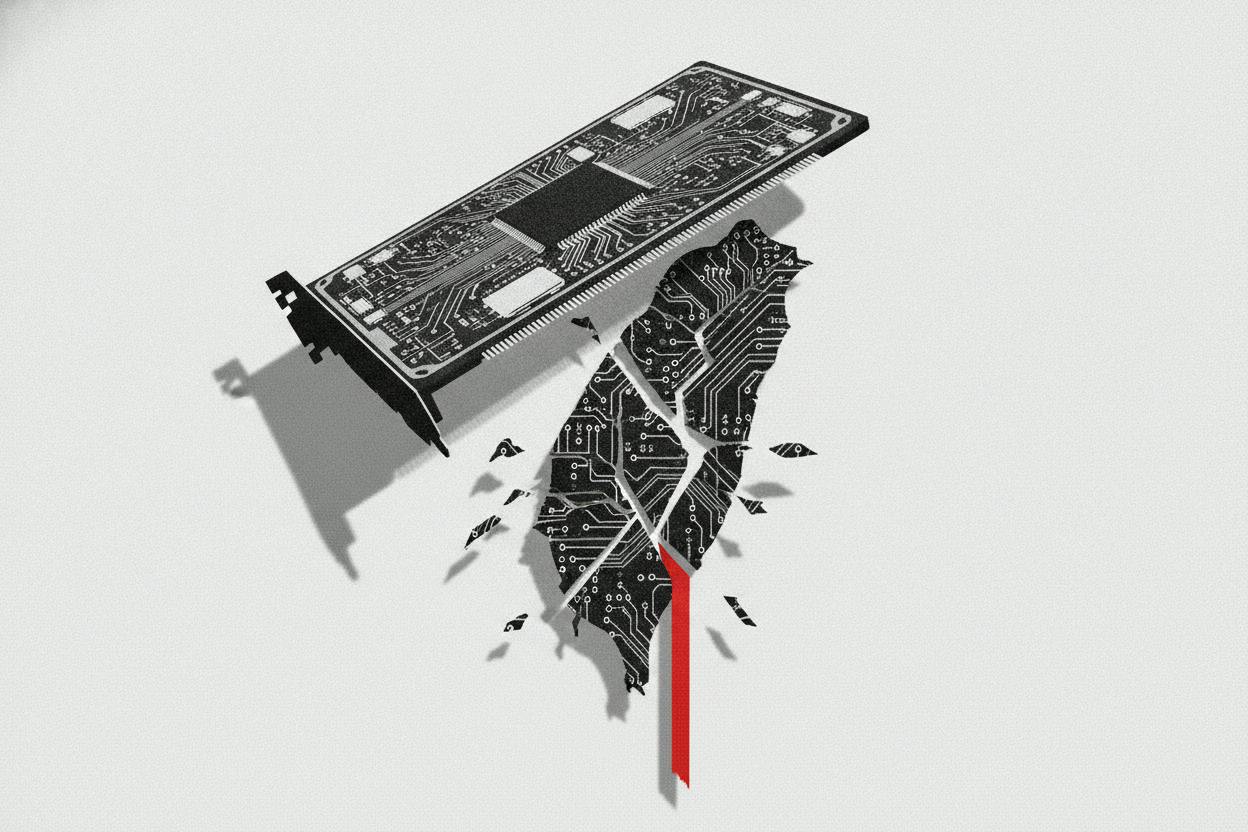
Taiwan's stock market suffered its worst day in months on Friday, with the benchmark index sinking nearly 6% as investors rushed to exit crowded artificial-intelligence trades. The drop capped a brutal week for the chip-heavy market, which has been one of Asia's standout performers during the global AI boom.
According to Reuters, Taiwan's main index fell 16.6% over the week, erasing about $1.12 trillion in market value since its record close on October 6. Major semiconductor names bore the brunt of the selling, reflecting growing anxiety about valuations that had soared on expectations of explosive AI-driven demand.
Why the AI trade is unwinding
The selloff wasn't confined to Taiwan. South Korea's KOSPI index dropped as much as 4.8%, and the MSCI emerging Asia equities index slid more than 3%. Currency markets also felt the strain, with Indonesia's rupiah hovering near a record low of 18,285 per US dollar. That pattern—stocks and currencies falling together—is a classic sign of investors pulling money out of the region's riskier assets.
What triggered the sudden reversal? The brief mentions two factors: the resignation of Nvidia CEO Jensen Huang and an early December congressional hearing. While the details are still emerging, such events can shake confidence in a sector that has become extremely crowded. When too many investors pile into the same trade, even a small shock can cause a rapid repricing.
For everyday investors, it's worth understanding that the AI trade isn't just about one company or one country. It's a global bet that artificial intelligence will drive massive spending on chips, data centers, and software. Taiwan, as home to the world's largest contract chipmaker TSMC and a host of other semiconductor firms, is ground zero for that bet.
Mechanical selling amplifies the drop
One reason the decline has been so sharp is that much of the selling is mechanical, not based on fresh news about company fundamentals. When a trade gets crowded, losses can trigger automatic selling from leveraged players facing margin calls. Risk models like value-at-risk (VaR) also force portfolio managers to cut positions when volatility spikes, and funds that target a steady level of volatility will dial back exposure after big moves.
This "de-risking" helps explain why a Taiwan-led chip slump can line up with a 4.8% drop in South Korea's KOSPI, a broader fall in the MSCI emerging Asia index, and renewed pressure on regional currencies like the won and the rupiah. It's a domino effect that can turn a sector-specific correction into a regional pullback.
For investors, the key takeaway is that when a trade becomes this crowded, declines can feed on themselves. The selling may have little to do with whether AI companies will actually deliver strong earnings in the coming years. Instead, it's about investors reassessing how much they're willing to pay for those future profits.
What it means for your portfolio
If you own international funds or ETFs with exposure to Asian markets, you're likely feeling the effects of this selloff. The drop in Taiwan and South Korea can drag down diversified emerging-market funds, and currency weakness can further reduce returns for US-based investors.
But it's important to keep perspective. Market corrections are a normal part of investing, especially after a period of strong gains. The AI trade has been one of the most profitable themes of the past two years, and some pullback was widely expected. The question now is whether this is a short-term blip or the start of a longer-lasting shift.
Investors will be watching several things in the coming days: how Nvidia and other AI leaders respond to the news, whether the congressional hearing produces any regulatory surprises, and whether the selling spreads to other regions. Related coverage includes Asia stocks sliding as the AI trade cools and the KOSPI hitting a 10-month low.
For now, the message is clear: when a trade gets too crowded, the exit can be just as crowded. That's a lesson that applies to AI stocks, but also to any investment that becomes the market's favorite story.