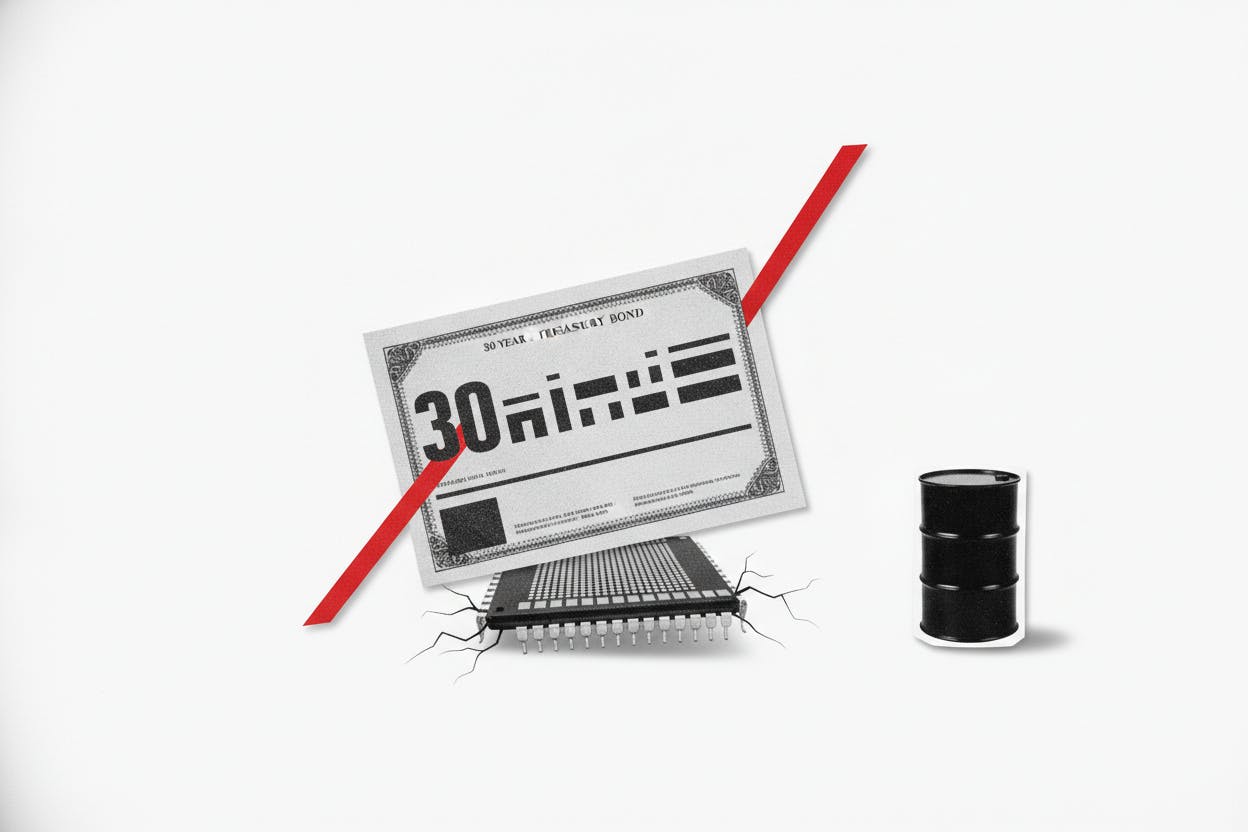
Technology stocks took a hit on Tuesday as long-term US Treasury yields remained near levels not seen since 2007, with semiconductor companies bearing the brunt of the selling. The move came alongside a rise in oil prices tied to renewed tensions between the US and Iran, which also pushed the Cboe Volatility Index (VIX) to its highest level in two weeks.
Why yields are weighing on tech
Long-dated Treasury yields, such as the 30-year bond, are a key benchmark for investors because they influence the "discount rate" used to value future cash flows. When yields rise, the present value of profits expected years down the road shrinks, which tends to hit growth-oriented stocks hardest. Tech companies, especially those in fast-growing areas like semiconductors, often derive a large portion of their value from earnings expected far in the future, making them particularly sensitive to yield moves.
The PHLX Semiconductor Index fell 5.4%, with memory-chip-related names especially weak. The Roundhill Memory ETF dropped 7.9%, reflecting concerns that higher borrowing costs could cool demand for memory chips used in data centers, smartphones, and other devices.
Oil and geopolitics add to the pressure
Adding to the market's unease, oil prices climbed as tensions between the US and Iran escalated. The prospect of supply disruptions in the Middle East, a region that accounts for a significant share of global crude production, tends to push energy prices higher. That dynamic was already visible in other markets, with UK stocks edging up on oil gains and energy stocks rallying ahead of Tuesday's open.
Rising oil prices can feed into inflation expectations, which in turn can keep long-term yields elevated. This creates a feedback loop that pressures equity valuations, particularly for growth and tech names. The 30-year Treasury yield was at its highest since 2007, a level that has historically signaled caution for stock investors.
What it means for investors
For everyday investors, the key takeaway is that the relationship between bond yields and stock prices matters, especially for tech-heavy portfolios. When yields rise, it's not just a bond market story—it can ripple through equities, hitting the sectors that had been driving market gains.
The VIX, often called Wall Street's "fear gauge," climbing to a two-week high suggests traders are bracing for more volatility. While a single day's move doesn't signal a trend, it does highlight how quickly sentiment can shift when macro forces like yields and geopolitics collide.
Investors should also watch how other markets are reacting. Long-term yields hitting 2007 highs have already sparked concerns about inflation, and eurozone bond yields have also climbed as oil prices jump. This is a global phenomenon, not just a US one.
For those with diversified portfolios, the lesson is that no sector is immune when yields and oil move together. While energy stocks may benefit from higher crude prices, the broader market—especially tech—can suffer. Keeping an eye on yield levels and geopolitical headlines can help investors understand why their portfolios are moving, even if they don't need to take immediate action.
As always, it's important to remember that market moves like this are part of the normal ebb and flow. Long-term investors who stay the course and maintain a diversified approach are often better positioned to weather short-term volatility than those who try to time the market.