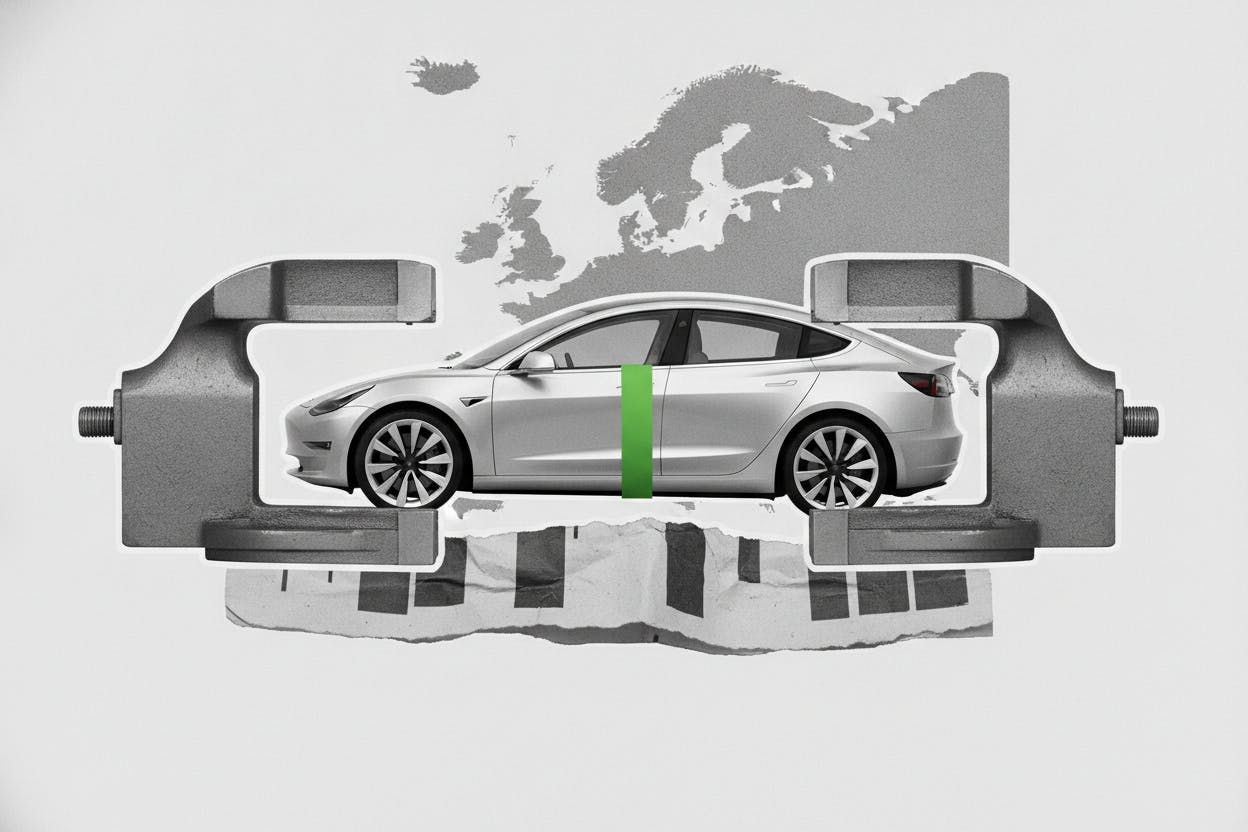
Tesla's Shanghai factory, the company's main export hub for Europe and Asia, delivered 89,091 Model 3 and Model Y vehicles in June, up 24.4% from a year earlier, according to data from the China Passenger Car Association (CPCA). The result extends an eight-month streak of year-on-year gains for the plant, which plays a critical role in Tesla's global supply chain.
But the headline growth masks a mounting challenge: China's largest electric vehicle maker, BYD, sold 557,090 battery-electric vehicles (BEVs) globally in the second quarter, according to Reuters. That figure underscores how quickly BYD is scaling production and expanding overseas, particularly into Europe, where it is building a direct competitor to Tesla's Shanghai-built exports.
Why the Shanghai factory matters
Tesla's Shanghai Gigafactory is not just for the Chinese market. It is the company's primary export hub for Europe, where demand for EVs has been stronger than in North America. The plant's ability to ramp up output has been a key driver of Tesla's global delivery numbers, and the June data suggests that momentum is continuing.
However, the factory's output also exposes Tesla to trade and tariff risks. Europe has been considering higher tariffs on Chinese-made EVs, which could raise costs for Tesla and other exporters. Meanwhile, BYD is building its own factories in Europe, including in Hungary, to bypass such barriers and get closer to European customers.
BYD's rapid ascent
BYD's Q2 BEV sales of 557,090 vehicles represent a significant jump from the same period last year, though the company does not break out monthly figures. The Shenzhen-based automaker has been aggressively expanding its model lineup and slashing prices in China, where competition is fierce. It is also pushing into Southeast Asia, Latin America, and Europe with new models like the Dolphin and Atto 3.
For investors, the key question is whether BYD can maintain its growth trajectory while protecting profit margins. The company has historically focused on volume and market share, but its recent push into higher-priced segments and overseas markets suggests it is trying to balance scale with profitability.
What it means for investors
The Tesla-BYD rivalry is entering a new phase. Both companies are increasingly looking to Europe for growth, as the Chinese market becomes saturated and price wars erode margins. The quickest lever for both is pricing — discounts, low-rate financing, and cheaper trims — which can boost unit sales but also drag down average selling prices.
That means the next stage of the contest will likely show up in margins and per-car profitability, especially for vehicles sold into Europe from Shanghai or from BYD's new overseas footprint. Investors should watch quarterly earnings reports for signs of margin compression, as well as any updates on tariff policies or factory expansions.
For context, Tesla's Q2 deliveries beat forecasts as the company shifts focus to robotaxi and AI initiatives. Meanwhile, the broader US auto market saw modest growth in Q2, with GM and Ford losing ground to Honda and Nissan.
The June jobs report sent mixed signals, and Tesla shares dropped despite the delivery jump, reflecting broader market uncertainty. For everyday investors, the takeaway is that the EV race is no longer just about who sells the most cars — it's about who can do so profitably while navigating trade tensions and shifting consumer demand.