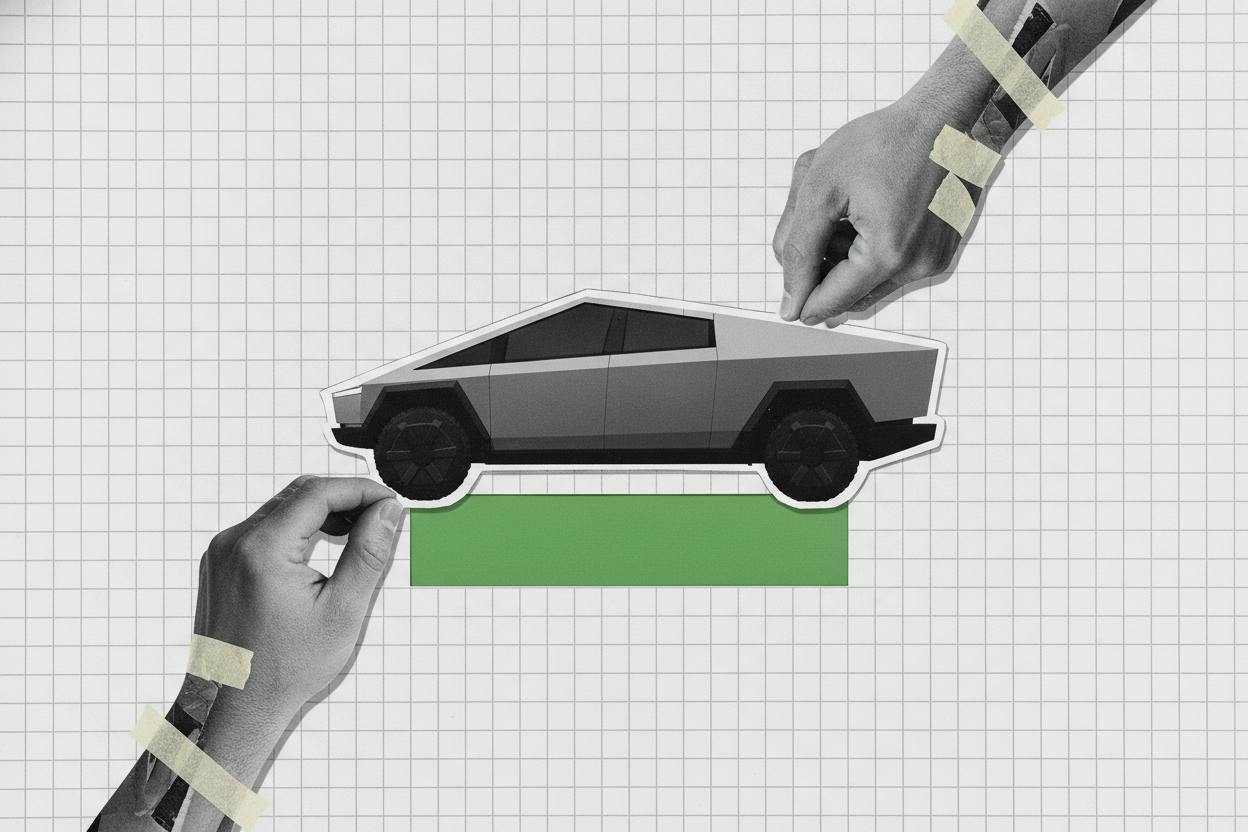
Tesla is preparing to retire its Cybertruck. CEO Elon Musk said the company could dismantle the Cybertruck assembly line in Austin, Texas, around June or July next year, freeing up factory space for the Cybercab, Tesla's upcoming robotaxi that has not yet entered commercial production.
The move marks a sharp pivot for a vehicle that was once billed as a breakthrough for Tesla, opening a new market in the pickup truck segment. But sales have disappointed. According to Motor Intelligence data cited by Reuters, Cybertruck deliveries are estimated to be down 28% this year through September, to roughly 11,600 units. That is a far cry from the 250,000-a-year production rate Musk once floated as a possibility.
Why Tesla is shifting gears
Musk said Tesla will first ramp up Cybertruck output to work through an existing order backlog, then retire the line. That sequencing highlights a basic manufacturing reality: Tesla's factory floor is finite, and the company is betting its future on autonomous vehicles rather than a niche electric pickup.
The Cybercab, unveiled last year, is a purpose-built robotaxi with no steering wheel or pedals, designed to operate without a human driver. Tesla has not yet received regulatory approval to deploy it commercially, and the timeline for that remains uncertain. By clearing out the Cybertruck line, Tesla is signaling that it wants to be ready to mass-produce the Cybercab as soon as the green light comes.
This is not the first time Tesla has reallocated production lines to chase a new product. The company has a history of shifting factory capacity toward its most promising vehicles, and it has often struggled with production ramps. The Cybertruck itself faced years of delays before finally reaching customers in late 2023.
What the Cybertruck's struggles mean
The Cybertruck's sales slump is a cautionary tale. When it launched, it generated enormous hype, with over a million refundable reservations. But converting interest into actual purchases proved harder. The vehicle's polarizing design, high price, and production challenges likely contributed to the shortfall.
For Tesla, the Cybertruck was never going to be a volume leader like the Model Y. But the gap between the 250,000-unit ambition and the roughly 11,600 units sold through September is stark. It suggests that even a company with Tesla's brand power can struggle to create demand for a product that doesn't fit the mainstream.
The decision to retire the Cybertruck also raises questions about Tesla's broader strategy. The company has been investing heavily in autonomous driving and artificial intelligence, and Musk has repeatedly said that the future of Tesla is robotaxis, not just selling cars. The Cybercab is central to that vision. But autonomous vehicle technology has faced regulatory hurdles and safety scrutiny, and it remains unclear when—or if—the Cybercab will generate meaningful revenue.
What it means for investors
For everyday investors, this news is a reminder that Tesla is a company in transition. The Cybertruck was supposed to be a growth driver, but its retirement suggests that Tesla is willing to cut its losses and focus on what it sees as the next big thing.
Investors should watch a few things in the coming months. First, how quickly Tesla can clear the Cybertruck backlog and whether the wind-down goes smoothly. Second, any updates on Cybercab regulatory approvals or pilot programs. Third, whether Tesla's core vehicle sales—the Model 3, Model Y, and others—continue to hold up, since those remain the company's main source of revenue.
The move also highlights the risks of investing in a company that makes big bets on unproven technology. Tesla's stock has historically been volatile, and news like this can move the share price. But for long-term investors, the key question is whether the Cybercab can deliver on its promise—and whether Tesla can execute on its ambitious timeline.
In the meantime, the Cybertruck's retirement is a notable chapter in Tesla's story. It shows that even the most hyped products can fall short, and that companies must adapt to changing market realities. For Tesla, the next chapter is all about autonomy.