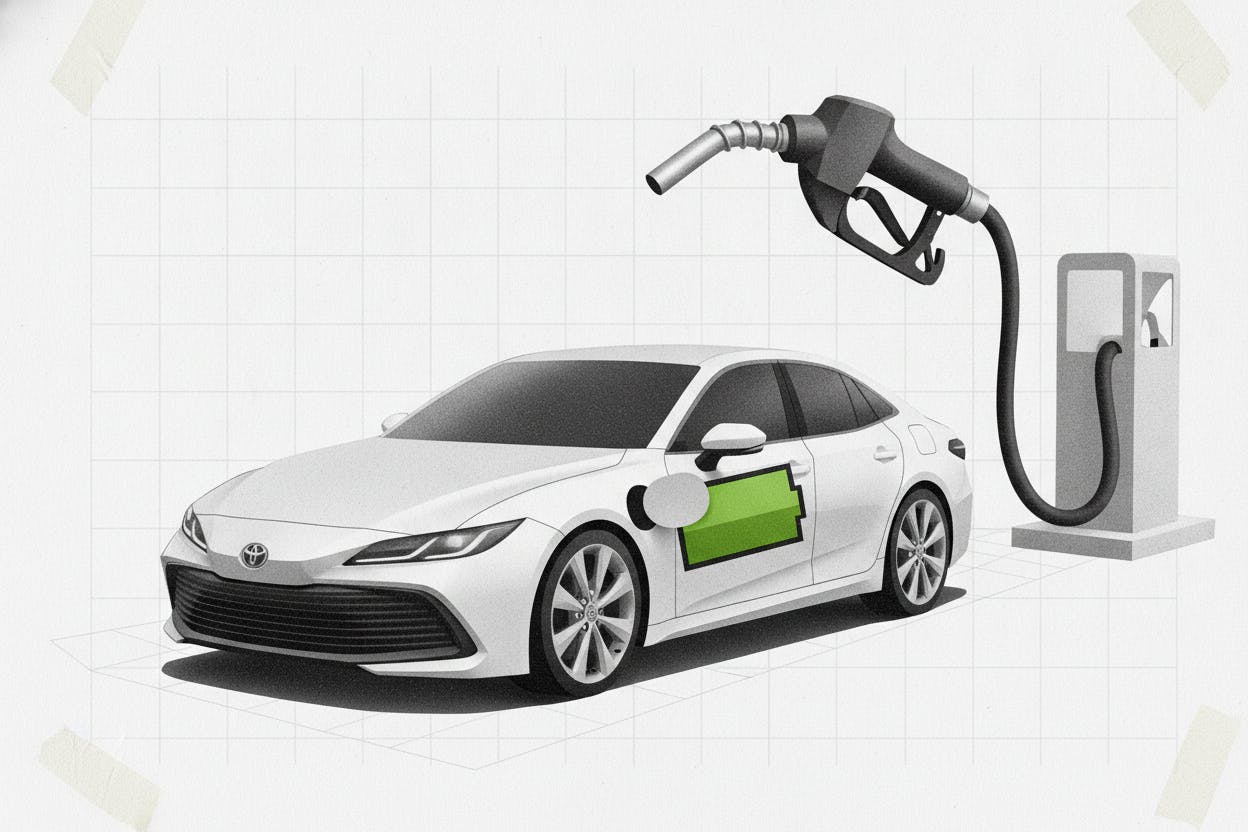
For years, General Motors has been the undisputed king of US auto sales. But a new challenger is closing fast. Toyota is narrowing the gap with GM, thanks to a surge in demand for hybrids as gasoline prices hover near $4 a gallon, according to data from Cox Automotive cited by Bloomberg.
The shift highlights how quickly consumer behavior can change when fuel costs rise. And it suggests that the next phase of the auto industry's electrification push may be driven less by flashy new EV models and more by the humble hybrid — a technology that's been around for decades but is suddenly looking like a winning bet.
What the Numbers Show
Cox Automotive, a leading auto industry research firm, expects Toyota's US market share to reach 15.8% in the first half of the year. That's up from previous periods and puts the Japanese automaker within striking distance of GM, whose share is forecast to slip to 16.8%. The gap — just one percentage point — is the narrowest it has been in years.
The driver of Toyota's gains is its lineup of "electrified" vehicles, a category that includes hybrids, plug-in hybrids, and battery-electric vehicles. Through May, Toyota's electrified sales rose 5.6% compared to the same period last year. That growth came even as the broader US auto market is expected to contract, making Toyota's performance all the more striking.
Most of those sales are hybrids — cars that combine a gasoline engine with an electric motor to improve fuel efficiency. Unlike fully electric vehicles, hybrids never need to be plugged in. They recharge their batteries through regenerative braking and the engine itself, offering a familiar driving experience with significantly better mileage.
Why High Gas Prices Matter
Gasoline prices near $4 a gallon have a way of focusing the mind. When fuel costs rise, running a car suddenly becomes a much bigger line item in the household budget. Buyers start paying attention to what analysts call "total cost of ownership" — the full expense of owning and operating a vehicle over time, including fuel, maintenance, and depreciation.
Hybrids shine in this environment. A typical hybrid can deliver 50 miles per gallon or more, compared to 25-30 mpg for a conventional gasoline car. Over a year of driving, that difference can save a driver hundreds or even thousands of dollars at the pump. And because hybrids don't require a new charging routine or the upfront cost of a home charger, the adoption hurdle is much lower than for full EVs.
"Near-$4 gas is a fast way to reshape what Americans buy," the data suggests. When fuel prices spike, buyers tend to shift toward efficiency quickly because the savings show up immediately at the pump. That dynamic is playing out now, and Toyota is the primary beneficiary.
What It Means for Investors
For investors, the narrowing Toyota-GM gap is more than just a headline. It signals a shift in the competitive dynamics of the auto industry that could have lasting implications.
Toyota's 5.6% jump in electrified sales is translating into disproportionate market share gains. That's because the company has invested heavily in hybrid technology for years, building a broad lineup that includes everything from the Prius to hybrid versions of the RAV4, Camry, and Highlander. When demand for fuel-efficient vehicles spikes, Toyota is ready with products that consumers actually want to buy.
GM, by contrast, has focused more on developing full battery-electric vehicles like the Chevrolet Bolt and the upcoming Silverado EV. While that strategy may pay off in the long run, it leaves GM exposed in the near term if buyers are more interested in hybrids than pure EVs. The company's market share slip suggests that its current lineup isn't capturing the wave of demand for fuel-efficient vehicles that don't require a charging station.
The broader lesson for investors is that the auto industry's "electrification" story is not a straight line. While EV adoption is growing, hybrids are proving to be a powerful bridge technology — especially when gas prices are high. Automakers that can scale hybrid production and keep prices competitive may win the next round of US sales, even if they don't have the flashiest EV models.
This dynamic also has implications for the energy sector. If hybrids continue to gain share, they could slow the growth of gasoline demand, even as they reduce the urgency for charging infrastructure. That's a different path to lower emissions than the one many investors have been betting on.
What to Watch Next
Investors should keep an eye on pump prices. If gasoline stays near $4 a gallon or rises further, the trend toward hybrids is likely to accelerate. That would benefit Toyota and other automakers with strong hybrid lineups, while putting pressure on companies that are betting heavily on full EVs.
Also worth watching: how GM responds. The company could accelerate its hybrid offerings or adjust pricing to defend its market share. Any such moves would be a signal that the competitive landscape is shifting.
For context on broader market trends, see our coverage of New Home Sales Slip, Oil Inventories Drop: Mixed Signals for Investors and Oil Prices Slide as Tankers Clear Strait of Hormuz, US Authorizes Iranian Sales.
In the end, the Toyota-GM story is a reminder that in the auto industry, the race doesn't always go to the fastest — sometimes it goes to the most fuel-efficient.