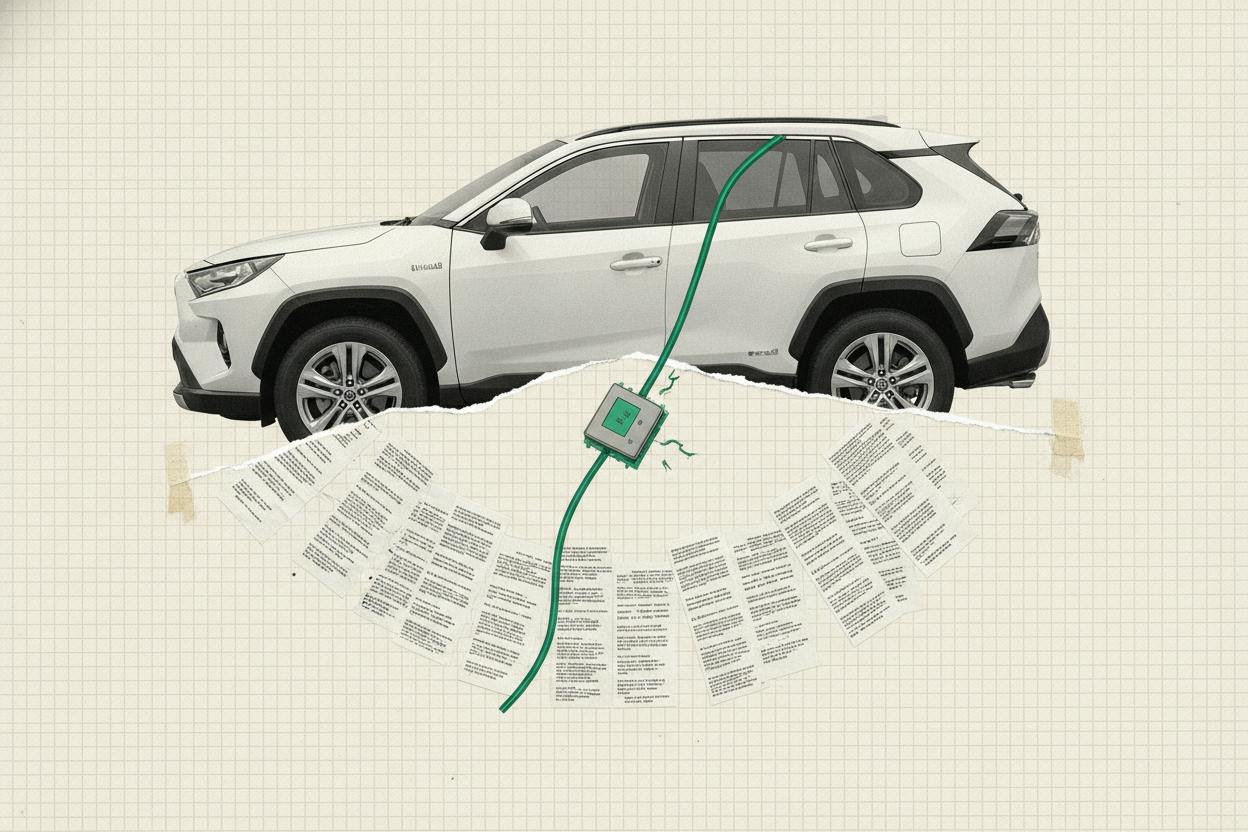
Toyota has announced a recall of approximately 31,000 RAV4 Plug-In Hybrid SUVs in the United States. The move comes after the automaker discovered a fault in an electronic control unit that could cause the plug-in hybrid system to shut down while the vehicle is being driven. The announcement weighed on Toyota's stock, which fell 1.4%.
What is the problem?
The issue lies in the electronic control unit, a computer that manages the hybrid powertrain. In certain conditions, this unit can malfunction, causing the hybrid system to stop working. If that happens while the car is moving, the driver could lose power, increasing the risk of an accident. Toyota has not reported any injuries or crashes related to the fault, but the potential for sudden power loss is a serious safety concern.
Why does this matter?
A recall tied to losing power while driving is the kind of safety issue that can attract regulatory scrutiny and force a company to act quickly, even when the number of vehicles involved is relatively small. The direct fix might be straightforward—often it's a software update or a replacement part—but the operational work is rarely simple. Dealers need to receive the parts, owners need to be notified and schedule repairs, and automakers sometimes pause deliveries or sales of affected models until the issue is resolved.
For Toyota, this recall adds to a series of quality challenges that have emerged in recent years. While the company has long been known for reliability, the growing complexity of hybrid and electric systems introduces new potential failure points. This particular recall is limited to the plug-in hybrid version of the RAV4, which is a popular model in Toyota's lineup, especially among buyers looking to reduce fuel costs without going fully electric.
What does this mean for investors?
For investors, a recall of this size is unlikely to have a major financial impact on Toyota, which sells millions of vehicles globally each year. The cost of fixing 31,000 cars is manageable, and the company's balance sheet is strong. However, the 1.4% drop in the share price reflects a broader concern: recalls can damage a brand's reputation for quality, and they can invite closer scrutiny from regulators.
Investors should also consider the competitive landscape. Toyota is a leader in hybrid technology, and its plug-in hybrids are part of a growing segment as consumers seek more fuel-efficient options. The company faces increasing competition from rivals like Ford, which has seen hybrid sales surge as gas prices climb. Any perception of reliability issues could give competitors an edge in this important market.
Moreover, the recall comes at a time when the auto industry is under pressure from multiple directions. Detroit's Big Three have been losing US market share as buyers shift toward hybrids, and European automakers are also investing heavily in electrified models. Toyota's ability to manage this recall smoothly will be closely watched by investors who see the company as a bellwether for the industry's transition to cleaner vehicles.
What to watch next
Investors will be looking for details on the fix and how quickly Toyota can complete the recall. The company will likely issue a formal notice to owners, and dealers will be instructed on the repair procedure. If the fix is a simple software update, the recall could be resolved within weeks. If it requires a hardware replacement, it could take longer and cost more.
Regulators, including the National Highway Traffic Safety Administration (NHTSA), will monitor the recall to ensure it is handled properly. In some cases, recalls can lead to investigations if the problem is more widespread or if the company is seen as slow to respond. So far, Toyota has acted proactively, which is generally viewed positively by safety advocates and investors alike.
For everyday investors, the key takeaway is that recalls are a normal part of the auto industry, and even the most reliable brands occasionally face them. The impact on a company's long-term prospects depends on how it handles the situation and whether the problem is isolated or indicative of deeper issues. Toyota's strong brand and financial stability suggest it can weather this storm, but the incident is a reminder that investing in automakers carries inherent risks related to product quality and safety.
As the industry continues to evolve, with Europe considering quotas on Chinese hybrid imports and other market shifts, Toyota's ability to maintain its reputation for reliability will be crucial. The company's hybrid leadership is a key competitive advantage, and any erosion of that trust could have longer-term consequences.
In the meantime, owners of affected RAV4 Plug-In Hybrids should watch for official notification from Toyota and follow the instructions to get their vehicles fixed promptly. Safety should always be the top priority, and Toyota's quick action is a step in the right direction.