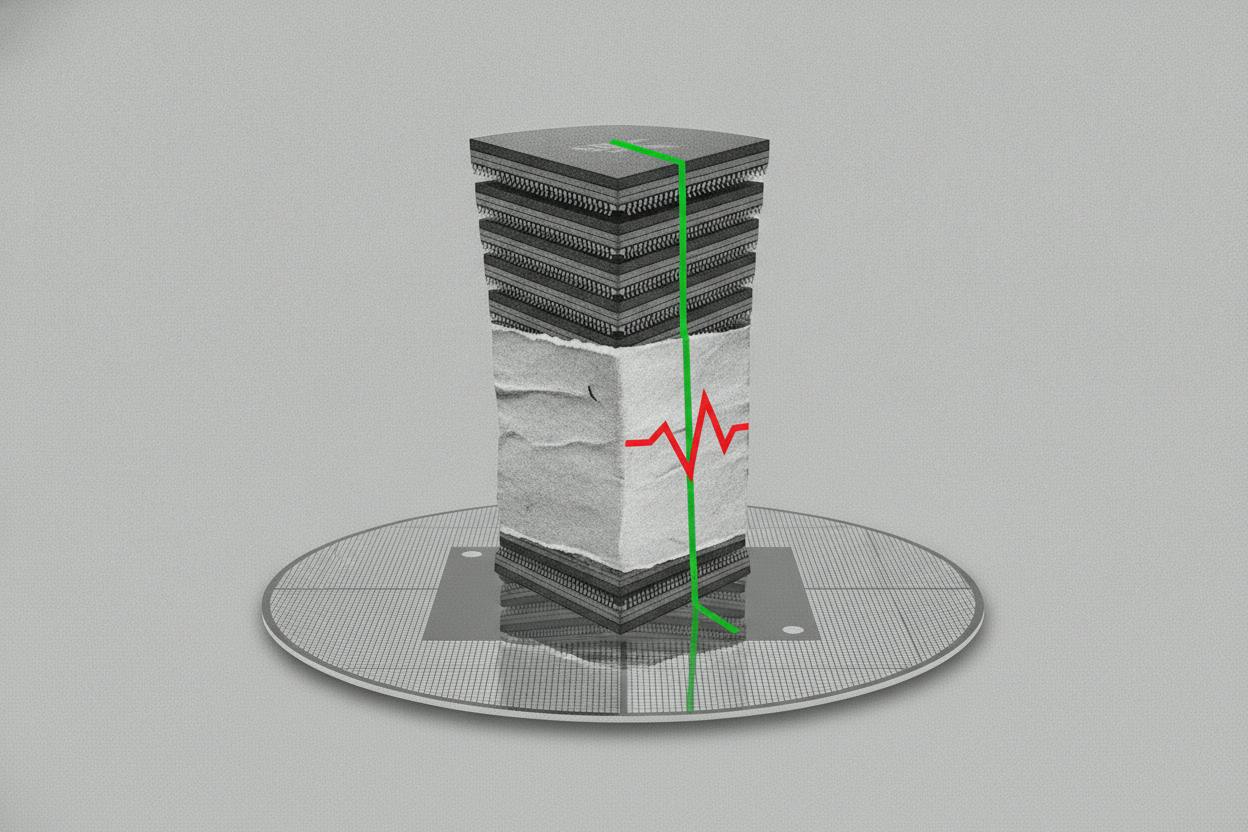
Taiwan Semiconductor Manufacturing Company (TSMC), the world's largest contract chipmaker, is reportedly considering a move into advanced memory chips. According to The Information, the company has begun sketching out production plans for 3D DRAM, a newer type of memory, after a shortage pushed memory prices higher.
TSMC is best known for making "logic" chips—the processors designed by companies like Apple and Nvidia that handle computing tasks. Memory chips, by contrast, store data. DRAM (dynamic random-access memory) is the kind of memory used in computers, servers, and smartphones. A 3D DRAM stacks memory cells vertically, which can boost capacity and speed while saving space.
Why TSMC is eyeing memory
The move comes as memory has become a bottleneck for AI hardware. AI systems rely on both powerful processors and large amounts of fast memory to handle the massive data sets used in training and running models. If DRAM supply can't keep up, even the most advanced processors can't be shipped in complete systems. That's why Nvidia, a major buyer of both logic and memory chips, has reportedly asked TSMC to consider making 3D DRAM.
For TSMC, entering the memory market would be a significant shift. The company has long focused on logic chips, where it holds a dominant position. Memory is a more cyclical business—prices swing sharply with supply and demand. A shortage now has driven prices up, but a glut could send them down just as quickly. Still, the potential to secure a stable supply of advanced memory for its customers—and to capture more of the AI chip value chain—may make the risk worthwhile.
What it means for investors
For everyday investors, this news is a reminder that the AI boom isn't just about processors. Memory chips are a critical piece of the puzzle, and their prices have been rising. That's already showing up in the earnings of big tech companies. For instance, Apple's recent results highlighted how memory chip costs are squeezing profit margins, even as sales shine.
If TSMC enters the memory market, it could shake up the competitive landscape. Currently, memory is dominated by a few players, including Samsung, SK Hynix, and Micron. TSMC's entry could bring more supply and potentially lower prices over time—good for buyers, but a challenge for incumbents. It could also open a new revenue stream for TSMC, which is already benefiting from the AI boom. The company's logic chips are in high demand, and profits from the AI boom have largely flowed to chipmakers rather than software developers.
However, investors should note that TSMC's plans are still in the early stages. The company hasn't confirmed any specific timeline or investment. Building a new memory production line is a massive undertaking, requiring billions of dollars and years of development. It's also a different manufacturing process than logic chips, so TSMC would need to build new expertise.
Broader context
The memory shortage is part of a wider trend in the semiconductor industry. Demand for AI chips has surged, and China's tech giants face long waits for Nvidia AI chips, reflecting the global scramble for supply. At the same time, deal-making in chips and other sectors has picked up, as companies position themselves for the next wave of growth.
For TSMC, moving into memory could also be a defensive play. If memory shortages continue to limit AI system shipments, TSMC's own logic chip sales could be affected. By securing its own memory supply, TSMC could ensure that its customers can build complete systems, which would help maintain demand for its processors.
What to watch next
Investors will be watching for any official announcements from TSMC about its memory plans. The company typically provides updates during its quarterly earnings calls, and any confirmation of a 3D DRAM project would be a major development. Also worth watching is how memory prices evolve. If the shortage persists, TSMC's move could be seen as a smart bet. If prices crash, the company might reconsider.
For now, the news is a signal that the AI hardware supply chain is still in flux. As Qualcomm bets on data center chips and other firms pivot to AI, the race to secure every component—from processors to memory—is intensifying. For everyday investors, it's a reminder that the AI story is broader than just the biggest names in tech.