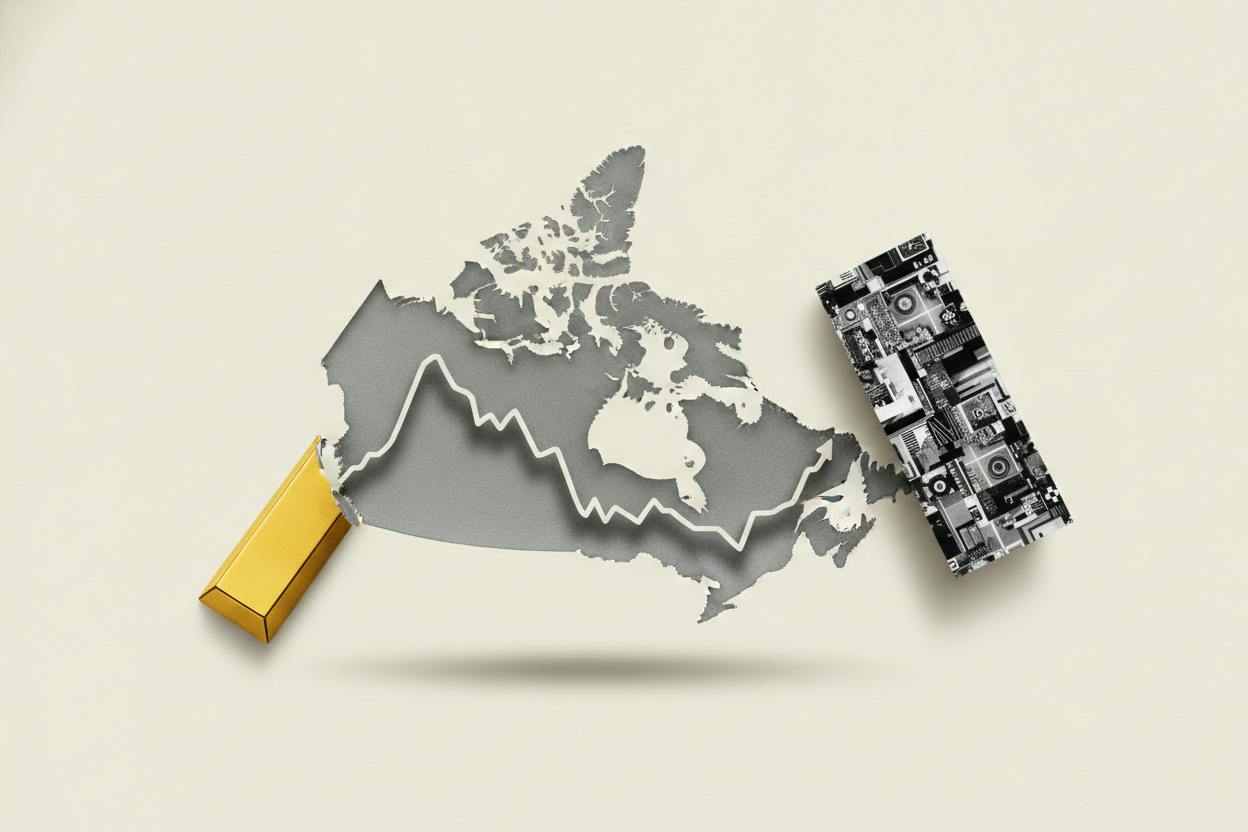
Canada's main stock index hit a one-week low on Friday, falling 1.57% as a sharp drop in gold prices and growing concerns about the cost of artificial intelligence buildouts weighed on the market. The S&P/TSX Composite closed at 35,673.99, with eight of its ten sectors ending lower.
The decline was led by mining and technology stocks, two groups that have been particularly sensitive to recent market shifts. Materials, the sector that includes miners, tumbled 4.9%, while technology lost 2.6%.
Gold's slide hits miners hard
Gold fell about 2% on the day, slipping to its lowest level since November 2025. The drop was tied to persistent inflation and firmer oil prices, which have kept investors focused on the possibility that the U.S. Federal Reserve could raise interest rates again.
For Canadian investors, gold's moves matter more than they do in many other markets. Mining stocks make up a large slice of the TSX, so even a modest decline in the metal can translate into a bigger hit for the index. That's because many mining costs—labor, equipment, energy—don't adjust quickly day to day. When the price of what a miner sells falls, much of that drop flows straight to the bottom line. This "operating leverage" is why materials fell nearly 5% while the broader index dropped just 1.57%.
The result is that the TSX can experience larger short-term swings than more diversified benchmarks, even on days when other sectors like energy are holding up.
AI spending under the microscope
On the technology side, investors are increasingly questioning how much cash big tech companies are burning to build out artificial intelligence infrastructure. The spotlight intensified after Amazon flagged a sharp cash burn in the third quarter, and Intel warned it expects more of the same this year. Those comments put the cost of AI buildouts under a harsher light, and tech stocks on both sides of the border felt the pressure.
This is not just a U.S. story. Canadian tech names are also exposed to the same investor sentiment, and the sector's 2.6% decline on the TSX reflects that. For everyday investors, the key takeaway is that AI-related spending is becoming a double-edged sword: it can drive future growth, but it also eats into current cash flows and profits.
Mixed economic data
Macroeconomic data offered little comfort. Canada's economy stalled again in August, marking another month of no growth. That soft reading has some analysts suggesting the Bank of Canada should be cautious about further rate increases, especially after its move earlier this week. A weaker economy can weigh on corporate earnings and consumer spending, which in turn affects stock prices.
Meanwhile, stock-specific news drove some of the biggest moves. Uranium producer Cameco sank 9.5% after missing quarterly revenue estimates. That's a reminder that even in a down market, individual company results can have outsized effects on their share prices.
What it means for investors
For Canadian investors, Friday's session underscores a few important points. First, the TSX's heavy weighting in natural resources means it can be more volatile than broader global benchmarks. When commodity prices swing, the index feels it quickly.
Second, the AI spending debate is not going away. As more companies report their earnings, investors will be watching closely to see whether the massive investments in AI infrastructure are starting to pay off. If they don't, tech stocks could face continued pressure.
Finally, the mixed economic data and the Bank of Canada's cautious stance suggest that interest rates may stay higher for longer. That environment tends to favor cash and bonds over stocks, and it can make gold less attractive because the metal doesn't pay interest.
For those with diversified portfolios, the key is to remember that days like this are normal. The TSX has a history of sharp moves, both up and down. Staying focused on long-term goals, rather than reacting to daily swings, remains a sound approach for most investors.