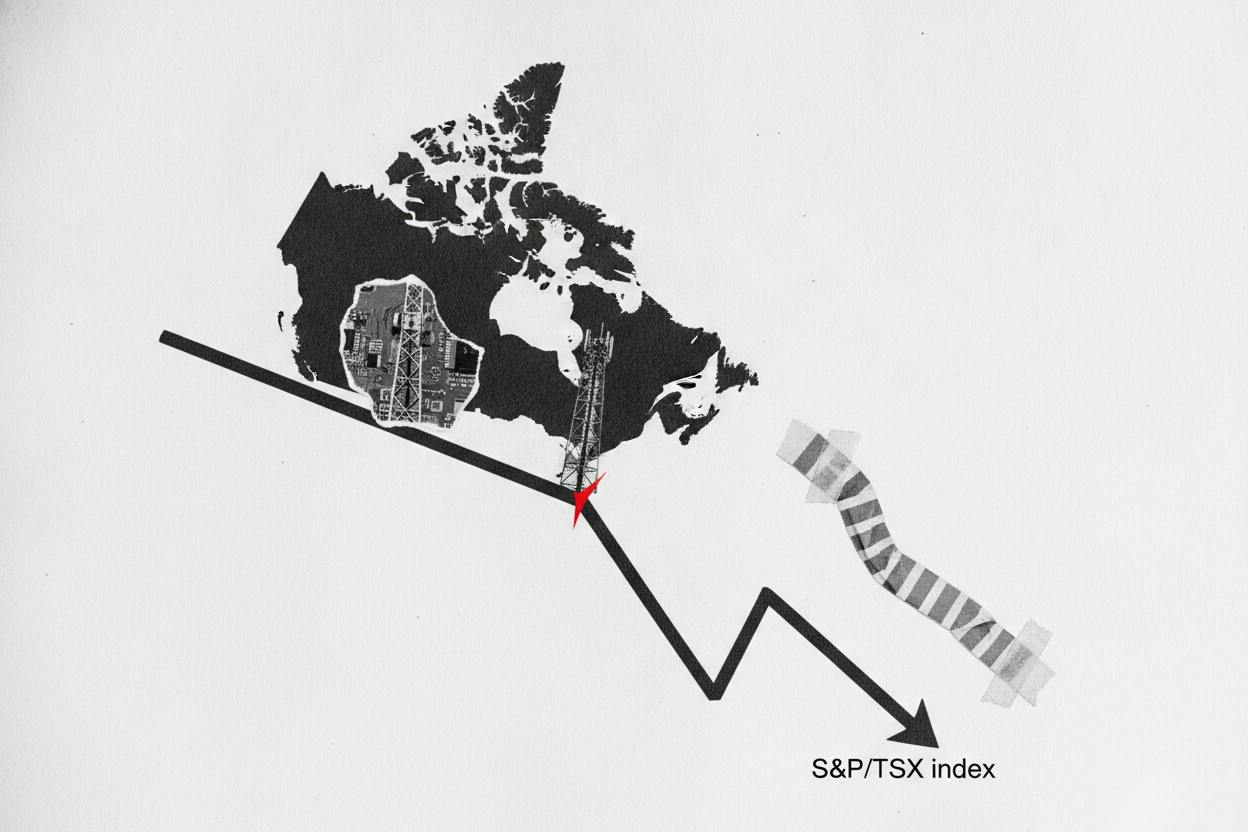
Canada's S&P/TSX Composite Index dropped 170 points in Tuesday morning trading, pulled down by two heavyweight sectors: technology and telecommunications. The move reflects sector-specific pressures rather than a broad economic downturn, but it still rattled investors who had been enjoying a relatively calm stretch.
Tech slides on Nvidia jitters
The technology sector led the decline as investors reassessed the outlook for chipmakers. Fresh headlines about US scrutiny of Nvidia's chip sales to China reignited concerns about the global AI trade. Nvidia, the world's most valuable chipmaker, has become a bellwether for the entire AI supply chain, and any negative news tends to ripple through tech-heavy markets worldwide.
Canadian tech stocks, while not as directly tied to Nvidia as their US counterparts, often move in sympathy with the sector. Investors worry that tighter US export controls could slow AI infrastructure spending, which would hurt demand for everything from semiconductors to cloud services. This is not the first time such concerns have hit Canadian markets; TSX futures have slipped before on similar Nvidia and chip-curb headlines.
The broader AI trade has been under pressure lately, with AI chip stocks facing a pivotal week as investors await Nvidia's earnings and watch for other catalysts. The uncertainty around US policy toward China has added a layer of risk that many investors are not comfortable with, especially after a strong run in tech stocks.
Telecoms dip on Quebecor's Telus bid
Telecom stocks also weighed on the index after Quebecor, a Canadian telecom company, announced it had made a non-binding proposal to acquire Telus, one of the country's major carriers. Both stocks fell as investors focused on the potential costs and regulatory hurdles of such a deal.
Quebecor's move is a bold one. Telus is significantly larger than Quebecor, and a merger would create a telecom giant with substantial market power. However, the proposal is non-binding, meaning it is more of an expression of interest than a firm offer. Investors are likely skeptical about the chances of success, given the regulatory scrutiny that would almost certainly follow in Canada's tightly controlled telecom sector.
For Telus shareholders, the news introduces uncertainty. A takeover bid could lead to a premium, but it could also distract management and create regulatory headaches. For Quebecor, the bid signals ambition but also risk, as financing such a deal would likely require significant debt.
Telecom stocks are often seen as defensive investments, providing steady dividends and stable cash flows. But a potential mega-merger changes that calculus, introducing event-driven volatility. This is a reminder that even defensive sectors can be shaken by corporate actions.
What it means for investors
Tuesday's decline is a good reminder that the TSX is not immune to global tech sentiment. Even though Canada's tech sector is smaller than the US's, it is still closely tied to the AI trade. Investors with tech-heavy portfolios should be prepared for continued volatility as Nvidia's earnings approach and US policy on chip exports evolves.
The telecom news is more idiosyncratic. If you hold Telus or Quebecor shares, the bid could affect your investment in ways that are hard to predict. Non-binding proposals often lead to months of negotiation, and there is no guarantee a deal will materialize. In the meantime, expect some volatility in both stocks.
For the broader market, the 170-point drop is not catastrophic, but it does highlight how quickly sentiment can shift. The TSX has been supported by strong energy and financial sectors, but those gains can be offset by weakness in tech and telecoms. Diversification remains key, as no single sector is immune to shocks.
Looking ahead, investors will be watching Nvidia's earnings closely, as they could set the tone for tech stocks globally. Nvidia has elevated export controls to a board-level committee, underscoring the seriousness of the US scrutiny. Any guidance from the company about future sales to China could move markets.
Also on the radar is the broader AI trade, which has been a major driver of market gains. Futures have slipped as Nvidia earnings test the AI trade, and this week's results could either reassure or disappoint. For Canadian investors, the key takeaway is that tech and telecom are not isolated silos; they are interconnected with global trends and policy decisions.
In the meantime, keep an eye on any developments in the Quebecor-Telus saga. Merger talks can drag on, but they can also create opportunities for patient investors. As always, avoid making hasty decisions based on a single day's move. The market's long-term trajectory is shaped by fundamentals, not just Tuesday's headlines.