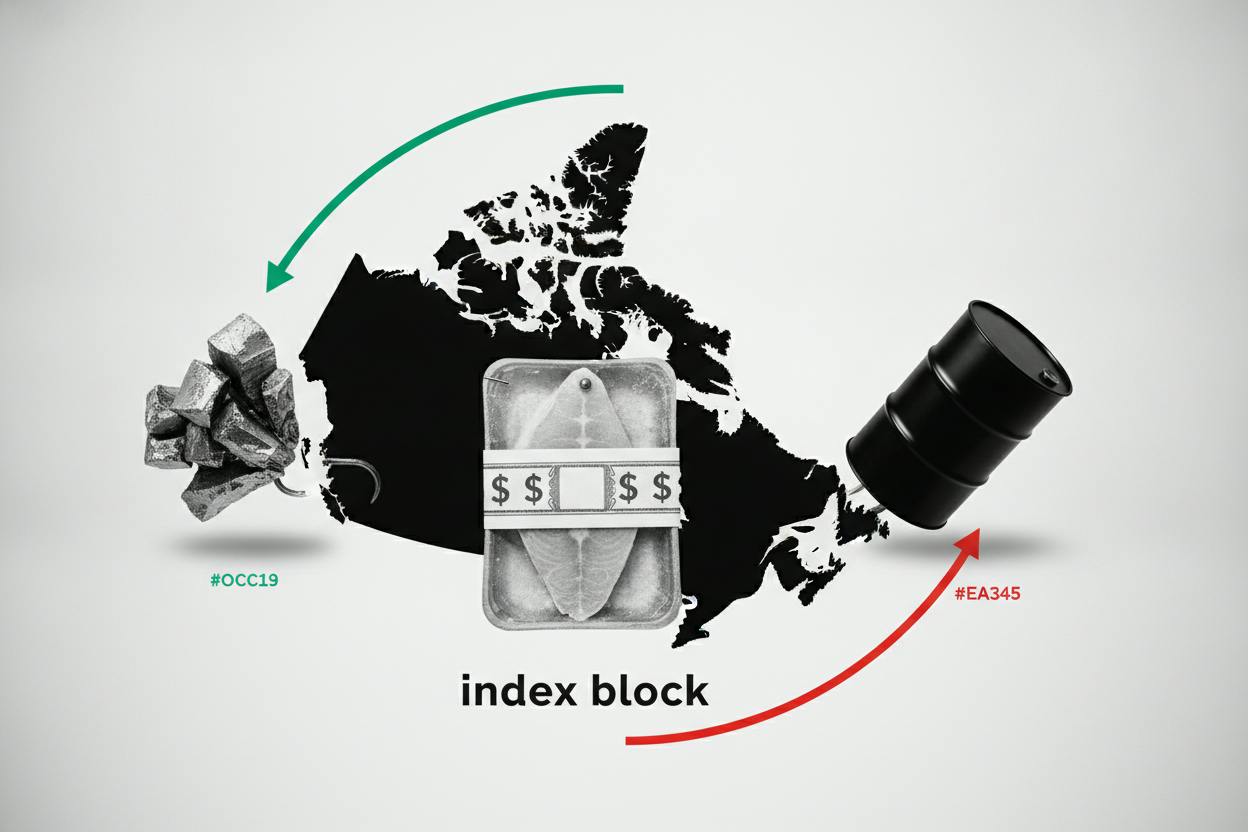
Canada's S&P/TSX Composite Index edged higher on Monday, with strength in base metals offsetting weakness in energy stocks. The day's standout was High Liner Foods, which surged 77% after agreeing to be acquired by Umios for CA$27 per share in cash.
The move underscores how commodity-linked sectors often drive the Canadian benchmark, and how a single corporate deal can dominate trading in a stock.
Base metals lead, energy lags
Mining stocks were the main contributors to the index's gains, as copper and gold prices firmed. Base metals, which include copper, zinc, and nickel, are used widely in construction and manufacturing, so their prices often rise when investors expect stronger global demand. Gold, meanwhile, tends to benefit from uncertainty and from expectations that interest rates may eventually fall.
On the other side, energy stocks dragged on the index as crude oil prices slipped. Canada is one of the world's largest oil producers, and its energy sector carries heavy weight in the TSX. When oil prices fall, energy companies' future profits are seen as less valuable, which typically weighs on their share prices.
This split between miners and energy producers is a familiar pattern for Canadian investors. The TSX is unusually concentrated in natural resources and financials, so a modest overall gain can mask very different stories beneath the surface. On a day like Monday, the index's green close didn't mean everything was rising.
High Liner Foods jumps on buyout
The biggest single-stock move was in High Liner Foods, a frozen seafood company based in Nova Scotia. The company agreed to be bought by Umios, a private investment firm, for CA$27 per share in cash. That price represented a large premium over where the stock had been trading, which is why shares jumped 77%.
Takeover offers at a premium are a common way for investors to realize gains quickly, but they also carry risks. The deal still needs shareholder and regulatory approvals, and there's always a chance it could fall through. If that happens, the stock would likely drop back toward its pre-announcement level.
For everyday investors, a buyout like this is a reminder that holding individual stocks can lead to sudden, outsized moves—both up and down. Diversification across many companies and sectors can help smooth out those swings.
What it means for investors
Monday's session illustrates how commodity prices can move the Canadian market in different directions at the same time. Investors who own broad index funds are exposed to both miners and energy producers, so a day like this may net out to a small change. But those with concentrated positions in one sector could see larger swings.
The energy weakness comes as oil prices have been volatile, influenced by global supply and demand expectations. If crude continues to slide, energy stocks could remain under pressure, which might weigh on the TSX overall. Conversely, if copper and gold keep climbing, miners could provide support.
Looking ahead, investors will be watching for clues on interest rates. The Bank of Canada has been navigating inflation and economic growth, and its decisions affect borrowing costs for consumers and businesses. A stronger retail sector could give the central bank room to hold rates steady, while persistent energy-driven inflation might push it to hike again. For context, recent data showed retail sales rebounding in August, which could factor into the next rate decision.
Higher rates tend to pressure stock valuations, especially for growth companies, but they can also signal a healthy economy. The interplay between commodity prices, inflation, and central bank policy will likely keep driving the TSX in the coming weeks.
The bottom line
Canada's main index rose modestly, but the real story was the divergence between sectors. Base metals led the way, energy lagged, and a major acquisition sent one stock soaring. For investors, the takeaway is that the TSX is not a single bet—it's a collection of industries with different drivers. Understanding those drivers can help you make sense of daily moves and position your portfolio for the long term.