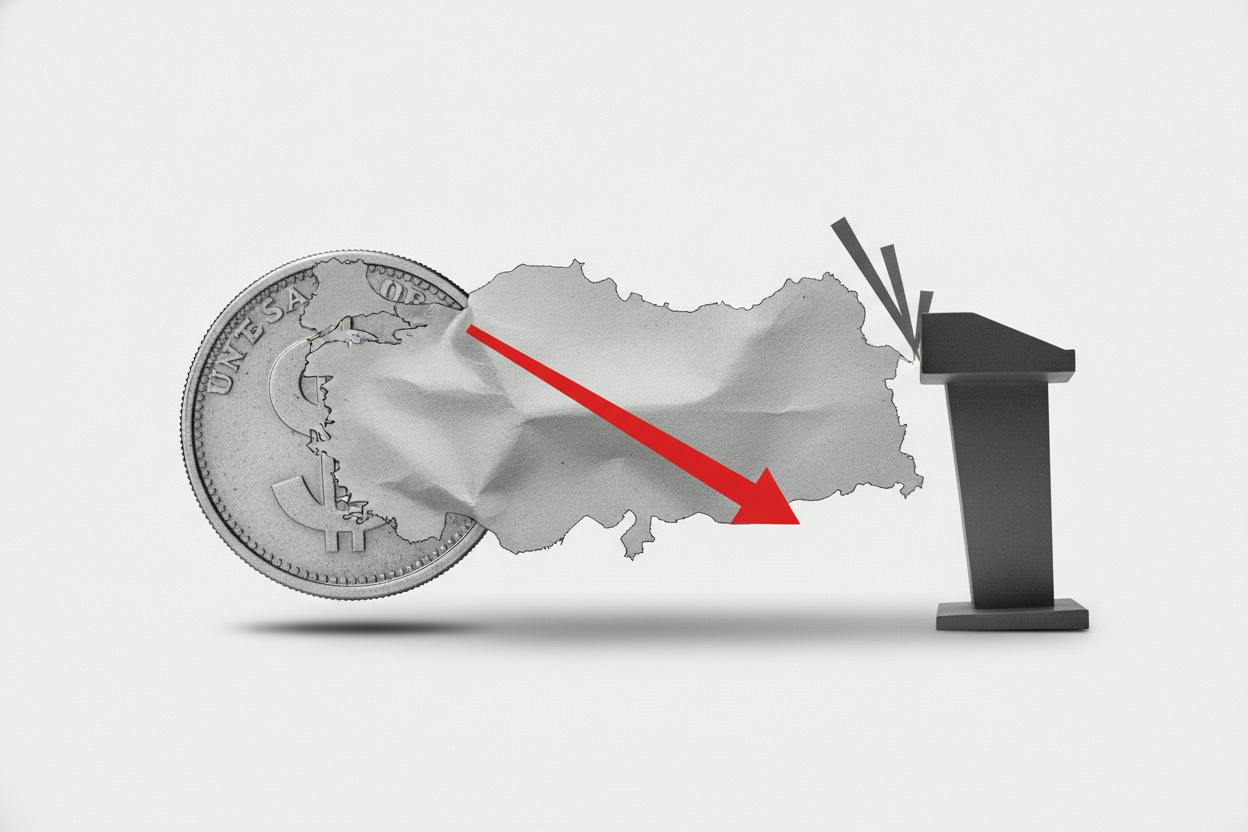
Turkey is hosting COP31, the UN climate conference, while its currency hovers near record lows against the dollar. The lira traded around 50.23 per US dollar early Wednesday, after closing at 50.2325 on Tuesday. Local investors remained cautious, with the BIST 100 index slipping 0.43% on Tuesday to end at 11,661.86.
Why the lira is under pressure
The lira's day-to-day moves are being driven less by Ankara and more by the global rate backdrop. Reuters reported that the dollar held firm after a hotter-than-expected US inflation read and hawkish central bank talk pushed traders to price in the risk of a larger, half-percentage-point Federal Reserve hike next month.
That matters for countries like Turkey because higher expected US rates tend to pull money toward dollar assets, leaving emerging-market currencies under pressure. The lira traded around 50.2300-50.2325 per dollar early Wednesday, after closing at 50.2325 on Tuesday, while Turkish stocks ended the session at 11,661.86.
This dynamic is not unique to Turkey. As hot US inflation boosts the dollar, other currencies like the Aussie dollar and the pound have also felt the pinch. The loonie hit 1.4185 per US dollar as hot US inflation boosted Fed hike odds.
Ziraat Bank's earnings in a 50-per-dollar economy
Against that backdrop, state lender Ziraat Bank reported third-quarter net profit of 50.3 billion lira, up slightly from 49.7 billion a year earlier. It's a reminder that in a 50-per-dollar economy, corporate results can look huge in local-currency terms even as investors focus on what exchange rates and global borrowing costs do to real purchasing power.
For everyday investors, the key takeaway is that big-sounding figures don't automatically translate into the same heft once you convert them back into dollars at roughly 50-to-one. A 50.3 billion lira profit is about $1 billion at current exchange rates—a solid number, but not the eye-popping sum it might seem at first glance.
What it means for investors
At 50.23 per dollar, everyday prices can end up feeling Fed-linked. When the dollar strengthens and markets expect higher US interest rates, emerging-market currencies often weaken because global investors can get paid more to hold dollars. If that pressure pushes the lira lower, anything priced in dollars gets more expensive in lira terms, even if the foreign price didn't change.
That's why overseas travel, electronics, and fuel and other imported inputs can move with global events like US inflation surprises. For Turkish consumers, a hotter US inflation print can mean higher prices at home, even if the local economy hasn't changed.
For investors, the focus should be on how currency moves affect real returns. A stock that gains in lira terms might still lose value when converted to dollars. Similarly, a company with large dollar-denominated debt could see its interest costs rise as the lira weakens.
Turkey's hosting of COP31 adds another layer of attention to the country's economic situation. Climate conferences often draw global investors and policymakers, and their focus on Turkey's energy transition and environmental policies could influence investment flows. But for now, the lira's trajectory remains tied to the Federal Reserve's next move.
As the market watches for the Fed's decision, Turkish assets are likely to stay volatile. The BIST 100's modest decline on Tuesday suggests investors are treading carefully, waiting for clearer signals on both global rates and domestic policy.
In the meantime, the lira's stability near 50 per dollar is a fragile one. Any further strengthening of the dollar or a surprise from the Fed could push it lower, with knock-on effects for inflation and purchasing power in Turkey.