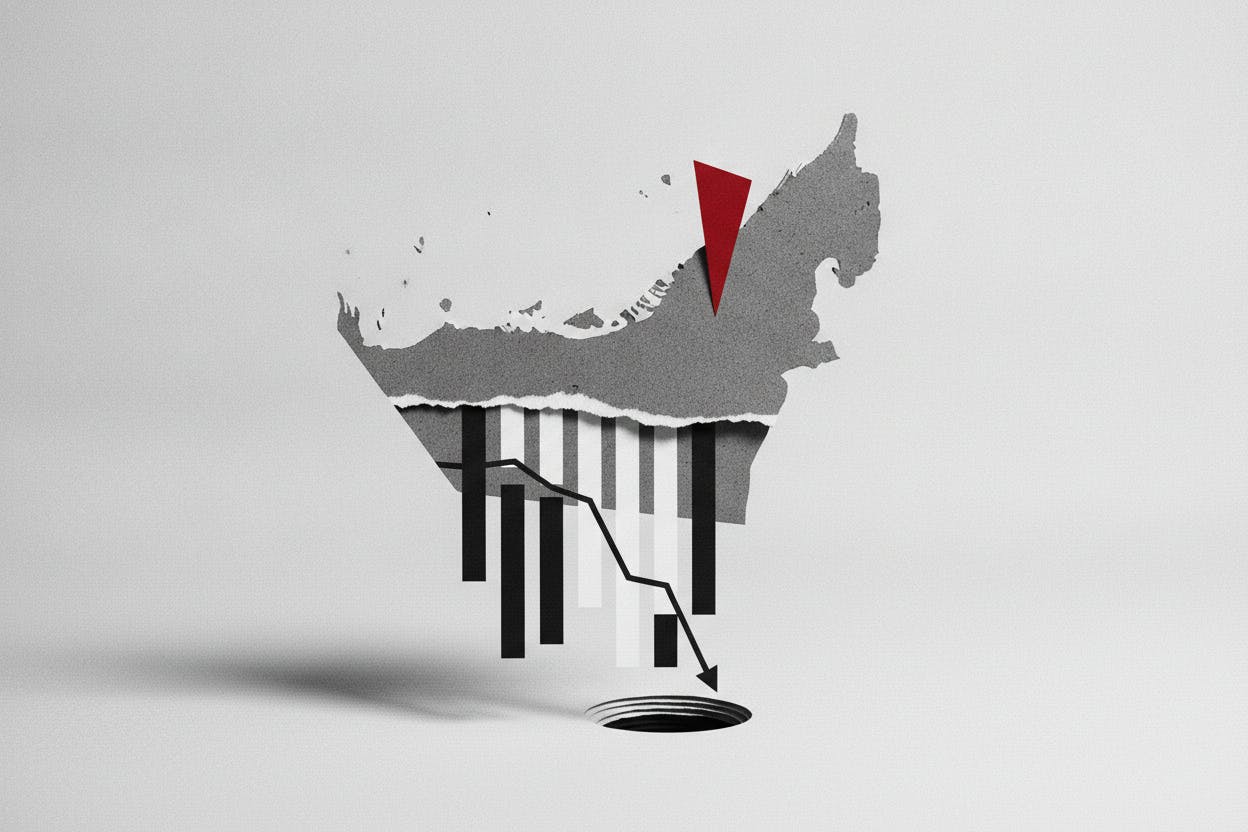
Stock markets in the United Arab Emirates slid on Monday as escalating military action between the United States and Iran spooked investors. Abu Dhabi's FTSE ADX General Index fell 0.564%, while Dubai's DFM General Index dropped 1.511%, reflecting a broad risk-off mood across Gulf equities.
The declines came after the US Central Command announced it had struck Iranian air defenses, command-and-control sites, anti-ship missile positions, and dozens of Islamic Revolutionary Guard Corps small boats. The strikes were a response to Iranian attacks on three commercial vessels. At the same time, the US revoked a license that had previously allowed certain Iranian oil sales, tightening the economic pressure on Tehran.
Why the Strait of Hormuz Matters
Investors are particularly focused on the Strait of Hormuz, a narrow waterway between Iran and Oman that is a critical chokepoint for global oil shipments. About one-fifth of the world's petroleum passes through this strait daily. Any disruption to shipping there can send oil prices higher and rattle markets that depend on stable energy supplies.
The latest US-Iran confrontation has already pushed oil prices above $76 a barrel, as Gulf stocks slide under the weight of geopolitical uncertainty. For the UAE, which is a major oil exporter, higher crude prices can boost government revenues, but the accompanying volatility often weighs on investor sentiment across the board.
What It Means for Investors
For everyday investors, the key takeaway is that geopolitical risk is back in focus. When tensions flare in the Middle East, markets in the region tend to sell off first, as traders price in the possibility of supply disruptions, higher insurance costs for shipping, and broader economic uncertainty.
The drop in UAE indexes is part of a wider pattern. Indian stocks and the rupee have also been hit by the oil surge, while Asian markets are split, with Japan and South Korea—both heavy oil importers—feeling the strain. The US dollar, meanwhile, has held near a one-week high as investors seek safe-haven assets, as reported earlier.
For UAE investors, the immediate concern is how long these tensions will last. If the situation de-escalates quickly, markets could rebound. But if strikes and retaliation continue, the risk of a prolonged disruption to oil flows could keep stocks under pressure. Sectors most exposed to shipping and energy—such as logistics, airlines, and petrochemicals—are likely to remain volatile.
Broader Market Context
The sell-off in Abu Dhabi and Dubai comes after a period of relative calm in Gulf markets. The UAE's stock exchanges had been buoyed by strong corporate earnings and a steady flow of foreign investment. But geopolitical shocks can quickly reverse those gains, as traders prioritize safety over returns.
The US revocation of the Iranian oil sales license is a significant policy shift. It removes a channel that had allowed some Iranian crude to reach global markets, tightening supply at a time when the world is already grappling with elevated energy prices. For the UAE, which competes with Iran for oil market share, this could be a double-edged sword: higher prices benefit state coffers, but the instability hurts investor confidence.
Investors should also watch for any signs of diplomatic intervention. Past episodes of US-Iran tension have often been followed by back-channel talks or ceasefires, which can quickly reverse market moves. Until then, the mood is likely to remain cautious.
What to Watch Next
In the coming days, traders will be monitoring oil price movements, any new statements from US or Iranian officials, and the response from other Gulf Cooperation Council (GCC) countries. The UAE's central bank may also step in with liquidity measures if market stress deepens, though no such action has been announced yet.
For now, the message for everyday investors is clear: geopolitical risk is a reminder that markets can turn quickly. Diversification across asset classes and regions remains a prudent strategy, especially when tensions are high in a region as strategically important as the Middle East.