When the Federal Reserve raises interest rates, the immediate worry for many consumers is how much their borrowing costs will climb. For car buyers, the answer may be less painful than feared. According to a new analysis from UBS, a 25-basis-point increase in policy rates adds only about $5 a month to a typical car payment.
That modest figure suggests that the Fed's recent tightening cycle—and any future hikes—may not significantly deter shoppers from buying vehicles. But the same rate move could hit auto dealers much harder, especially those that rely on floating-rate loans to keep their lots stocked.
The math behind the $5
UBS Securities, the investment banking arm of the Swiss bank, told clients that a 25-basis-point move in interest rates translates to roughly $5 more per month on a standard auto loan. For context, a basis point is one-hundredth of a percentage point, so 25 basis points equals a quarter of a percentage point.
That $5 increase is small relative to the total monthly payment on a new car, which often runs into the hundreds of dollars. Many buyers can absorb the extra cost without changing their purchasing decisions. Lenders may also offset the impact by stretching loan terms—extending the repayment period to keep monthly payments stable, even if the total interest paid over the life of the loan rises.
In other words, for the average consumer, a rate hike of this size is unlikely to be the deciding factor between buying a car or holding off.
Dealers feel the pinch faster
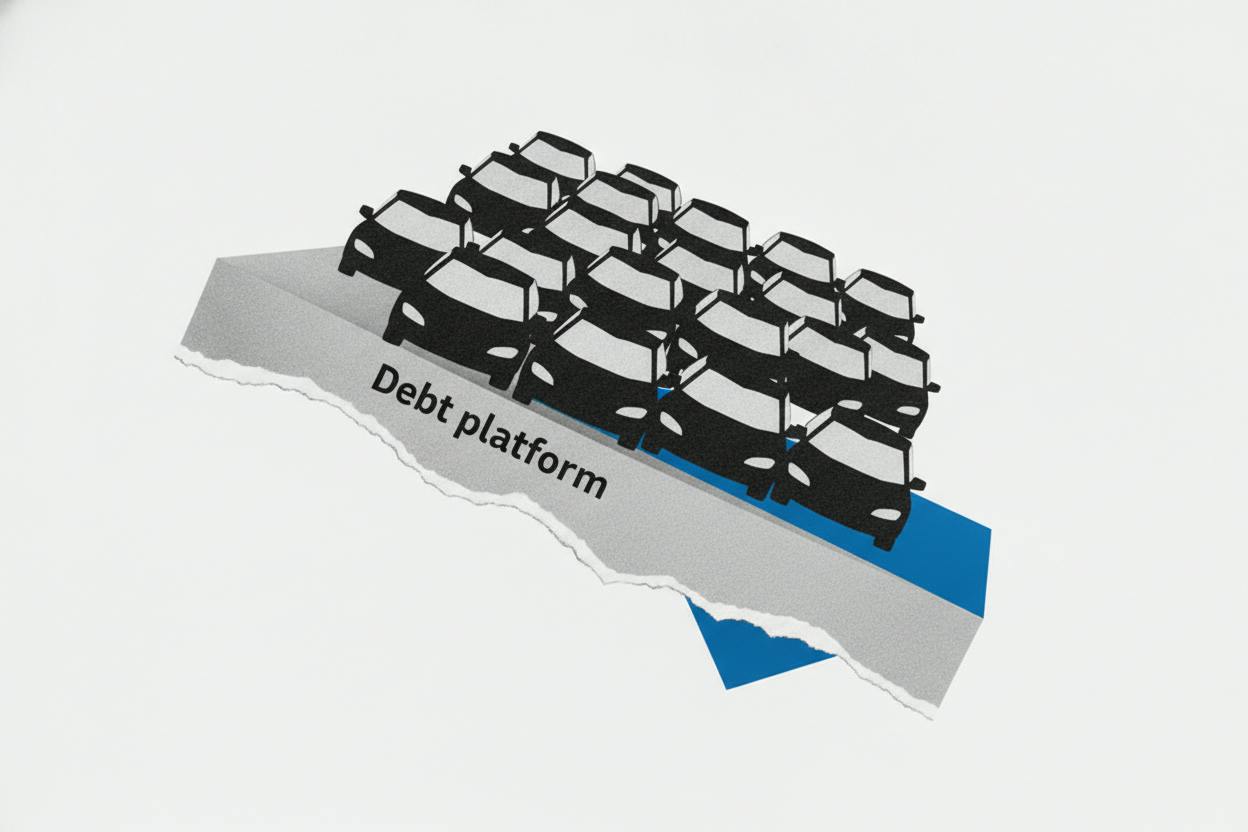
The situation is different for auto dealers. Many dealerships use what's called “floor-plan financing”—short-term loans used to purchase the vehicles sitting on their lots. These loans often carry floating interest rates, meaning they reset quickly when the Fed moves.
UBS warns that a 50-basis-point increase in borrowing costs could shave into dealership groups' 2026 earnings per share. The exact impact varies by company, but the direction is clear: higher rates raise the cost of carrying inventory, and those costs eat directly into profits.
This is a classic example of how the same macroeconomic event can have very different effects on different parts of the economy. Consumers see a small, manageable uptick in monthly payments. Dealers, meanwhile, face an immediate and potentially significant hit to their bottom lines.
What it means for investors
For everyday investors, the UBS analysis offers a useful lens on how rate-sensitive industries respond to Fed policy. Auto manufacturers and dealership groups are often seen as vulnerable to higher rates because car purchases are typically financed. But the actual impact depends on who bears the cost.
If consumers are largely insulated by small payment increases and flexible loan terms, demand for vehicles may hold up better than expected. That could be a positive signal for automakers and dealership stocks. On the other hand, dealers with heavy floating-rate debt could see their margins compress, making their stocks more sensitive to the Fed's path.
Investors should also consider the broader context. The Fed has signaled it may continue raising rates, though officials like Fed's Daly have suggested there's no rush to act at every meeting. Meanwhile, Fed's Bowman has echoed a similar cautious tone. This suggests that while rates are likely to stay elevated, the pace of increases may slow.
For those watching the auto sector, the key metric to track is dealer inventory financing costs. If rates keep climbing, dealership groups with high floating-rate debt could see their earnings forecasts cut. Conversely, if the Fed pauses or reverses course, those same companies could see relief.
Looking ahead
The UBS note is a reminder that the ripple effects of monetary policy are not uniform. A rate hike that barely registers for a car buyer can be a significant headwind for a dealer. Investors should pay attention to how different companies in the same industry are positioned—those with fixed-rate debt or strong pricing power may weather the storm better than those with floating-rate exposure.
As the Fed continues to navigate between inflation and economic growth, the auto market will remain a key test case. For now, UBS's analysis suggests that the consumer side of the equation is relatively resilient, but the dealer side warrants caution.
For more on how rate hikes are affecting other sectors, see our coverage of Netflix's pricing strategy and Ecolab's pricing power.