The UK housing market is cooling faster than many economists anticipated. Lloyds Banking Group reported that house prices fell 0.6% in October compared with September, and were 1.2% lower than a year earlier. The annual decline was the steepest since October 2023 and came in well below every forecast in a Reuters poll, which had expected a smaller drop. The monthly fall also contrasted with predictions of a slight gain.
Why prices are slipping
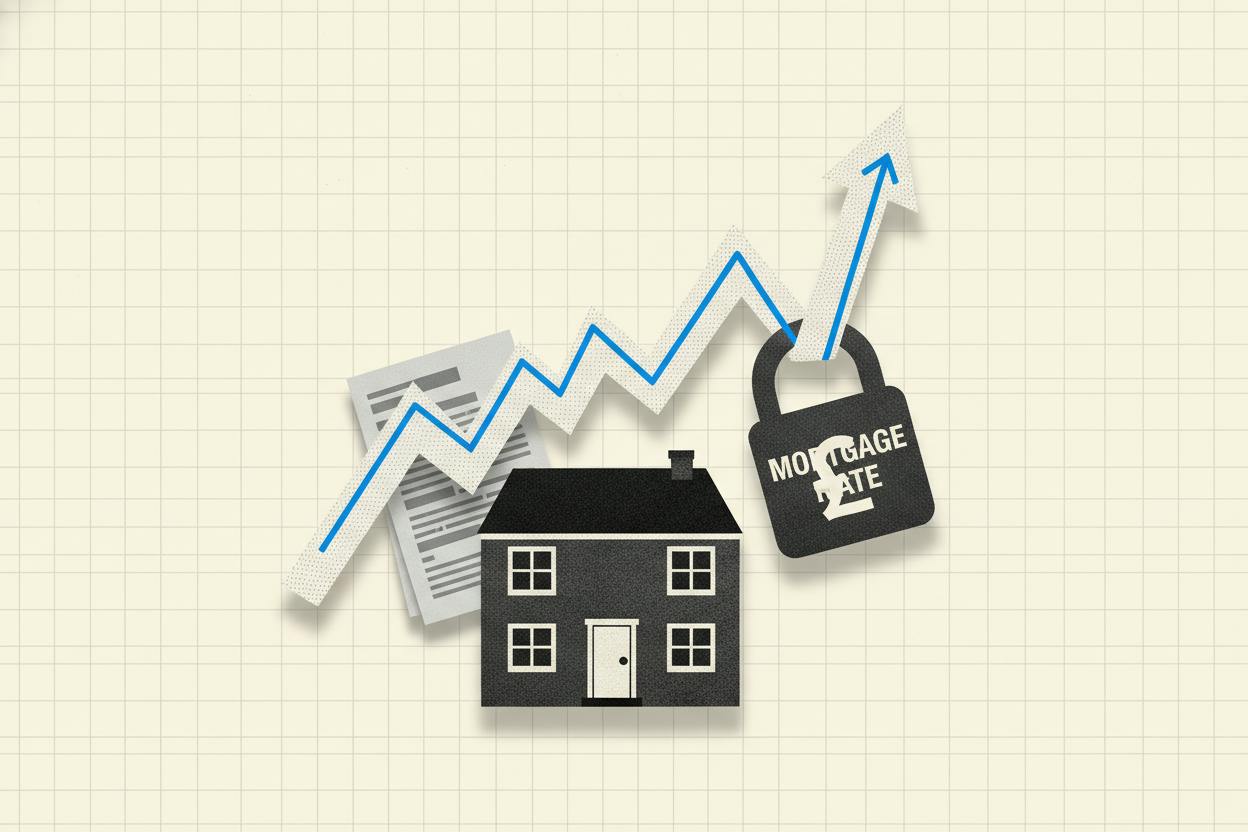
The main culprit, according to Lloyds, is higher mortgage rates. Lenders have been raising the cost of new fixed-rate deals as their own funding costs climb and as investors adjust their expectations for where the Bank of England's base rate will go over the next few years. This matters because many fixed-rate mortgage offers are priced off wholesale funding costs, not just the central bank's current policy rate. So even before the Bank of England makes its next move, the cost of borrowing for a home can rise.
Lloyds said demand is being "tested" by these higher rates, but it expects a subdued market rather than a prolonged, sharp downturn. That view is in line with how housing markets typically respond to affordability pressures: higher borrowing costs shrink the pool of buyers who can afford a given price, which slows activity and puts downward pressure on prices, but rarely triggers a crash unless the economy also deteriorates sharply.
Mixed signals from other lenders
Not every measure points in the same direction. Nationwide, another major UK mortgage lender, reported that prices were flat in October, leaving annual growth at 0.5%. The discrepancy is not unusual — different lenders use different data sources and methodologies, and monthly figures can be volatile. But the overall picture is one of a market that has lost momentum after a period of relative stability.
The housing market has been under pressure since the Bank of England began raising interest rates in late 2021 to combat inflation. While the central bank has held rates steady at recent meetings, the prospect of future cuts has been pushed back by stronger-than-expected inflation data and by global bond market moves. That has kept mortgage rates elevated, even as some lenders have offered competitive deals to attract borrowers.
What it means for homeowners and buyers
For anyone coming to the end of a fixed-rate mortgage deal, the key takeaway is that your next offer can move on rate expectations, not just today's Bank of England decision. When lenders' funding costs rise, they often reprice new fixed-rate deals quickly. That means a household could face a jump in monthly payments even if their current deal hasn't reset yet.
For prospective buyers, higher mortgage rates directly reduce how much they can borrow, which in turn lowers the price they can offer. This tends to cool the market more than it instantly knocks the value of existing homes, because sellers are often slow to adjust their asking prices. But as transactions slow, price growth typically follows.
The broader economic backdrop remains uncertain. Inflation has come down from its peaks, but it is still above the Bank of England's 2% target, and wage growth remains firm. That gives the central bank little room to cut rates aggressively, which means mortgage costs are likely to stay elevated for a while. Investors will be watching upcoming inflation and jobs data for clues about the path of rates, as well as any signals from the Bank of England about its next move.
For now, the message from Lloyds is that the housing market is adjusting to a new reality of higher borrowing costs. That adjustment is likely to be gradual, with prices drifting lower or flatlining rather than collapsing. But for anyone planning to buy or remortgage, it's worth budgeting for higher monthly payments than you might have expected a year ago.