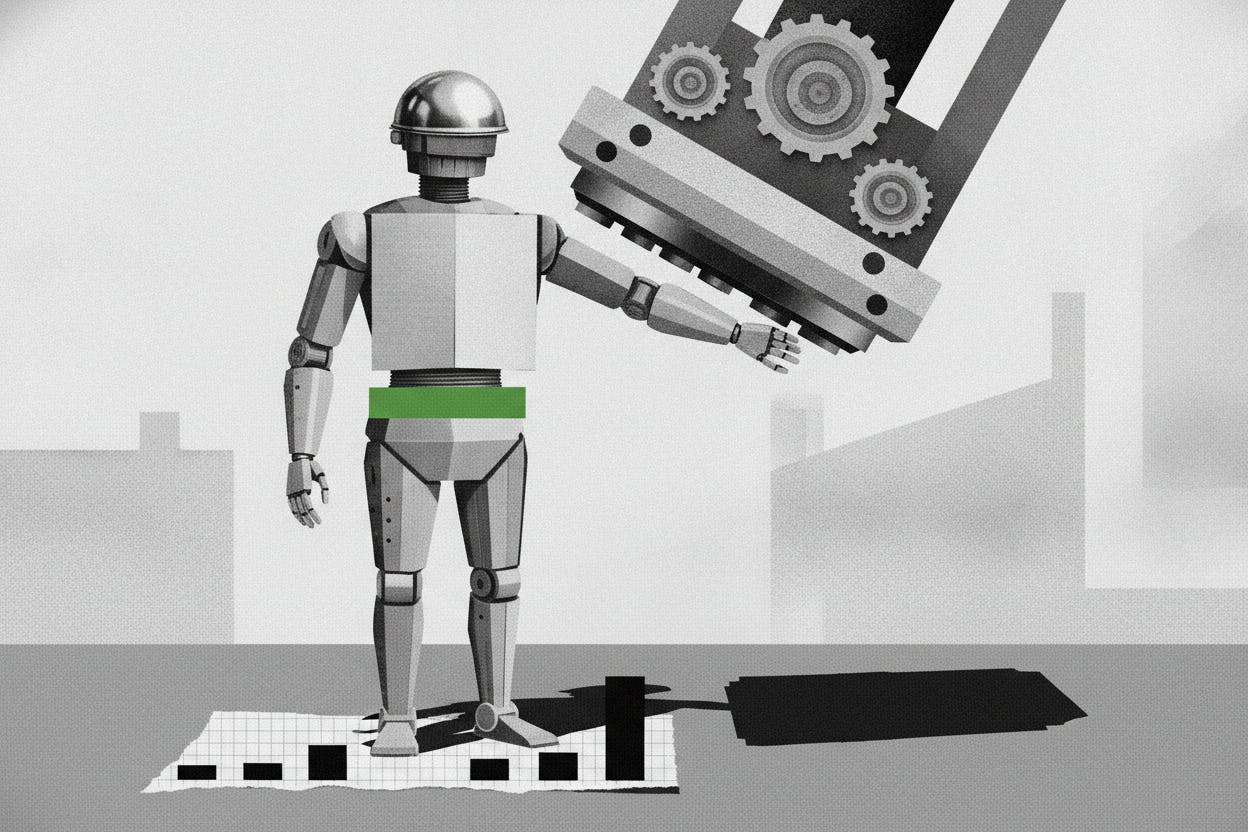
A UK robotics startup has joined the billion-dollar club as investors pour money into machines that can think and move. Humanoid, a company building human-like robots for industrial work, announced it raised $152 million in a Series A funding round led by Prime Movers Lab, pushing its valuation to $1.35 billion.
The round marks a significant milestone for the physical AI sector, where robots are guided by advanced software to perform repetitive tasks. Humanoid says the funding brings its total capital raised to $270 million, which it will use to develop its next-generation platform and expand its in-house AI system, called KinetIQ. The company plans to move from prototypes to commercial deployments, with beta testing scheduled for the fourth quarter of this year.
What is Physical AI?
Physical AI refers to robots that combine hardware with sophisticated artificial intelligence to interact with the real world. Unlike traditional industrial robots that follow pre-programmed paths, physical AI systems can adapt to changing environments, learn from experience, and handle tasks that require dexterity and decision-making. This makes them particularly attractive for factories and warehouses, where companies are looking to automate repetitive work and reduce reliance on human labor.
Humanoid's robots are designed to work alongside humans in settings like assembly lines, logistics centers, and distribution hubs. The company's KinetIQ system acts as the brain, enabling the robots to perceive their surroundings, plan movements, and execute tasks with precision.
Why Investors Are Piling In
The funding round is the latest sign that venture capital is shifting toward robotics and automation. Investors see a growing opportunity as companies across industries struggle with labor shortages, rising wages, and the need for consistent output. Factories and warehouses, in particular, are under pressure to boost efficiency while keeping costs under control.
Prime Movers Lab, the lead investor in this round, focuses on breakthrough technologies that can transform major industries. Its bet on Humanoid reflects a broader trend: money is flowing into startups that can deliver tangible automation solutions rather than just software or AI models. This is similar to other recent moves in the tech space, such as Microsoft and Mistral AI's multibillion-dollar deal for sovereign AI in Europe, which highlighted the growing appetite for AI-powered systems.
Humanoid's valuation of $1.35 billion places it among a select group of robotics startups that have achieved unicorn status. The company's ability to attract $152 million in a single round suggests strong confidence in its technology and market potential.
What It Means for Investors
For everyday investors, the rise of physical AI represents a new frontier in automation. While Humanoid is still a private company, its success could signal opportunities in publicly traded robotics and automation stocks. Companies that supply components, software, or services to the robotics industry may benefit as demand grows.
Investors should also watch for initial public offerings from robotics startups. If Humanoid or similar companies go public in the future, they could offer a way to gain exposure to the physical AI trend. However, it's important to remember that early-stage robotics companies often face high costs, long development timelines, and intense competition.
The broader market context also matters. As central banks adjust interest rates and inflation moderates, investors are looking for growth areas that can deliver returns regardless of the economic cycle. Automation fits that bill, as companies invest in efficiency even during downturns. For example, Marsh's Q2 profit hit $1.27 billion as companies locked in insurance coverage, showing how businesses are prioritizing stability amid uncertainty.
What's Next for Humanoid
Humanoid's immediate focus is on beta deployments in the fourth quarter. The company will work with select customers to test its robots in real-world environments, gathering data to refine the technology. If successful, this could pave the way for broader commercial rollout in 2025 and beyond.
The company also plans to expand its KinetIQ AI system, which is central to its competitive advantage. By improving the software that controls its robots, Humanoid aims to make them more versatile and easier to deploy across different industries.
Investors will be watching for updates on customer adoption, revenue growth, and any partnerships that could accelerate commercialization. The robotics sector is still in its early stages, but with $270 million in funding and a clear roadmap, Humanoid is positioning itself as a key player in the physical AI revolution.