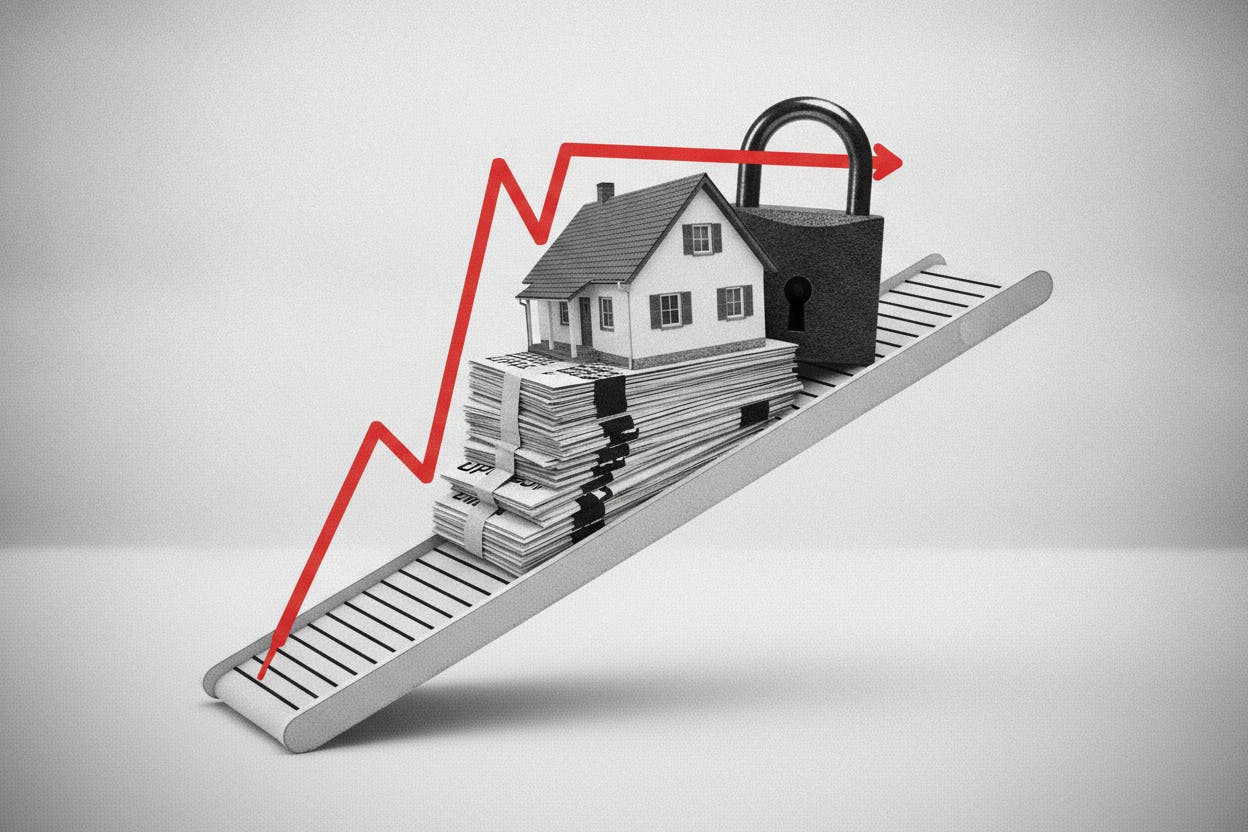
The US housing market continues to defy gravity. The S&P CoreLogic Case-Shiller National Home Price Index rose 1.1% in May compared to a year earlier, signaling that home prices are still climbing even as borrowing costs remain elevated.
The data underscores a persistent challenge for would-be homebuyers: prices keep going up, even as mortgage rates near 6.5% for a 30-year fixed loan. That combination has pushed affordability to some of the worst levels in decades.
What's driving the price increase?
The main factor behind the continued price gains is a severe shortage of homes for sale. Many homeowners who locked in ultra-low mortgage rates during the pandemic are reluctant to sell and trade up to a much higher rate. That has kept inventory tight, giving sellers pricing power even as demand cools.
At the same time, demographic demand from millennials entering their prime home-buying years continues to support the market. The result is a standoff: buyers are squeezed by high rates and prices, but sellers have little incentive to lower prices when there are still enough buyers to keep the market moving.
Affordability remains the big headwind
While prices are still rising, the pace has slowed from the double-digit gains seen in 2021 and 2022. The 1.1% year-over-year increase in May is modest by recent standards, but it still outpaces wage growth for many households.
For context, the monthly payment on a median-priced home with a 20% down payment and a 6.5% mortgage is roughly 30% higher than it was two years ago, according to industry estimates. That squeeze is forcing some buyers to look at smaller homes, different neighborhoods, or delay their purchase altogether.
The Federal Reserve's interest rate policy plays a key role here. The central bank has raised rates aggressively to fight inflation, and while it has paused hikes recently, rates are expected to stay higher for longer. That keeps mortgage rates elevated and puts pressure on the housing market.
What it means for investors
For everyday investors, the housing market's resilience is a mixed signal. On one hand, it suggests that home prices are unlikely to crash, which supports the value of real estate holdings and homebuilder stocks. On the other hand, the affordability crunch could slow the economy more broadly, as housing is a major driver of consumer spending and confidence.
Investors should watch for signs of a slowdown in home sales and construction activity. If the Fed eventually cuts rates, mortgage rates could fall, potentially reigniting demand and pushing prices higher. But if rates stay high, the market could stagnate, with prices flat or slightly declining in real terms.
For those considering buying a home, the key takeaway is that affordability is unlikely to improve soon. Waiting for rates to drop might mean facing even higher prices if demand picks up. But buying now means taking on a high monthly payment that could be hard to refinance if rates stay high.
As always, the housing market is local, and conditions vary widely by city and region. The Case-Shiller index is a national measure, so individual markets may be performing differently.
For more on how broader economic trends are affecting markets, see our coverage of copper prices and Fed rate hike bets and energy stocks sliding on oil price moves.