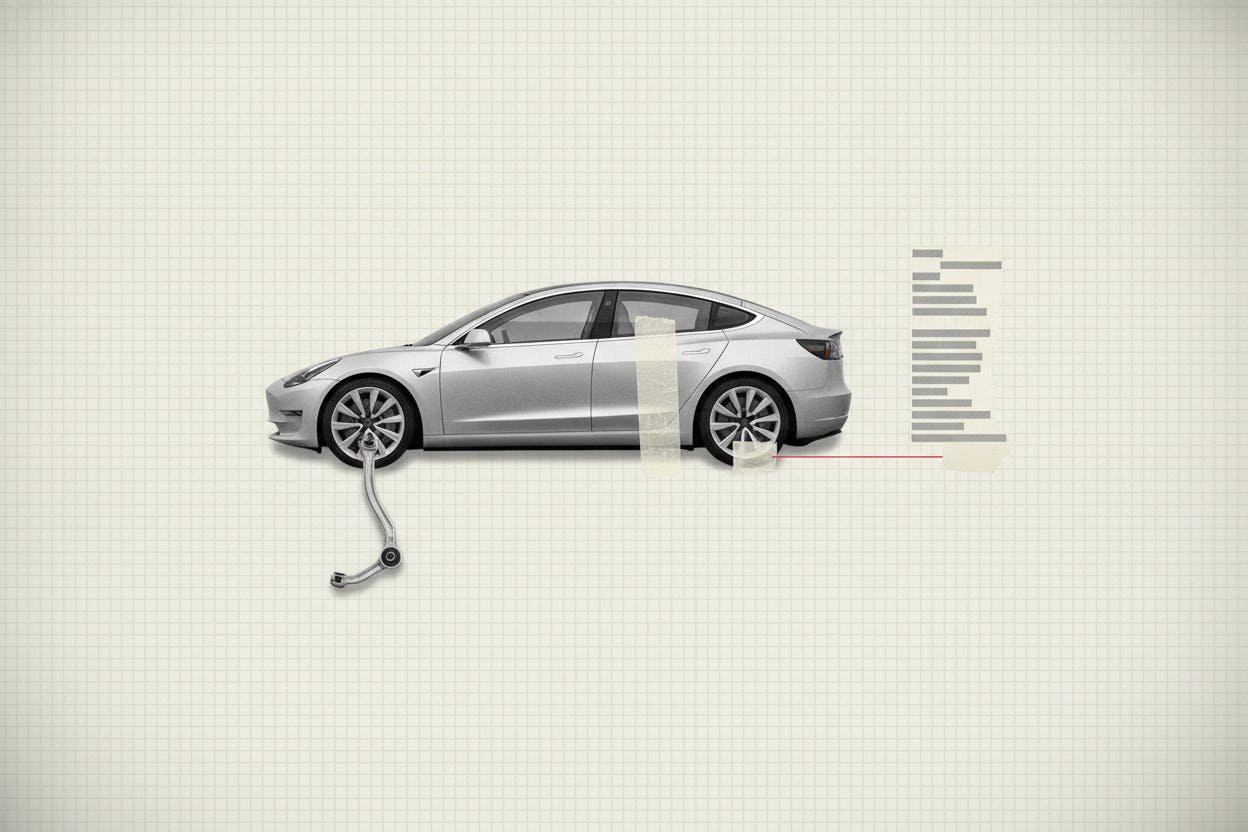
The National Highway Traffic Safety Administration (NHTSA) has opened a preliminary investigation into roughly 1.2 million Tesla Model 3 and Model Y vehicles following 156 complaints that a suspension component can detach and interfere with steering.
The probe, announced by NHTSA's Office of Defects Investigation, focuses on the front lower lateral link—a key part of the suspension that helps keep the wheel aligned and stable. According to the complaints, the part can separate with little warning, sometimes after drivers hear unusual noises. In some cases, the failure leaves the vehicle difficult to control and may require a tow.
This is the first step in the federal defect review process, known as a preliminary evaluation. At this stage, regulators are trying to determine how often the problem occurs, what causes it, and how serious the safety risk is. If the investigation escalates, it could lead to a recall.
Which vehicles are affected?
The probe covers certain 2018-2020 Model 3 sedans and 2021-2023 Model Y SUVs. Tesla has not yet issued a recall related to this issue, and the company has not publicly commented on the investigation.
Suspension failures are not uncommon in the auto industry, but they are taken seriously because they can directly affect a driver's ability to control the vehicle. The lower lateral link is a metal arm that connects the wheel hub to the vehicle's frame, and a failure can cause the wheel to shift or tilt, leading to alignment problems or, in severe cases, loss of steering control.
NHTSA's preliminary evaluation is a fact-finding phase. The agency will review the complaints, analyze data from Tesla, and possibly inspect vehicles. If the evidence points to a safety defect, the probe can be upgraded to an engineering analysis, which often precedes a formal recall.
What this means for Tesla and its investors
For Tesla, this investigation adds another layer of regulatory scrutiny to a company that has faced multiple safety reviews in recent years. While a preliminary probe does not imply wrongdoing, it can lead to costly recalls and potential reputational damage.
Investors should note that this is not the first time Tesla's suspension has come under the spotlight. The company has previously dealt with recalls and investigations related to suspension components, though each case is separate and must be evaluated on its own merits.
The news comes at a time when Tesla is already in the spotlight for other reasons. The company recently reported negative cash flow as AI spending surges, and its stock has been volatile ahead of earnings. This probe could add to the uncertainty surrounding the stock, especially if it escalates.
For everyday investors, the key takeaway is that regulatory investigations are part of the normal risk profile for automakers. They can lead to fines, recalls, and higher warranty costs, but they do not necessarily signal a fundamental problem with the company. The outcome of this probe will depend on the evidence NHTSA gathers over the coming months.
What to watch next
Investors will be watching for any updates from NHTSA, including whether the investigation is upgraded or closed. Tesla's response—whether it cooperates, issues a voluntary recall, or disputes the findings—will also be important.
In the broader context, this probe is a reminder that regulatory oversight is a constant factor for automakers, especially those with large fleets on the road. For Tesla, which has sold millions of vehicles worldwide, even a small defect rate can translate into a significant number of complaints.
As the investigation unfolds, investors should keep an eye on Tesla's earnings calls and any statements from the company about the issue. The stock's reaction to such news can be sharp, but long-term investors often look past these events if the company's fundamentals remain strong.
For now, the probe is in its early stages, and no conclusions have been drawn. Tesla owners who experience steering or suspension issues should report them to NHTSA and contact Tesla for service.