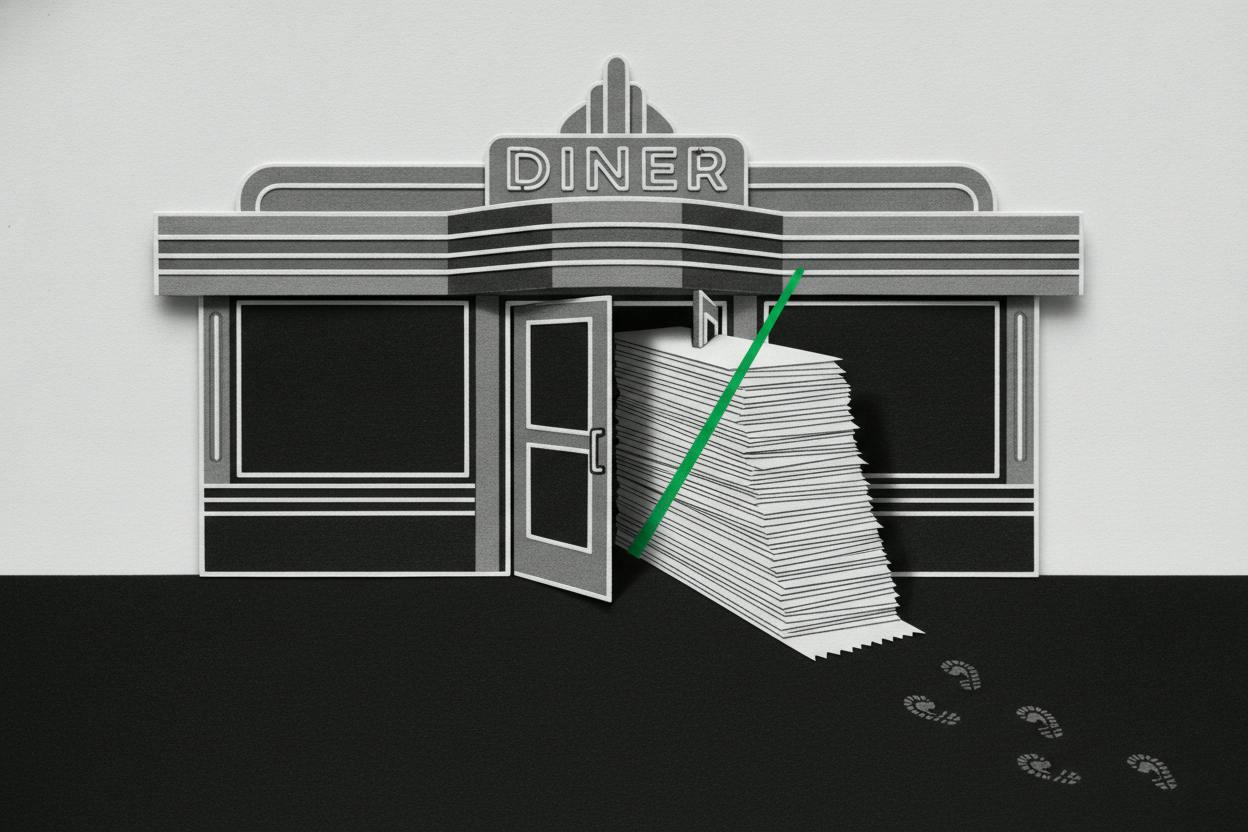
US restaurant chains are still posting modest sales gains, but the number of people actually walking through the door keeps falling. That's the picture painted by Seaport Research Partners, an equity research firm, which expects same-store sales to grow roughly 1% to 2% through the end of 2026.
In a note to clients, Seaport analyst Eric Gonzalez argued that the industry's headline numbers look steadier than the demand underneath. Same-store sales—a key metric that compares revenue at locations open at least a year—have stayed in the low single digits this year. But Seaport says that's largely because menu prices and what customers order are doing more of the lifting than higher guest counts.
Why traffic is still negative
The firm flagged an unusually long slump: industry traffic has been negative for an extended stretch, a trend that shows no sign of reversing soon. The culprit, according to Seaport, is inflation. Even as overall price increases have cooled from their peaks, food costs and dining-out prices remain elevated, leaving many households feeling squeezed.
For everyday consumers, that means the cost of a meal at a restaurant—whether fast food or casual dining—is noticeably higher than it was a few years ago. Many are responding by eating out less often, trading down to cheaper items, or opting for takeout instead of dining in. Restaurants, for their part, have been raising menu prices to protect their own profit margins, which helps sales figures but does little to bring customers back.
This dynamic isn't unique to restaurants. Broader consumer spending has shown resilience in some areas—August retail sales jumped 1.2%, defying forecasts—but the restaurant sector is feeling the pinch of cautious spending on discretionary experiences.
What this means for investors
For investors, the key takeaway is that restaurant stocks may look stable on the surface, but the underlying health of the business is weaker than it appears. Same-store sales growth of 1%-2% is positive, but it's being driven by price increases rather than genuine demand growth. That's a fragile foundation.
If inflation continues to ease, consumers might eventually feel confident enough to return to restaurants in greater numbers. But if prices stay sticky, traffic could remain negative for even longer, putting pressure on chains to find other ways to boost sales—such as limited-time offers, value menus, or loyalty programs.
Seaport's outlook suggests that restaurant companies will need to navigate this environment carefully. Those with strong brand loyalty or a focus on value may fare better, while others could see margins squeezed as they try to attract cost-conscious diners.
It's also worth noting that the broader economic backdrop matters. With the Federal Reserve keeping interest rates elevated—and the dollar staying near highs—borrowing costs for consumers remain high, which can further dampen discretionary spending. However, some analysts see potential for rate cuts down the line, which could provide relief.
What to watch next
Investors should keep an eye on quarterly earnings reports from major restaurant chains. Management commentary on traffic trends, pricing power, and consumer behavior will be crucial. Also watch for any signs that inflation is easing enough to boost real consumer spending power.
Seaport's forecast extends through 2026, suggesting that the industry may be in for a prolonged period of sluggish growth. For now, the message is clear: the restaurant industry's sales are steady, but the underlying traffic problem isn't going away anytime soon.