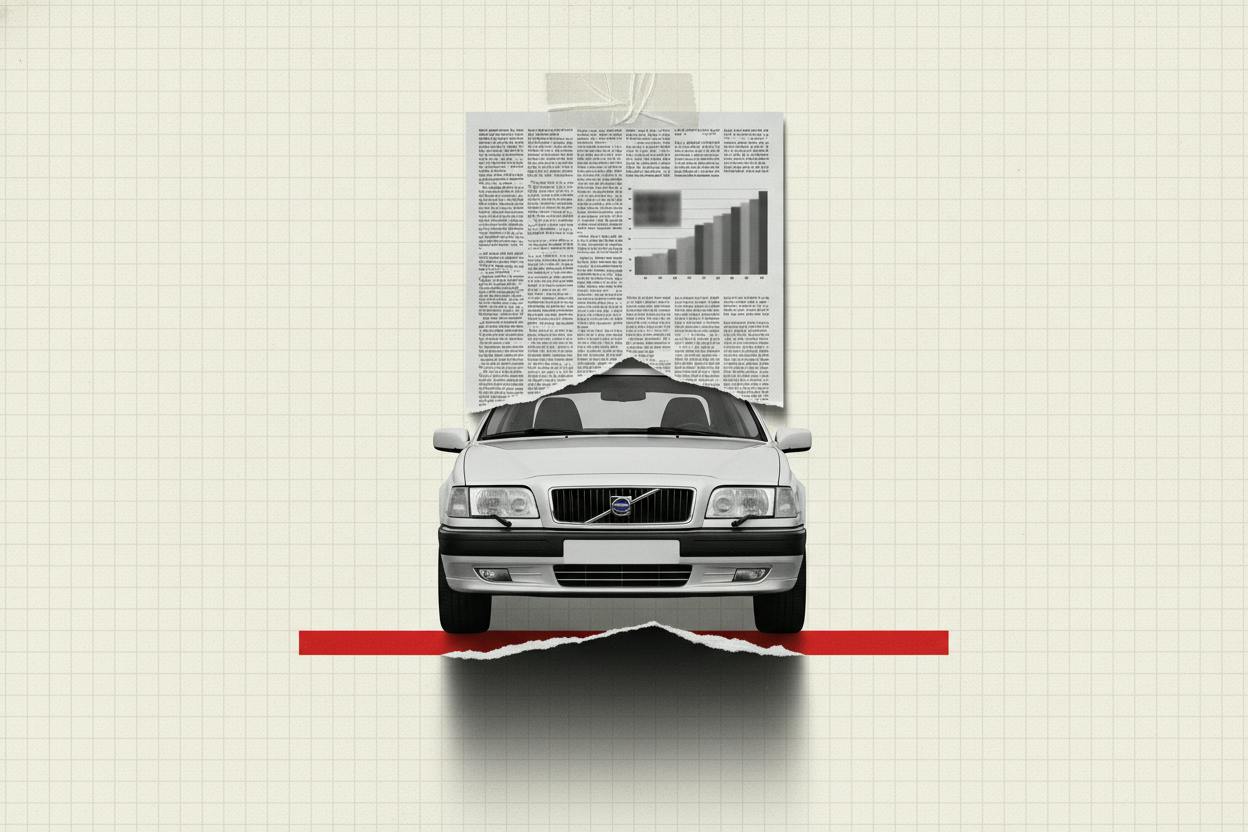
Volvo Cars has withdrawn its full-year guidance for sales volumes and cash flow, a notable step for a listed automaker that leaves investors without the signposts they normally use to judge how the rest of the year will go. The Swedish company, controlled by China's Geely Holding, made the move after third-quarter deliveries fell 11% from a year earlier, with 141,609 cars sold in the period.
The company pointed to two main drags: weaker conditions in China and a slower-than-expected recovery in the United States. Europe, by contrast, is holding up better. Notably, unlike in July — when Volvo also adjusted its outlook — it did not replace the old targets with fresh numbers for the remainder of the year.
Why guidance matters so much
Guidance is the set of forward-looking targets a company gives the market, usually covering revenue, profit, sales volumes or cash flow. Investors rely on it to build their expectations, and analysts use it to calibrate their models. When a company pulls guidance without offering a replacement, it removes that anchor entirely.
The message is rarely just about the numbers. Withdrawing an outlook typically signals that management cannot confidently predict demand, pricing or costs over the coming months. That uncertainty can weigh on a stock because investors dislike not knowing what to expect, even more than they dislike bad news they can plan around.
Cash flow guidance is particularly sensitive. It tells investors how much actual money the business expects to generate after running its operations and funding its investments — a key measure of financial health, especially for capital-intensive manufacturers like carmakers.
A tough stretch for the auto industry
Volvo's challenges are not happening in isolation. Global automakers have been navigating a complicated mix of slowing electric-vehicle demand in some regions, intense price competition in China, and shifting trade policy. China is the world's largest car market and a critical one for Volvo, which has deep ties to the country through Geely. When Chinese demand softens, it hits both volumes and pricing.
The US picture has its own complications. A recovery in demand that many expected to arrive faster has instead been gradual, and tariff uncertainty has added a layer of unpredictability for imported and exported vehicles. Europe, meanwhile, has been a relative bright spot for Volvo, though it is not immune to broader economic softness.
This is also a period of transition for Volvo's leadership. The company recently named Klaus Zellmer as its next CEO, a change that comes as the business confronts exactly these tariff and China headwinds. A new chief executive inherits both the strategic plan and the near-term pressure.
What investors will watch next
With formal guidance off the table, attention shifts to the company's upcoming earnings report, where management's commentary on order books, pricing and regional demand will carry extra weight. Investors have already been focused on Volvo's 2027 order book ahead of its October 23 earnings, which could offer clues about longer-term demand even as the near-term outlook stays cloudy.
Several questions matter most:
- China: Is the weakness cyclical or structural? A prolonged slump would pressure both volumes and margins.
- US recovery: How much of the slowdown is timing versus a genuine change in demand?
- Pricing: Are discounts rising? That would erode profitability even if volumes stabilize.
- Cash generation: Without cash-flow guidance, investors will scrutinize the actual figures closely.
What it means for everyday investors
For anyone holding Volvo shares — or shares in other automakers — the key takeaway is that uncertainty has increased. Pulling guidance is a signal that the company sees too many moving parts to make reliable forecasts. That does not automatically mean the business is in trouble, but it does mean the next few quarters could bring surprises in either direction.
It is also a reminder of how interconnected the auto industry is. A slowdown in China or a hesitant US consumer does not stay contained; it ripples through supply chains, dealers and lenders. Investors with exposure to carmakers, parts suppliers or auto-focused funds may want to pay attention to how broadly these pressures are being felt.
Finally, this is a good example of why guidance is worth watching across your portfolio. When a company cuts or withdraws its outlook, it is often an early warning about demand trends that can take months to show up in reported results. For long-term investors, the question is whether the underlying business remains sound — not whether one quarter was weak. But a withdrawn outlook is a signal to look more carefully, not less.