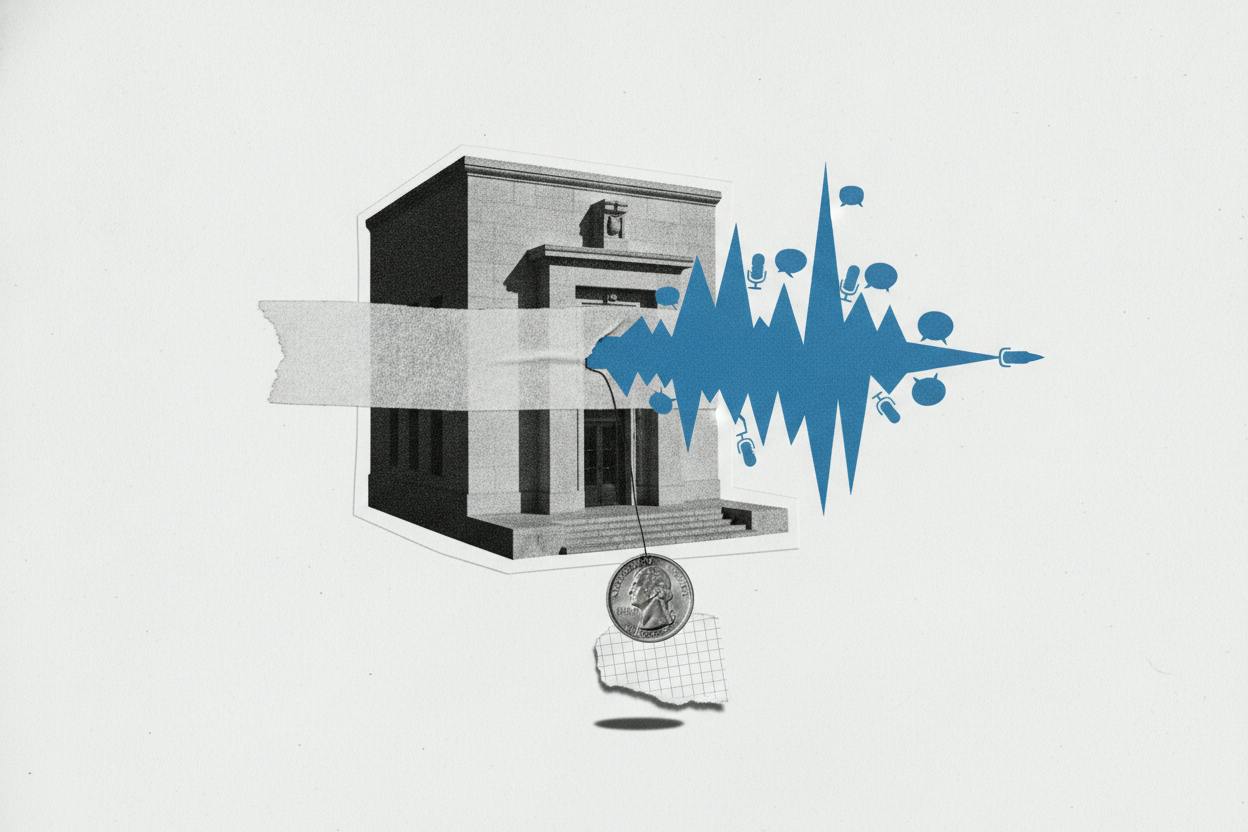
Federal Reserve Governor Kevin Warsh is reportedly pushing for a more reserved central bank, one that speaks less and lets data do the talking. But since the Fed's September rate hike, his colleagues have made more than 40 public appearances, and those speeches are moving markets in ways that complicate the message.
The tension comes at a delicate moment. A fresh inflation report has reopened the debate about whether the Fed will need to raise rates again, and the chatter from officials is making it harder for investors to guess what comes next.
What's going on here?
Warsh wants the Fed to stop giving explicit "forward guidance" — the practice of signaling where interest rates are headed in the future. According to a report from Reuters, he's pushing to strip hints from the Fed's policy statements and possibly drop the quarterly projections that show where officials expect rates to go.
His argument is simple: if the Fed stops pre-committing to a path, investors will have to focus on the latest economic data instead of trying to decode hints from officials. Market reactions to that data would then serve as a kind of feedback for policymakers, helping them gauge how their decisions are landing.
But the reality right now is the opposite. Since the September rate hike, Fed officials have logged more than 40 public appearances, and those speeches have been nudging expectations about future moves. That's a lot of voices, and they don't always sing the same tune.
Why the Fed's message is getting muddled
The fresh inflation data has only added to the confusion. A hotter-than-expected reading in September — with core inflation beating forecasts — has pushed up the odds of another hike, and that's showing up in markets. For example, AI stocks took a hit as traders priced in a more aggressive Fed.
When officials speak, they often reinforce or soften those market moves. Some have echoed Warsh's caution, like Governor Michelle Bowman, who recently said there's no urgency for more hikes. Others have sounded more hawkish, keeping the door open for further tightening.
That mixed messaging is exactly what Warsh wants to avoid. In his view, the Fed's job is to set policy, not to manage expectations through a constant stream of speeches. But changing that culture is easier said than done, especially when inflation is still above the Fed's 2% target.
What it means for investors
For everyday investors, the debate over Fed communication matters because it affects how markets move. When the Fed is clear about its intentions, investors can plan with more confidence. When it's not, every data point and every speech becomes a potential trigger for volatility.
The recent inflation report is a good example. The surge in gasoline prices helped push overall inflation higher, but the core rate — which strips out food and energy — also came in above expectations. That's the kind of number that makes investors wonder if the Fed will have to act again.
If Warsh gets his way, the Fed would stop giving those hints, and investors would have to rely more on the data itself. That could mean bigger market swings after each economic release, since there would be less guidance to anchor expectations.
But it could also mean less confusion in the long run. Without a steady stream of speeches to interpret, investors might focus on what actually matters: whether inflation is cooling and whether the economy is holding up.
The bigger picture
The Fed's communication strategy has been a work in progress since the financial crisis, when it started using forward guidance to calm markets. Over time, that guidance became a tool in itself, and markets grew to depend on it. Warsh's push to dial it back is part of a broader debate about how transparent the Fed should be.
For now, the Fed seems stuck in the middle. Officials are talking more than Warsh would like, but they're also being careful not to commit too strongly to any path. That leaves investors in a familiar spot: watching the data, listening to the speeches, and trying to figure out what the Fed will do next.
As the debate continues, one thing is clear: the Fed's words are just as important as its actions, and that's not likely to change anytime soon.