Chinese cloud commerce firm Weimob has joined the rush to secure Nvidia's most capable processors that can still be sold in China under US export controls. The company said it plans to build an AI computing cluster using roughly 5,000 of Nvidia's RTX PRO 5500 graphics cards, a workstation-grade chip that has become one of the strongest Nvidia options broadly available in the country.
The move highlights how Chinese companies are adapting to tightening US restrictions on advanced AI hardware. More powerful data-center chips, including Nvidia's Blackwell-based B300, cannot be sold in China at all, while sales of some other processors require case-by-case export licenses. The RTX PRO 5500, originally designed for professional workstations rather than data centers, has emerged as a practical workaround.
What Weimob plans to do with the cluster
Weimob provides cloud-based tools for merchants, helping them manage online stores, customer relationships, and marketing. The company says its merchants increasingly want AI-generated images, short marketing videos, and other content tools. The new cluster will be used for image and video generation and related workloads, allowing Weimob to offer these capabilities to its customers.
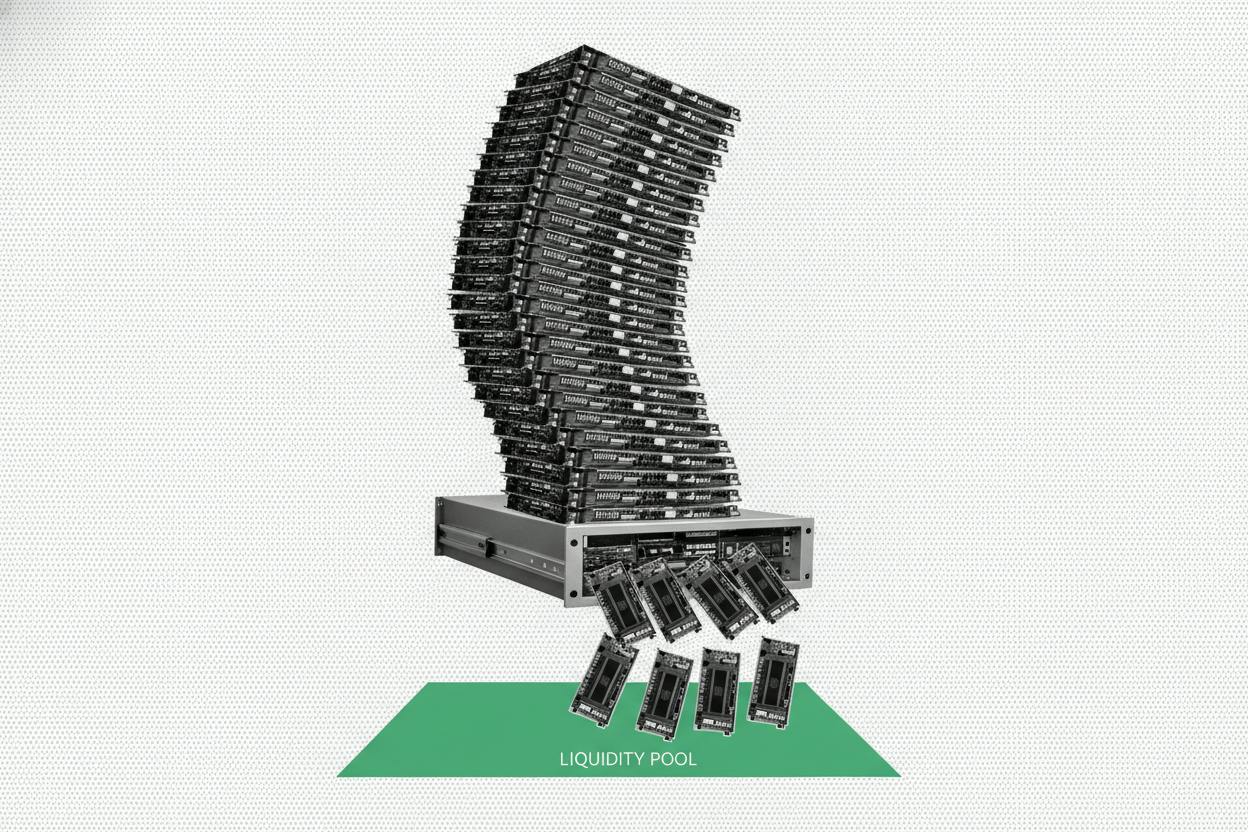
Beyond internal use, Weimob intends to rent out spare computing power through its unit Shanghai Weimeng Intelligent Computing Information Technology. The company cautioned that the timing and returns from this leasing business depend on chip supply, deployment progress, and demand. In other words, the plan is straightforward on paper but carries execution risks.
Why the RTX PRO 5500 is in demand
The RTX PRO 5500 is not a typical data-center chip. It is a professional graphics card, but its performance and memory make it attractive for AI inference and content generation tasks. Under current US export rules, it can be sold to Chinese buyers without a license, unlike Nvidia's top-tier data-center GPUs.
That has made it a hot commodity. Reuters reported in October that ByteDance, Alibaba, and Tencent — three of China's largest tech companies — ordered more than 3 million RTX PRO 5500 cards combined. That massive demand underscores the lengths Chinese firms are going to secure usable AI hardware.
The broader context is a tightening US export regime. As China AI labs face longer release cycles due to chip restrictions, companies are scrambling to build whatever clusters they can. Nvidia has also halted AI server shipments to some Southeast Asian markets, suggesting the export controls are being enforced more broadly.
What it means for investors
For Weimob's shareholders, the key question is whether the cluster will actually generate returns. A leasing business looks attractive because once GPUs are bought and installed, most costs are fixed. But that also means profitability swings with utilization: idle chips are expensive equipment that isn't earning money, and revenue depends on keeping third-party jobs flowing in at acceptable prices.
The bigger risk is competition. Many Chinese buyers are building similar clusters to work around export limits, which can turn "renting spare capacity" into a price war. If the market becomes flooded — and the more than 3 million cards ordered by ByteDance, Alibaba, and Tencent suggest it could be — smaller providers like Weimob may feel margin pressure first as customers shop for the lowest compute rates.
Weimob's 5,000-chip cluster is tiny compared to the orders placed by tech giants. That means its success depends on finding a niche where demand is strong and pricing holds up. The company's core business is cloud commerce, not AI infrastructure, so this is a diversification play that could either add a new revenue stream or become a costly side project.
For everyday investors, the story is a reminder that the AI boom is not just about Nvidia's stock. It's also about how companies around the world are adapting to a constrained supply of advanced chips. As Nvidia's stock slid on tighter export rules, the ripple effects are being felt across the industry.
Investors should watch how Weimob's cluster performs in the coming quarters. If utilization is high and rental rates hold, the strategy could pay off. If not, the company could be left with expensive hardware that doesn't earn its keep. In a market where giants are building massive clusters, the economics for smaller players are far from guaranteed.