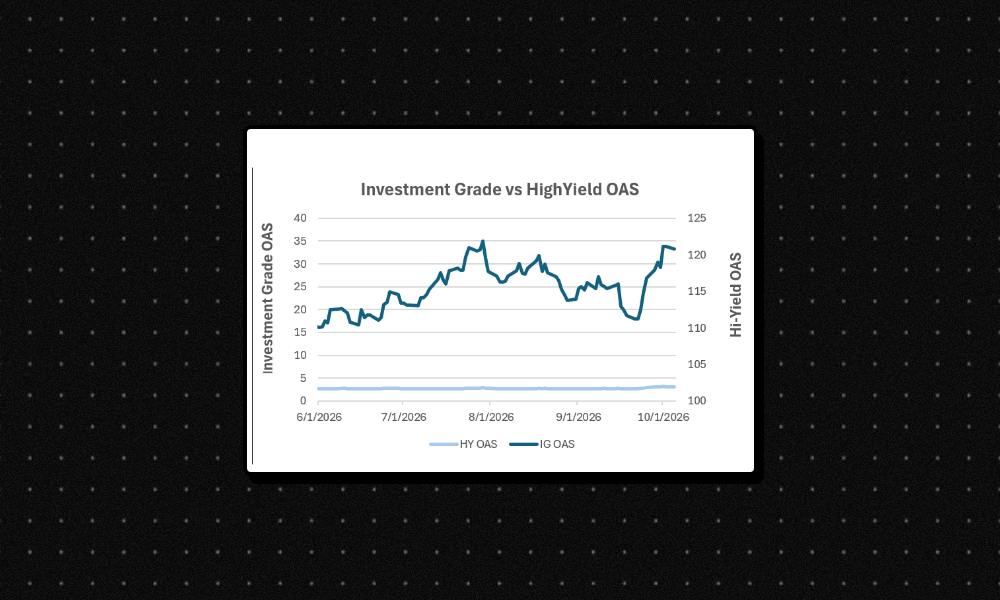
Corporate bonds are getting more volatile, and the reason for that depends on which part of the market you're looking at. A key measure—the option-adjusted spread, or OAS—is moving differently for investment-grade and high-yield bonds, and the gap is telling investors something important about risk.
The OAS is the extra yield investors demand to own a corporate bond instead of a comparable US Treasury, after adjusting for features like call options. The wider the spread, the more compensation investors want for taking on the company's credit risk. When spreads widen, it usually means investors are more worried about defaults or downgrades.
Two markets, two stories
Investment-grade bonds—issued by companies with strong balance sheets—are seeing spreads rise, but for reasons tied more to interest rates than to fears about those companies' health. As Treasury yields climb, the relative appeal of corporate debt shifts, and investors may demand a bit more yield to hold it.
High-yield bonds, often called junk bonds, are a different story. These are issued by companies with weaker credit profiles, and they're more sensitive to economic downturns. The fact that their spreads are widening suggests investors are starting to price in a higher chance of trouble for lower-quality borrowers. That's a classic sign of growing caution in the credit market.
The split is notable because it shows that the market isn't just reacting to one macro force. It's distinguishing between companies that can weather higher rates and those that might struggle. This kind of divergence often appears when the economic outlook becomes less certain.
What's driving the divergence
Rising yields are hitting both segments, but the transmission is different. For investment-grade, the move is largely about the risk-free rate—Treasury yields—and how that affects the discount rate for future cash flows. For high-yield, it's more about credit risk: the chance that a borrower might default.
When the economy slows or borrowing costs stay high, lower-rated companies face higher interest expenses and tighter margins. That makes their debt riskier, and investors want more compensation. The widening high-yield spread is an early warning that some of these companies could come under pressure.
This dynamic is playing out against a backdrop of global bond market turbulence. Yields have been climbing across developed markets, and that's rippled into equities and other assets. For example, European bank stocks have slid as the global bond selloff pushed yields higher, and French bond yields jumped, reviving eurozone debt worries. These are all signs that the repricing of risk is spreading.
What it means for everyday investors
For investors holding bond funds or ETFs, this split matters. If you own investment-grade funds, the rising yields might actually be a positive over the long run—you're getting more income. But if you own high-yield funds, the widening spreads could mean lower prices and higher risk of losses if defaults rise.
It's also a signal for the broader market. Credit markets often lead equities. When high-yield spreads widen sharply, it can be a warning that risk appetite is fading, which might eventually spill into stocks. Investors should watch whether the divergence continues or starts to narrow.
That said, a widening spread doesn't mean a crisis is imminent. It's a gradual process, and markets can stay in this state for a while. The key is to understand that lower-quality borrowers are becoming more vulnerable, and that's worth monitoring.
What to watch next
Investors will be watching whether the spread between investment-grade and high-yield continues to widen. If it does, it could signal that the market is bracing for more defaults. If it narrows, it might mean the worst is over.
Also worth watching: how central banks respond to rising yields. If they signal a pause in rate hikes, that could ease pressure on high-yield borrowers. But if they keep tightening, the vulnerability could grow.
For now, the takeaway is that credit markets are starting to split, and that's a nuanced signal. It's not a blanket warning, but it's a reminder that not all bonds are created equal—and that risk is being repriced differently across the quality spectrum.